Poble Espanyol
Walk from Ávila-style towers to an Andalusian lane, visit working craft studios and see the Fran Daurel collection on Montjuïc.
01 / The experience
Poble Espanyol
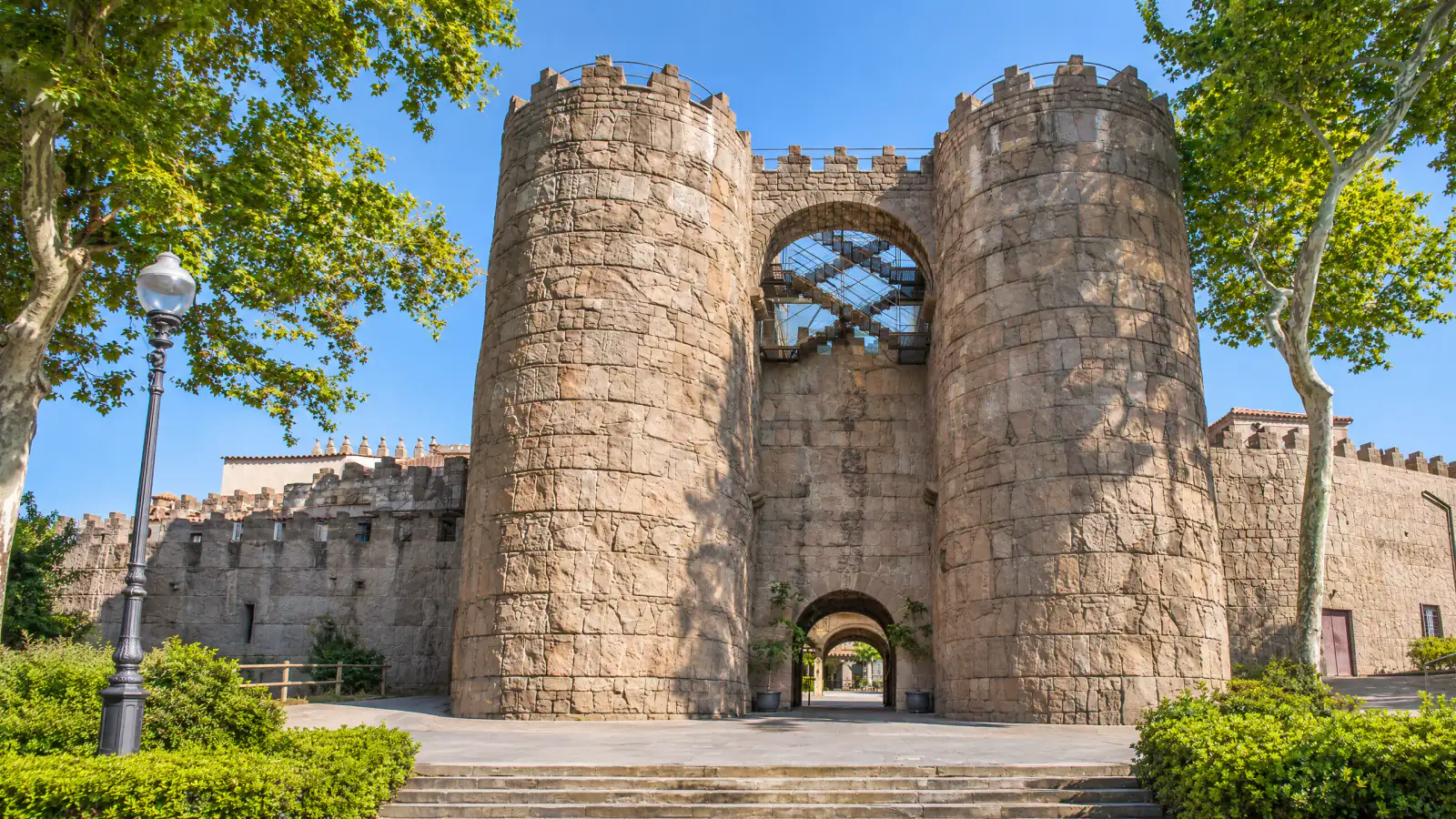
The entrance to Poble Espanyol is a pair of stone towers modelled on the walls of Ávila. On the other side, the passage opens into the Plaça Major, where arcades make a continuous route around much of the square. The village was built for Barcelona’s 1929 International Exposition. Its designers travelled around Spain to select buildings and details, then assembled them on Montjuïc. On the square, the Renaissance portico of the town hall follows the one in Valderrobres, in Aragón. Elsewhere along the square, façades and balconies from different regions sit side by side.
From Plaça Major to the Andalusian quarter
In the Andalusian quarter, Calle Arcos takes the walk into a narrower space. White arches cross above the lane and blue pots stand out against the white walls. Around the stone streets elsewhere, look up for timber balconies and see how the arcades provide shade at street level. A visit can be as much about these differences in street design as it is about finding individual buildings from the architectural catalogue.
Working studios and hands-on workshops
The craft studios still give the village a working life. At Vitromarce, glassmaker Salvador Marcé works with blown glass and shows finished pieces in the studio. Clay takes a different route at Cal Terrissaire, where the weekend workshop programme can include painting a ceramic piece. Other participating studios offer mosaic or woodworking. The weekend craft package lets visitors choose a hands-on workshop on arrival, subject to capacity.
The Fran Daurel collection and sculpture garden
The Fran Daurel Museum adds a different scale to the visit. Rooms of paintings and sculpture sit inside the village, with works by artists including Joan Miró and Antoni Tàpies. There is also an outdoor sculpture garden. It is possible to see the central square and several lanes quite quickly, but the museum and the studios have shorter opening hours than the grounds. Daytime is the useful part of the visit if the collection or the crafts are the reason you are coming.
Sant Miquel and the city view
The Sant Miquel monastery stands among trees beyond the denser streets. Its stone portal, bell tower and cloister bring Romanesque forms into one quieter part of the village. The nearby viewpoint opens across Barcelona. The monastery and parts of the square can close for private events, so the date matters if either is your main reason for visiting. The Museu Nacional d’Art de Catalunya is another stop on this side of Montjuïc. The combined ticket leaves time to see its collection on a different day.
04 / Before you go
Plan your visit
Admission
- General adult admission
- €14.40 in advance online or €16 on the day.
- Children aged 4–12
- €9 in advance online or €10 on the day at standard rates.
- Family ticket
- €42 for two adults and two children at standard rates.
- Children under 4
- Free.
- Poble Espanyol and MNAC
- €20 general admission for both venues.
- Wheelchair users
- Free admission at the venue.
Opening hours
Normally Monday 10:00–20:00 and Tuesday–Sunday 10:00–00:00. Winter and festive hours vary. The ticket office closes one hour before the site. Fran Daurel closes at 18:30 on Mondays and 19:00 Tuesday–Sunday, and is closed on 25–26 December and 1 January.
See opening hoursGetting there
Avinguda de Francesc Ferrer i Guàrdia, 13, 08038 Barcelona
Take metro L1 or L3 to Espanya, then walk about 15 minutes to the main gate at Avinguda de Francesc Ferrer i Guàrdia 13. Buses 13, 23 and 150 stop at Poble Espanyol.
The ticket counter on the right of the main entrance has a lowered section. An accessible route and adapted toilets are available. The operator’s practical information page provides a route map.
Tickets and entry
General admission includes the streets and squares, craft demonstrations and the Fran Daurel Museum during its opening hours. Hands-on workshops and separately ticketed events have their own admission.
Standard general tickets admit you once, from the chosen date through the following seven days. The purchase cannot be changed or refunded. Special event dates can carry different rates, and parts of the square or monastery may close.
Weekend craft tickets include admission and a 30–60-minute hands-on activity. Sessions run Saturdays and Sundays 11:00–14:00 and 16:00–18:00. Choose a participating workshop on arrival, subject to capacity.
The €20 Poble Espanyol and MNAC ticket allows one visit to each venue. Use the MNAC entry within 15 days of the selected Poble Espanyol date and take a printed copy.
Location & nearby places
Continue exploring / Barcelona
More to explore
in Barcelona
Find another place for your itinerary, or explore all things to do in Barcelona.
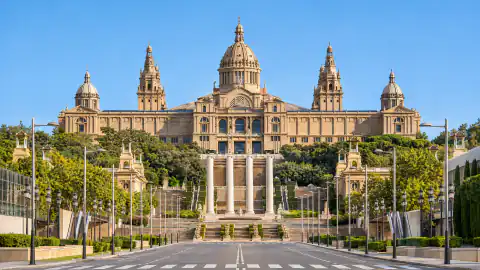 Museums Art And ArchitectureMuseu Nacional d’Art de CatalunyaExplore experience →
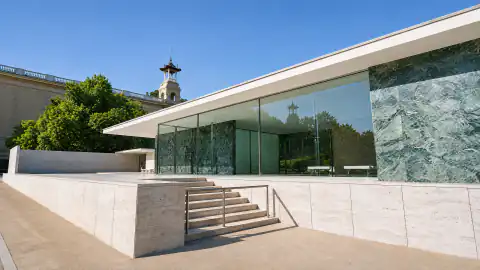 Beaches And MontjuicBarcelona PavilionExplore experience →
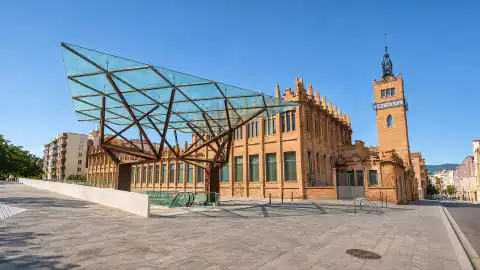 Beaches And MontjuicCaixaForum BarcelonaExplore experience →
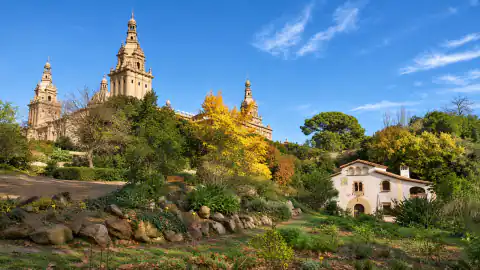 Beaches And MontjuicJardí Botànic HistòricExplore experience →
Good to know
Poble Espanyol: frequently asked questions
Does Poble Espanyol admission include hands-on craft workshops?
General admission to Poble Espanyol covers studio visits and craft demonstrations during opening hours. Hands-on sessions at Poble Espanyol require a workshop ticket.
Does Poble Espanyol general admission cover the Fran Daurel Museum?
General admission to Poble Espanyol includes entry to the Fran Daurel Museum during the museum’s opening hours.
Can I visit Poble Espanyol and the Museu Nacional d’Art de Catalunya on different days with the combined ticket?
The Poble Espanyol and Museu Nacional d’Art de Catalunya combined ticket includes one visit to each venue. Go to the Museu Nacional within 15 days of the selected Poble Espanyol date and take your printed ticket to the museum.