Museu Nacional d’Art de Catalunya
Catalonia’s Romanesque murals, Gothic altarpieces and Modernisme design inside the Palau Nacional on Montjuïc.
01 / The experience
Museu Nacional d’Art de Catalunya
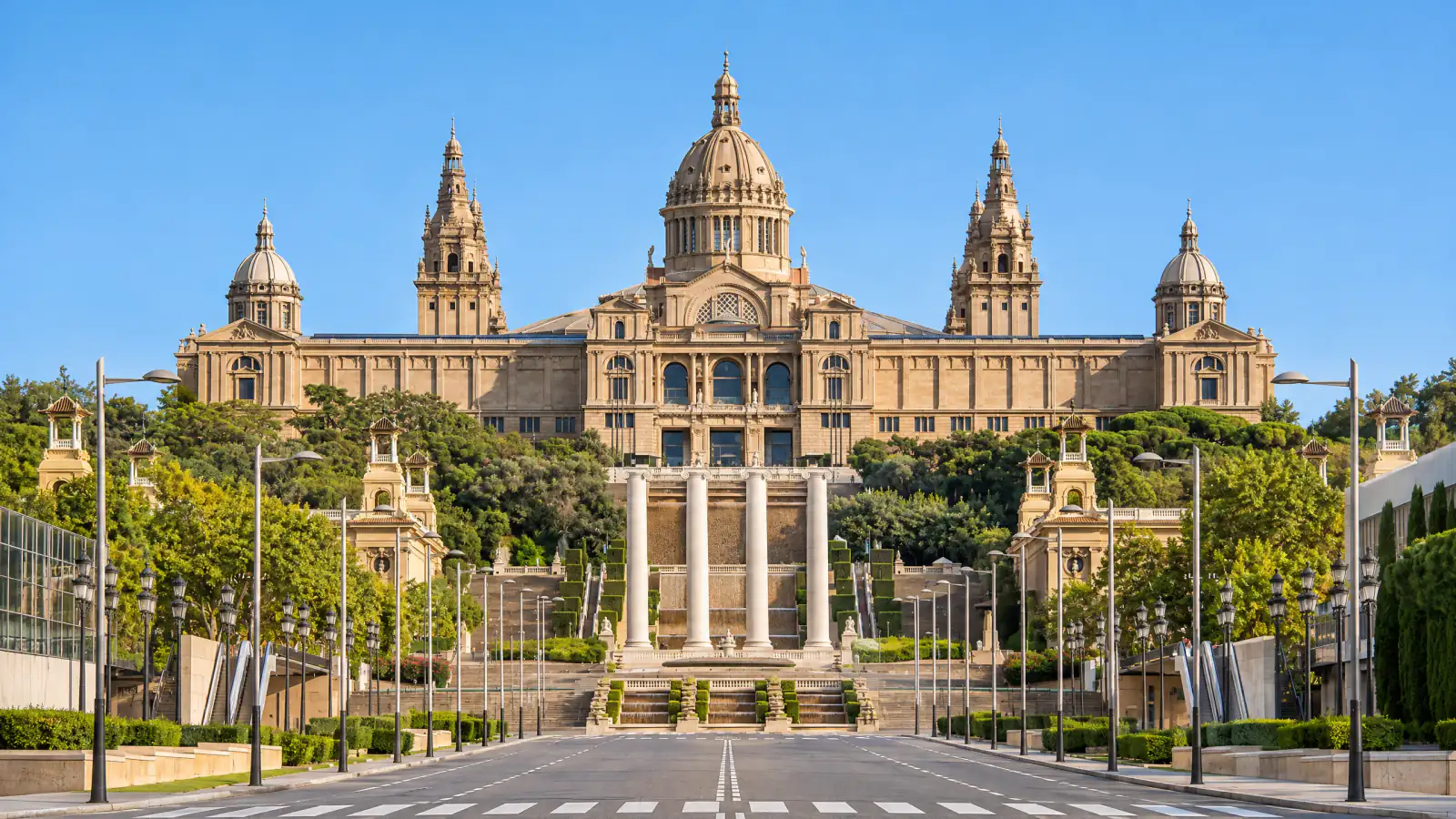
The Palau Nacional makes a good first stop on Montjuïc because the approach tells you where you are. From Plaça d’Espanya, the avenues and terraces draw your eye toward the palace at the top of the hill. It was built for Barcelona’s 1929 International Exposition. The wide stairs and the view back over the city make the building part of the visit. If you are coming chiefly for the art, go through the main doors and start with the Romanesque galleries before heading to the rooftop.
The Taüll murals and Romanesque rooms
The paintings from Sant Climent de Taüll are the first work to seek out. At the top of the painted apse, Christ sits in a field of bright colour above the smaller figures below. Stand far enough back to see the whole curve and the bands that would have organised a view from the church floor. Then go closer to see the lines and shading that give the figures their shape. The paintings came from a church in the Vall de Boí. The museum mounting preserves the curve of the original setting so that the fragments read as parts of a room.
Other Romanesque rooms show different ways to use painted architecture. At Sant Joan de Boí, look for the animals and other fragments that once belonged to a larger painted scheme. At Santa Maria de Taüll and Sant Pere del Burgal, look at the relationship of the figures to the surface behind them. A route through three or four of these ensembles is a rewarding short visit in its own right. It shows how much variety the painters found in a small number of architectural shapes.
Gothic panels to Gaudí furniture
With more time, carry the comparison into the Gothic rooms. Altarpieces arrange stories in separate panels around a central figure. Their carved frames and gold surfaces ask you to read from one scene to the next. The Renaissance and Baroque rooms offer a different sense of scale and space, with paintings made for different settings. The modern collection brings you back to Barcelona through designs such as Gaudí’s furniture, where a seat or a chair back shows the same interest in fitted shapes as the buildings seen elsewhere in the city.
The palace and rooftop
The Sala Oval belongs to the building itself, and its high arcades make an interesting change from the gallery rooms. From the rooftop viewpoint, the line of the avenue leads your eye back towards Plaça d’Espanya. If you only want the building and view, the basic ticket covers that visit. For the murals or other collections, choose general admission. It is valid for two days within a month, which makes it possible to give Romanesque and modern art separate visits. ArticketBCN also covers Fundació Joan Miró on Montjuïc and Museu Picasso in El Born, with one visit at each museum.
04 / Before you go
Plan your visit
Admission
- General admission
- €12 per person.
- Building and rooftop
- €2 per person.
- ArticketBCN
- €38 per person. Includes one visit to each of six museums within one year of purchase.
Opening hours
Tuesday to Saturday 10:00–18:00 October to April and 10:00–20:00 May to September. Sundays and public holidays 10:00–15:00. Closed Mondays except public holidays, plus 1 January, 1 May and 25 December. The ticket office closes 30 minutes before the museum.
See opening hoursGetting there
Palau Nacional, Parc de Montjuïc
Go to the main Palau Nacional entrance. From Espanya, follow Avinguda de la Reina Maria Cristina past the fountains and up the terraces. Bus 55 stops near the museum if you prefer to avoid the long staircase.
Tickets and entry
General admission includes the permanent collection, temporary exhibitions and rooftop viewpoint. Use it on two days within one month of purchase.
Free admission on Saturdays from 15:00 and on the first Sunday of each month requires an advance online reservation.
Location & nearby places
Continue exploring / Barcelona
More to explore
in Barcelona
Find another place for your itinerary, or explore all things to do in Barcelona.
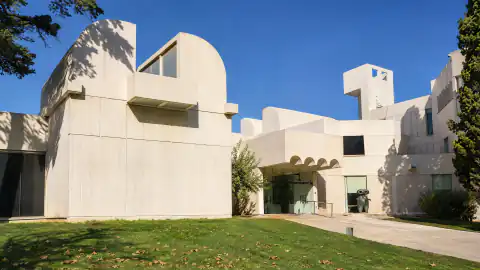 Museums Art And ArchitectureFundació Joan MiróExplore experience →
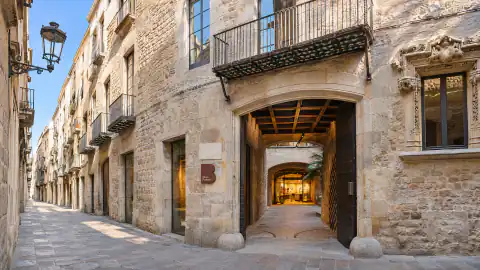 Museums Art And ArchitectureMuseu PicassoExplore experience →
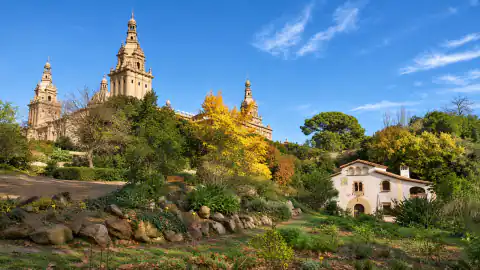 Beaches And MontjuicJardí Botànic HistòricExplore experience →
 Beaches And MontjuicBarcelona PavilionExplore experience →