Palau de la Música Catalana
Visit the stained-glass concert hall and mosaic balcony in Sant Pere, or hear a performance in the hall they were built around.
01 / The experience
Palau de la Música Catalana
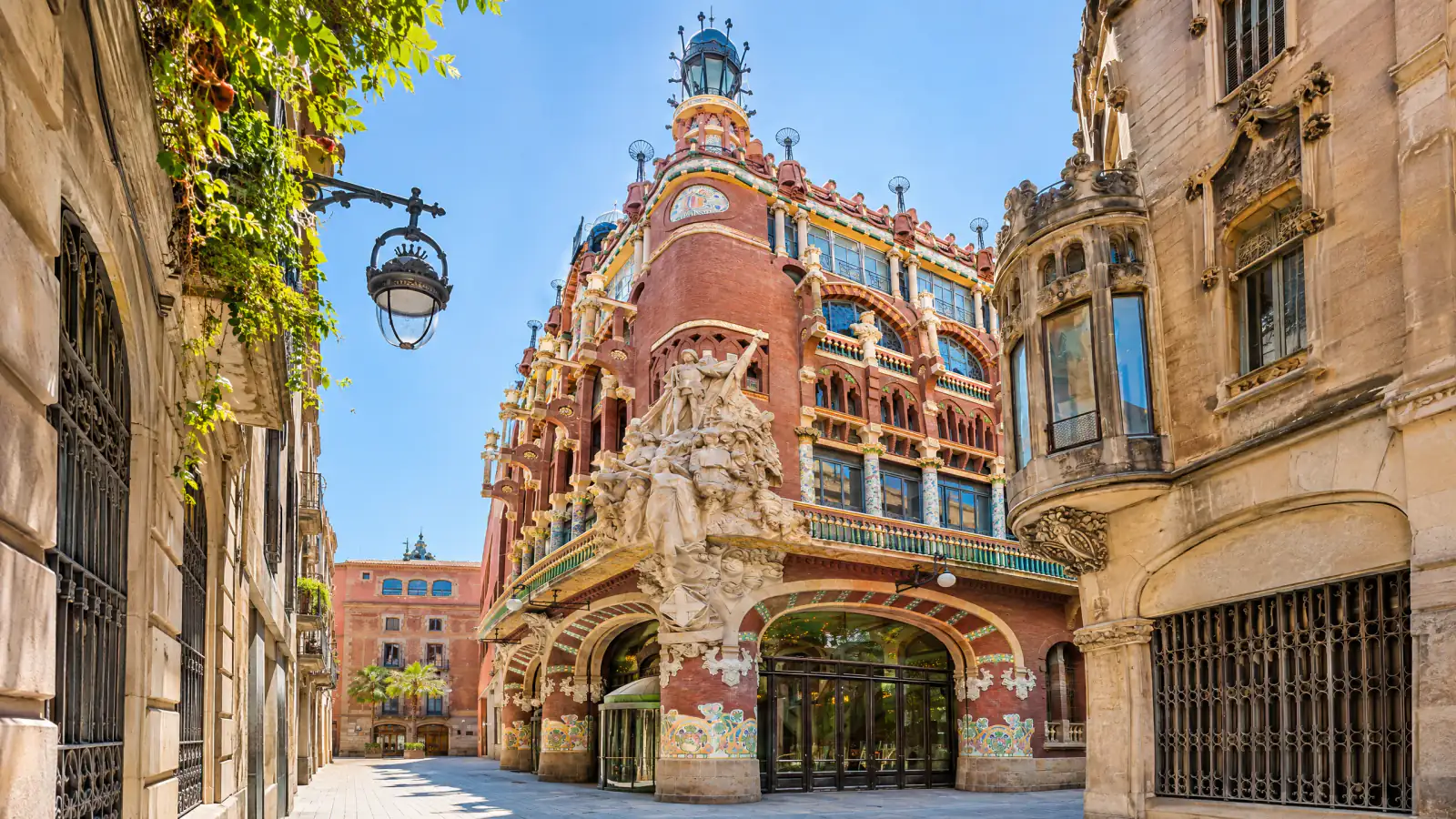
From Carrer de Sant Pere Més Alt, the Palau first appears in pieces. Mosaic columns catch the light above the street, while Miquel Blay’s sculptural group wraps the corner below them. Lluís Domènech i Montaner designed the building for the Orfeó Català, whose supporters paid for it through public subscription. It opened in 1908 on a site hemmed in by narrow streets. The architect used an iron structure to make room for extensive glazing, so the approach through the dark street makes the daylight inside all the more striking.
The stairs and mosaic balcony
From Plaça del Palau the route begins at the Foyer, where colourful ribs trace the brick vaults above the café. The main staircase rises between patterned walls and globe lamps. The Sala Lluís Millet, named for a founder of the choir, opens onto the mosaic-column balcony. Inside the room the tall windows bring the patterns close. Out on the balcony you get a better sense of how the paired columns dress the façade, with a different arrangement of ceramic motifs on each. The terrace is narrow enough that a single wide view from the street misses much of that individual work.
Inside the concert hall
The concert hall gathers those ideas in one space. A stained-glass sun dips from the ceiling and gives the hall light from above, while the side windows light the tiers of seats. Turn towards the stage and the organ is high over a line of figures sculpted by Eusebi Arnau. Their shoulders project from the wall and their lower bodies resolve into mosaic. The instruments and poses differ across the line. Looking back across the seats from the front gives a better view of how the balconies sit around the hall, while the visit from the stalls gives the clearest overall view of the stage.
Tour or concert
Choose a self-guided or audio-guided visit if you want to spend more of your time on the skylight or balcony. A guided visit gives those details a connection to the choir and the people who built the Palau. Under the main stage, the Orfeó Català rehearsal room holds the foundation stone laid in 1905. The guided route can include it when the room is available. A concert is a separate choice and a chance to hear the hall in use. The smaller, modern Petit Palau has its own programme.
Pair the Palau with Sant Pau
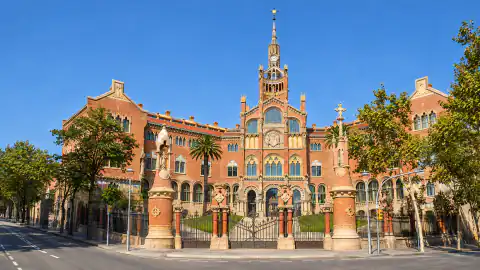
For both of Domènech i Montaner’s Barcelona landmarks, reserve the Palau time first with the combined ticket. You can then use that same ticket for flexible entry at Sant Pau during visiting hours. The two buildings use many of the same materials for very different purposes. Here they bring daylight into a concert hall. At Sant Pau they mark individual wards and bring colour into the former hospital.
04 / Before you go
Plan your visit
Admission
- Self-guided Palau visit with brochure
- €20 per person online.
- Guided or audio-guided Palau visit
- €24 per person online.
- Palau and Sant Pau combined ticket
- €32 per person online. Under-12s enter free with the combined ticket.
Opening hours
Daytime visits normally run daily 09:00–15:30. The dated tours calendar gives the available start times.
See opening hoursGetting there
Carrer del Palau de la Música, 4–6
Take L1 or L4 to Urquinaona, or walk from Plaça de Catalunya. The pin marks the Plaça del Palau side at Carrer del Palau de la Música 4–6. For the main visitor approach use the square. The Nova Porta reception has another street entrance at Via Laietana 54.
Use the Plaça del Palau entrance for step-free access. Lifts serve the floors and a ramp leads to the mosaic balcony.
Tickets and entry
Daytime visits use a timed ticket. Allow about 50 minutes for a self-guided or guided visit. Arrive before your slot, as late entry is refused once the visit has started. Concerts and rehearsals can change the visitor route. Tour tickets cannot be exchanged or refunded.
For the combined ticket, reserve the Palau time at booking and show the same ticket at Sant Pau for flexible entry during its visitor hours. A concert needs its own ticket.
Location & nearby places
Continue exploring / Barcelona
More to explore
in Barcelona
Find another place for your itinerary, or explore all things to do in Barcelona.
 Gaudi And ModernismeSant Pau Art Nouveau SiteExplore experience →
 Museums Art And ArchitectureMuseu Diocesà de BarcelonaExplore experience →
 Museums Art And ArchitectureMuseu Frederic MarèsExplore experience →
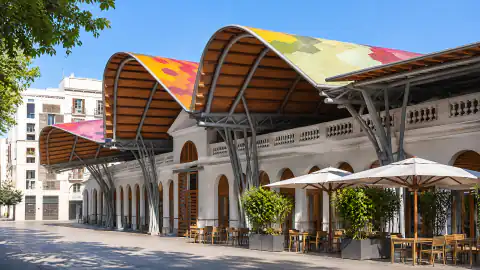 Food marketsMercat de Santa CaterinaExplore experience →
Good to know
Palau de la Música Catalana: frequently asked questions
Can I see the stained-glass skylight at Palau de la Música Catalana without a concert ticket?
A daytime visit to Palau de la Música Catalana includes the historic concert hall and its stained-glass skylight when the hall is open. Concerts and rehearsals can change the route.
Where is the visitor reception for Palau de la Música Catalana?
The Nova Porta reception for Palau de la Música Catalana is at Via Laietana 54. Use the Plaça del Palau entrance for the recommended accessible approach.