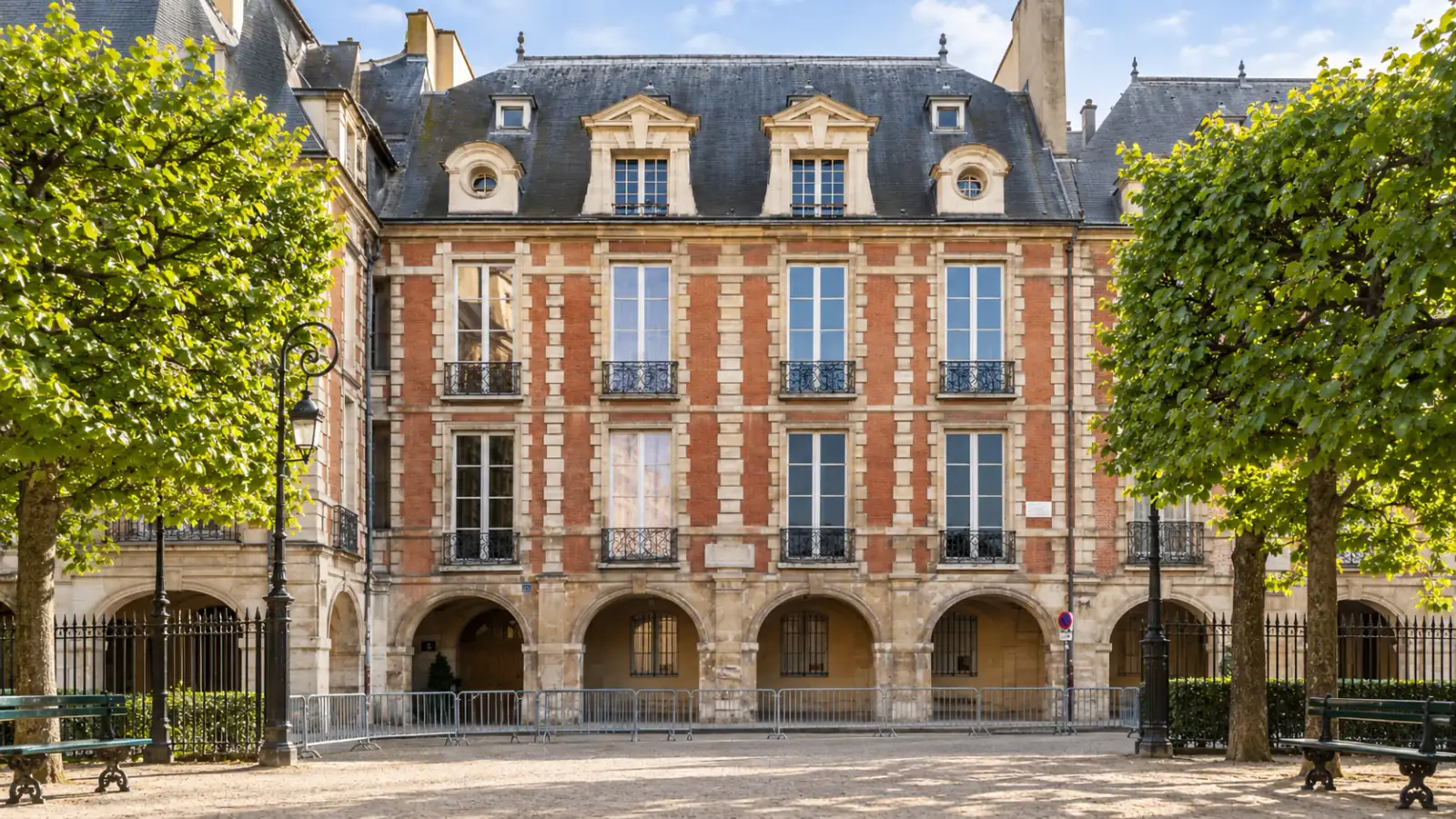
Maison de Victor Hugo
Victor Hugo’s Paris apartment, with a red salon, painted Chinese panels and rooms tracing his life before, during and after exile.
01 / The experience
The writer who also designed rooms.
The Chinese salon is an unexpected introduction to Victor Hugo. Its painted panels, porcelain plates, mirrors and specially designed furniture reveal an imagination at work on a room as well as on a page. The decorative elements were made for Juliette Drouet’s house in Guernsey, then brought together in Paris for the museum. They are part of Hugo’s story, but the arrangement is a museum presentation rather than an untouched room from his years on Place des Vosges.
Hugo’s Paris years and the red salon
Hugo lived at this address with his family from 1832 to 1848. Today the apartment follows the shape of his life before exile, during it and after his return. That distinction gives the visit more substance than simply identifying where a famous writer once slept. Furnishings and objects from different homes help explain how his domestic world changed alongside his literary and political life.
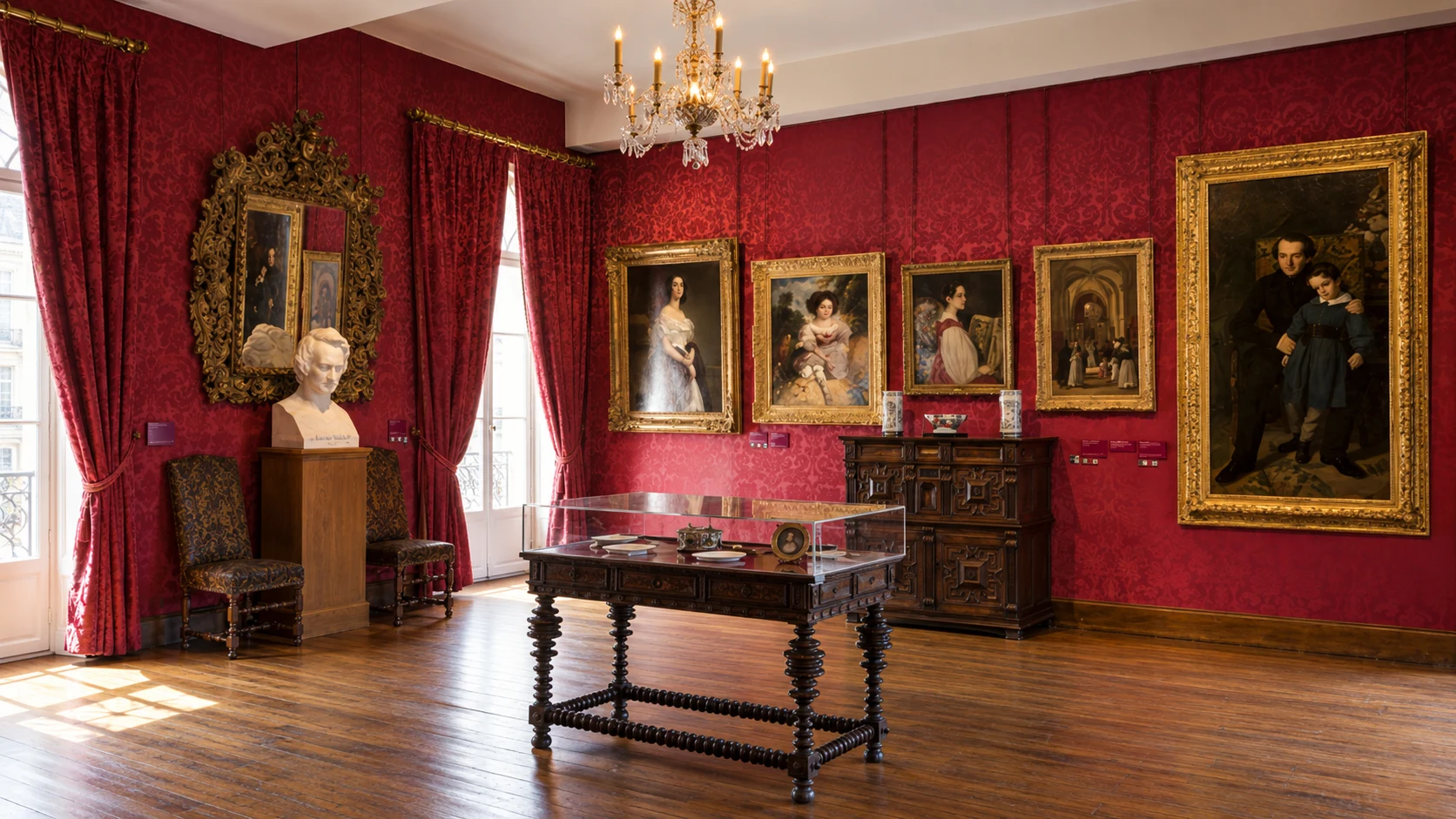
The red salon evokes the Paris years. Red damask, family portraits, a marble bust and pieces of furniture create a setting connected with the writers, artists and political figures around the leading Romantic author. The paintings include works by Louis Boulanger and Auguste de Châtillon. Their subjects and the presentation of the room make family life and public reputation visible together, within the scale of an apartment overlooking the square.
The Chinese salon and a visit beside the square
The Chinese salon and adjoining furniture bring the exile years into that sequence. Hugo designed the painted panels in the 1860s, and their decorative combinations show a playful, inventive side of his work. The objects were originally spread through several rooms in Drouet’s Guernsey home. Seeing them here therefore calls for a little attention to their history: Paris is presenting a part of that other house, rather than pretending every object has always stood at 6 place des Vosges.
The museum’s manageable scale makes it a useful companion to a walk around the square or a longer visit to Carnavalet. It also offers a different kind of museum experience from a large painting collection. Rooms, furniture and personal objects carry much of the narrative, with the relationship between writing and domestic space giving the visit its character. Temporary exhibitions can alter the route and make admission chargeable, so the particular exhibition matters to the visit as well as the permanent apartment.
In pictures
The full gallery.
02 / The essentials
Maison de Victor Hugo: visit essentials
- 01
Place des Vosges
- 02
Allow 60–90 minutes
- 03
Tuesday–Sunday 10:00–18:00; last admission 17:15. Closed Monday. Exhibition arrangements can change access and admission.
04 / Before you go
Plan your visit
Victor Hugo’s Paris apartment, with a red salon, painted Chinese panels and rooms tracing his life before, during and after exile.
Admission
Admission depends on the exhibition programme. Temporary exhibitions can make the whole museum visit chargeable; do not assume the apartment is always free.
Check admissionChoose your visit
Tuesday–Sunday 10:00–18:00; last admission 17:15. Closed Monday. Exhibition arrangements can change access and admission.
Confirm opening and service times for your visit.
Arrival & access
Enter at 6 place des Vosges, on the south side of the square. Bastille (Métro 1, 5 and 8), Saint-Paul (Métro 1) and Chemin Vert (Métro 8) serve the area.
6 place des Vosges, 75004 Paris
The municipality lists the museum as accessible. Ask the museum about lift access, assistance and the rooms available during exhibition changes. Last admission is 17:15.
Plan admission
Admission depends on the exhibition programme. The museum is charging €11 full / €9 reduced admission during its 11 June–13 December 2026 exhibition, including the permanent rooms. Admission conditions and prices depend on the exhibition programme.
05 / Where it is
Find it
and what’s nearby.
Continue exploring
More of Paris, around your visit.
Continue your Paris day
06 / Good to know
Maison de Victor Hugo: frequently asked questions
01Where is Maison de Victor Hugo in Paris?
Maison de Victor Hugo is at 6 place des Vosges, 75004 Paris, on the square’s south side. Enter at the museum address rather than through the central garden.
02When is Maison de Victor Hugo open?
Maison de Victor Hugo normally opens Tuesday–Sunday, 10:00–18:00, and closes on Mondays. Exhibition changes and exceptional closures can affect the rooms available.
03Is admission to Maison de Victor Hugo always free?
No. Temporary exhibitions can make the whole Maison de Victor Hugo visit chargeable, including the apartment. Admission and ticket prices depend on the museum’s exhibition programme.
04Which rooms can I see at Maison de Victor Hugo?
The apartment route includes the red salon, Chinese salon, furniture designed by Hugo, his study and bedroom. Displays connect the writer’s family life, art and decorative work; exhibitions can alter the route.
05Did Victor Hugo live in the Place des Vosges apartment?
Yes. Victor Hugo lived at 6 place des Vosges with his family from 1832 to 1848. Today’s museum also presents furnishings associated with other periods of his life.
06Is Maison de Victor Hugo accessible to visitors with disabilities?
Maison de Victor Hugo offers access for visitors with reduced mobility and sensory or cognitive disabilities. Call +33 1 42 72 10 16 about lifts, assistance and available rooms.
07Did Victor Hugo create the Chinese salon at Maison de Victor Hugo?
Hugo designed the Chinese salon’s painted panels and furniture for Juliette Drouet’s home in Guernsey. They were later brought together in the Paris museum; the room is a museum arrangement.