Musée Carnavalet – Histoire de Paris
Paris through old shop signs, archaeological finds, furnished rooms and the lives of its inhabitants, inside two Marais mansions.
01 / The experience
The city, told through the things it kept.
An old shop sign can make the Paris outside suddenly easier to imagine. At Carnavalet, signs from former trades bring the street into the museum: images that once identified a business before a visitor could rely on a numbered address. They offer an approachable beginning to a collection concerned with the way people actually lived in the city, as well as the events that changed it.
Two Marais mansions and the history of Paris
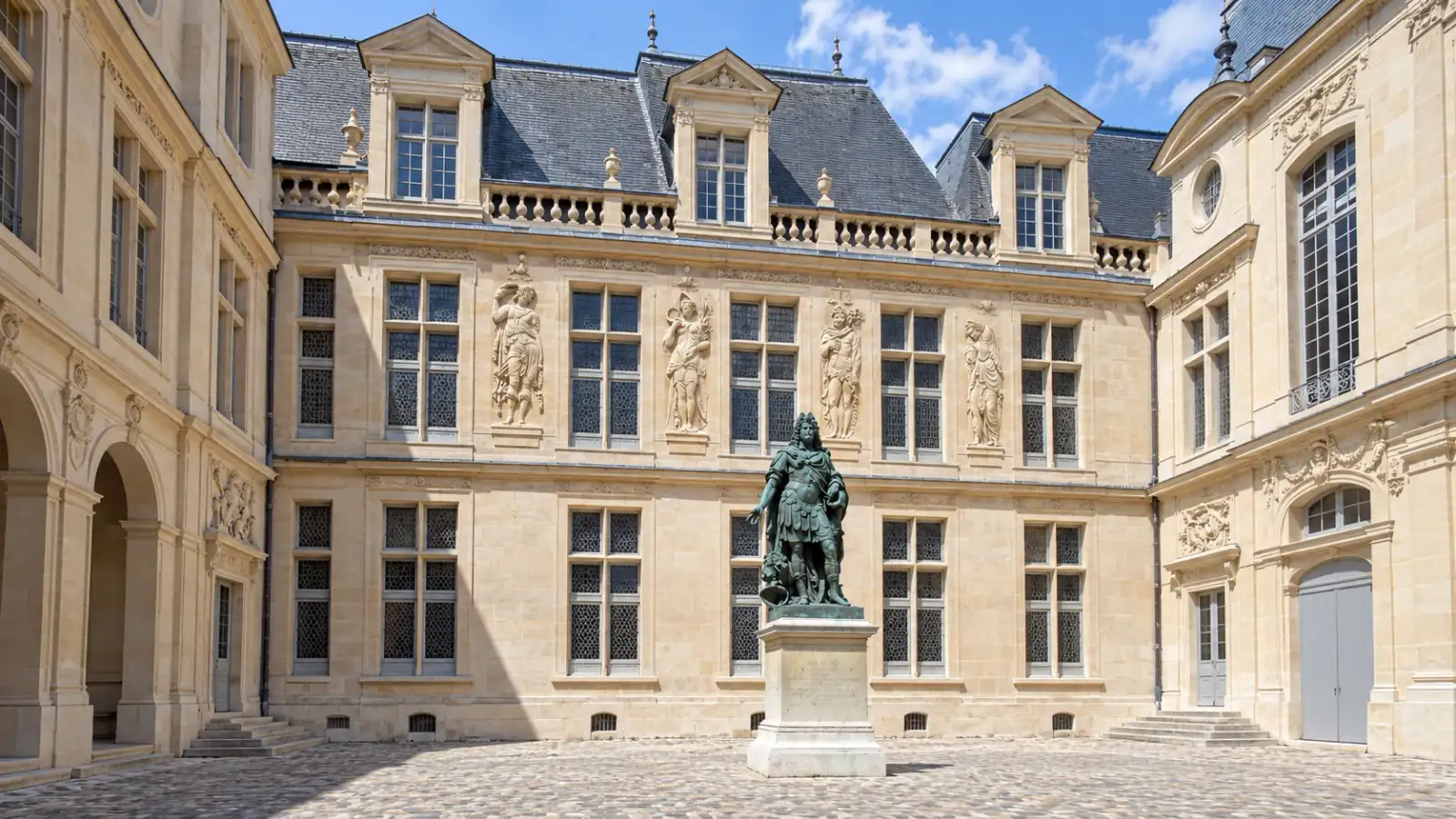
The museum occupies two historic Marais mansions, the Hôtel Carnavalet and Hôtel Le Peletier de Saint-Fargeau. Their courtyards, stairs and decorated rooms are part of the visit. The oldest building preserves Renaissance architecture, while later additions extend the story across several centuries. A walk through the collection therefore moves between different kinds of evidence: a furnished interior, a street scene, an object carried by a particular person and the fabric of the buildings themselves.
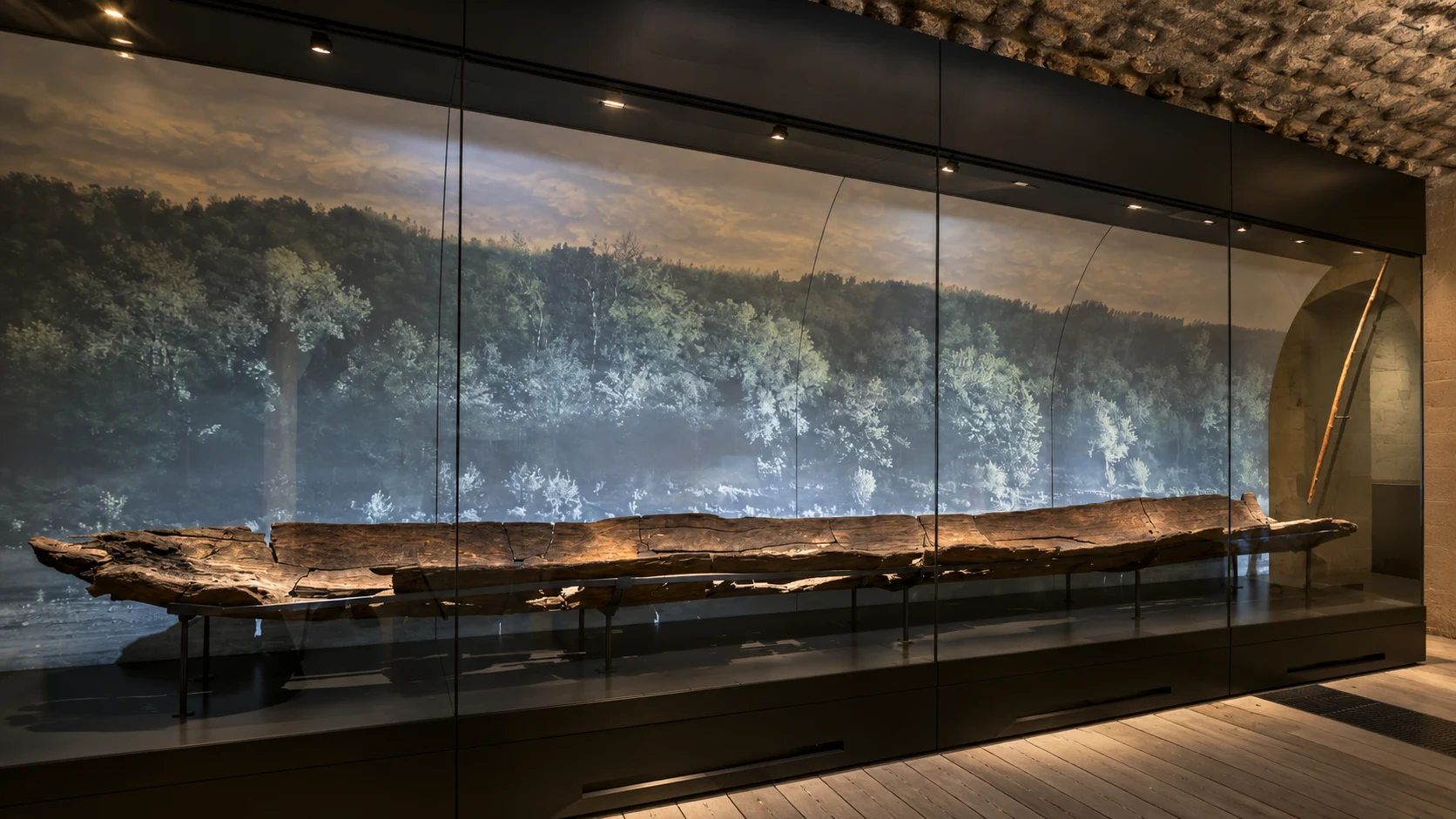
The chronological route reaches back before the familiar boulevards and monuments. Archaeological displays introduce earlier settlements and the material remains of everyday life. Later sections become more expansive around the eighteenth and nineteenth centuries, when revolution, rebuilding and new forms of urban life changed Paris. Paintings, models, posters, coins and personal objects give those changes a human scale rather than reducing the city to a succession of rulers.
Lives, objects and free permanent collections
Individual lives provide some of the strongest connections. The collections include possessions associated with Napoleon, the royal family and revolutionaries, alongside material relating to writers and other inhabitants. Marcel Proust’s furniture brings the scale back down to a bedroom. A bed, screen and writing-related objects tell a different story from a grand public monument: the conditions in which a major work of literature took shape. Not every object is always displayed, but the route gives plenty of ways into Paris beyond its best-known landmarks.
Carnavalet rewards a substantial visit without requiring a paid permanent-collection ticket. The historic rooms and courtyards also make it appealing to someone more interested in architecture and interiors than in following every chronological section. It sits among the streets it helps explain, with Place des Vosges and the Maison de Victor Hugo offering nearby continuations of the same conversation between a city, its buildings and its residents.
In pictures
The full gallery.
02 / The essentials
Musée Carnavalet – Histoire de Paris: visit essentials
- 01
Le Marais
- 02
Allow 2–3 hours
- 03
Tuesday–Sunday 10:00–18:00. Last permanent-collection admission 17:15. Closed Monday, 1 January, 1 May and 25 December.
04 / Before you go
Plan your visit
Paris through old shop signs, archaeological finds, furnished rooms and the lives of its inhabitants, inside two Marais mansions.
Admission
Permanent collections: free, without booking. Temporary exhibitions and guided activities are charged separately; programmes and prices may change.
Check admissionChoose your visit
Tuesday–Sunday 10:00–18:00. Last permanent-collection admission 17:15. Closed Monday, 1 January, 1 May and 25 December.
Confirm opening and service times for your visit.
Arrival & access
Visitor entrance on rue de Sévigné. Saint-Paul (Métro 1) and Chemin Vert (Métro 8) serve the surrounding Marais streets.
23 rue de Sévigné, 75003 Paris
The museum offers an accessible visit route. Contact the visitor team about lifts, assistance and any rooms unavailable on your date. Luggage is not accepted; only handbag-style bags are permitted.
Plan admission
The permanent collections are free without booking. Temporary exhibitions charge admission; advance booking guarantees exhibition entry. Guided activities have separate prices.
05 / Where it is
Find it
and what’s nearby.
Continue exploring
More of Paris, around your visit.
06 / Good to know
Musée Carnavalet – Histoire de Paris: frequently asked questions
01Are Musée Carnavalet’s permanent collections free to visit?
Yes. Individual visitors enter Musée Carnavalet’s permanent collections free without reservation. Temporary exhibitions and guided activities are charged separately; advance exhibition booking guarantees entry.
02When is Musée Carnavalet open, and what is the last entry time?
Musée Carnavalet opens Tuesday–Sunday, 10:00–18:00. Last entry is 17:15 for the permanent collection and 16:45 for temporary exhibitions. It closes Mondays, 1 January, 1 May and 25 December.
03Where is the visitor entrance to Musée Carnavalet?
Enter Musée Carnavalet at 23 rue Madame de Sévigné, 75003 Paris, in the Marais. Saint-Paul on Métro 1 and Chemin Vert on Métro 8 serve the surrounding streets.
04What can I see in Musée Carnavalet’s permanent collection?
Musée Carnavalet tells Paris history through old shop signs, archaeological finds, decorated interiors, paintings and personal objects. The route ranges from early settlement to the city’s more recent history.
05Can I take luggage into Musée Carnavalet?
No. Musée Carnavalet accepts handbag-style bags, with visual security checks on arrival, but does not accept luggage. Its lockers are not a luggage-storage service.
06Is Musée Carnavalet accessible to wheelchair users?
Musée Carnavalet offers an adapted visit route and free wheelchair loans at reception, subject to availability. Contact the museum about lift arrangements and any rooms unavailable during your visit.
07Do groups need a reservation for Musée Carnavalet?
Yes. Groups must reserve through Musée Carnavalet’s group booking service, including visits to the free permanent collection. Group reservation fees and guided-activity charges depend on the visit.