Brooklyn Botanic Garden
Cherry avenues, a Japanese pond, rose gardens, woodland paths and desert conservatory planting.
01 / The experience
A different garden around every turn.
Cherry avenues, a Japanese pond, rose gardens, woodland paths and desert conservatory planting.
Brooklyn Botanic Garden is a collection of distinct gardens rather than one continuous floral display. A woodland entrance, a Japanese pond, formal pergolas and glasshouse planting sit within the same 52-acre site, with different reasons to visit across the year. Cherry blossom is the famous spring attraction, but it is only one part of the garden’s character.
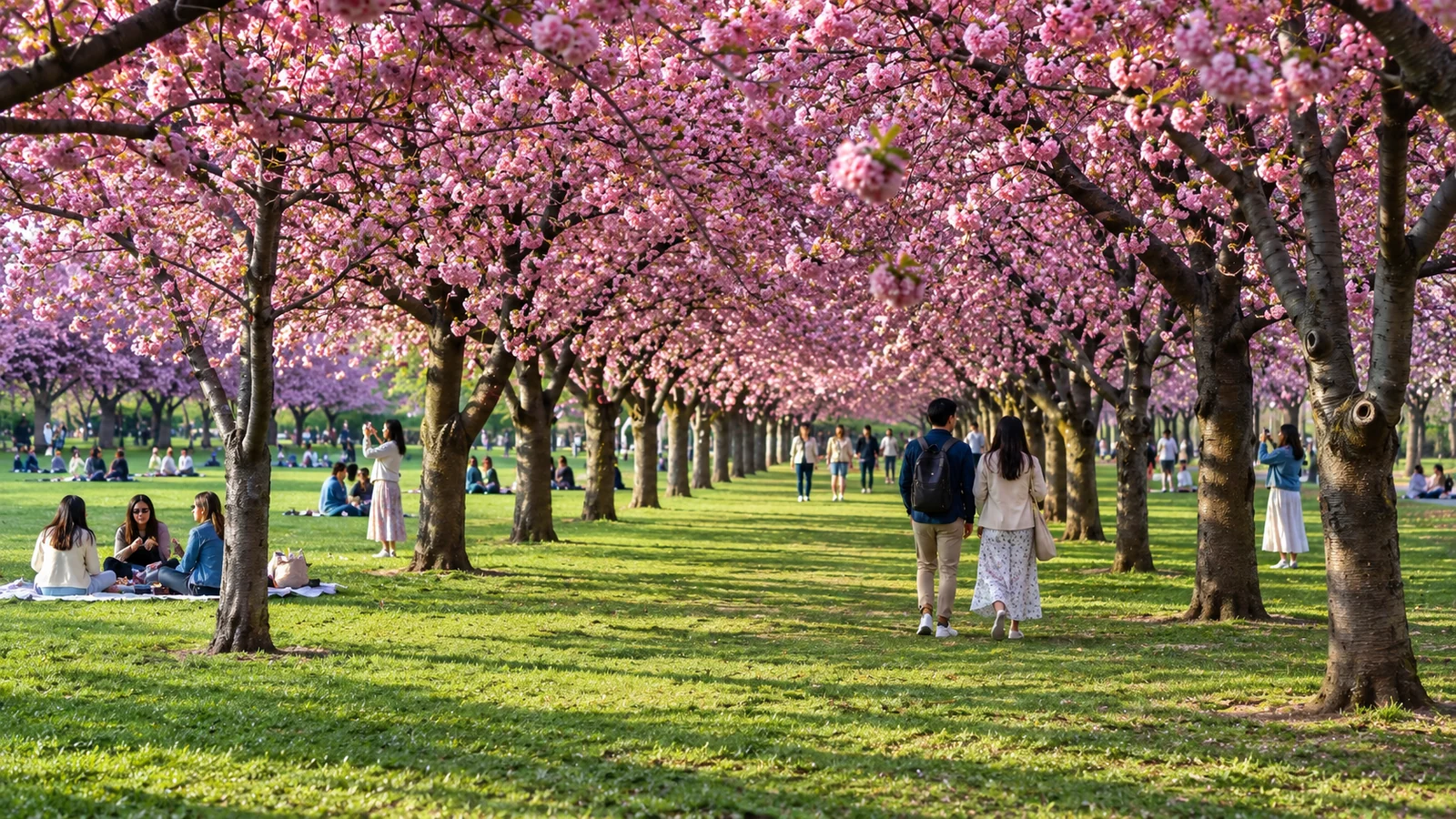
The Cherry Esplanade makes the seasonal spectacle easy to understand. Parallel rows of trees frame a broad lawn, and at peak bloom their branches form long pink corridors. The Japanese Hill-and-Pond Garden offers a different spring scene: weeping branches hang over water, with the red torii and surrounding evergreen planting giving the pond a recognisable structure. Neither space needs every tree to be in flower to explain its design. Blossom timing depends on the season, and different varieties flower at different times.
Osborne Garden is more architectural. Stone piers and timber beams carry a pergola along a straight path, with climbing plants softening its edges. It is a useful contrast to the irregular pond shoreline. Nearby garden rooms use planting at a much smaller scale. The Shakespeare Garden brings mixed borders and clipped shrubs around a narrow path, drawing its plant choices from the writer’s works. The Fragrance Garden puts aromatic plants within reach in raised beds, making scent and touch part of the visit where the garden’s signs permit them.
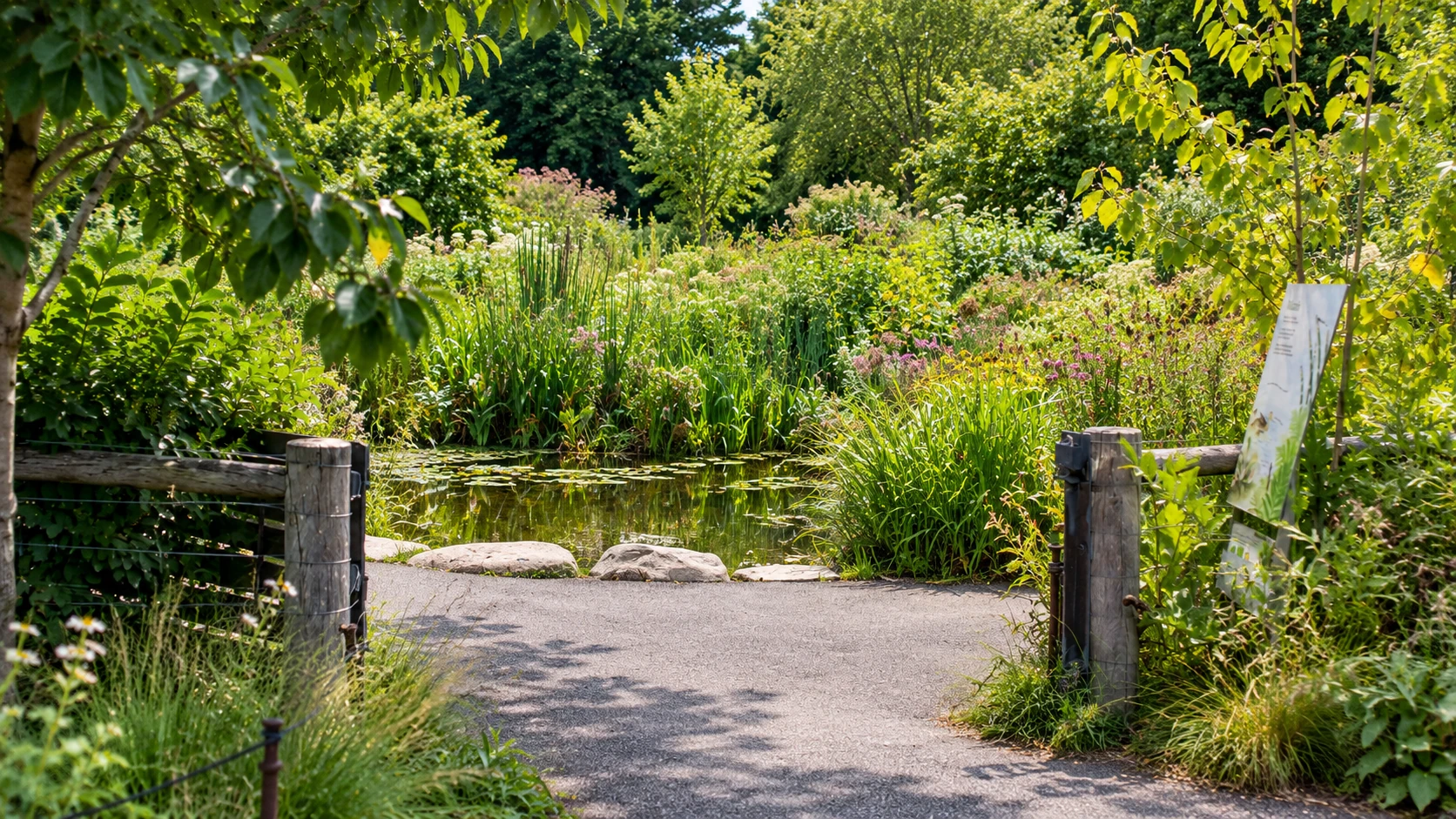
Cranford Rose Garden has its own early-summer emphasis, with climbing roses, supports and layered beds creating different heights of colour. Its peak is a separate event from the cherry season. At the Water Garden, the subject changes from abundant flowers to the relationship between pond, wetland plants and the surrounding landscape. Lily pads, grasses and reflections reward a different kind of photograph from a blossom avenue.
The Native Flora Garden makes room for regional plant communities. Its wooded paths and changing canopy help explain that a botanic collection can include familiar-looking landscapes as well as spectacular specimen plants. The Discovery Garden approaches that idea through hands-on exploration for children, including marsh habitat and paths that bring young visitors close to living systems. Families can give this part of the garden proper time instead of treating it as a quick diversion.
The conservatory collections widen the range again. The Desert Pavilion sets columnar and rounded cacti among rocks and sandy planting beds. The Bonsai Museum presents carefully trained trees at a scale where their branches, trunks and containers become the focus. Their display settings are part of the experience, quite different from an outdoor woodland walk. The Visitor Center’s planted living roof adds a contemporary connection between the buildings and the garden.
A visit works best around the season’s strongest areas and the entrance nearest your next stop. Brooklyn Museum is next door, with a same-day combination ticket available under specific conditions. Prospect Park offers a free landscape outing nearby. The garden itself is a paid, bounded visit, with enough variety to occupy a substantial part of the day even outside the headline blossom weeks.
In pictures
The full gallery.
Highlights
- 01
Eastern Parkway
- 02
$23.67 per adult online
- 03
Brooklyn
04 / Before you go
Plan your visit
Allow 3–4 hours.
Admission
$23.67 per adult online
Adults $22 at the box office; the online adult total includes a $1.67 fee. Seniors and students aged 12+ with ID have reduced admission.
When to visit
October: Tuesday–Sunday, 10 a.m.–6 p.m. November: Tuesday–Sunday, 10 a.m.–3:30 p.m. Closed Mondays and Thanksgiving; seasonal exceptions and event admissions apply.
Arrival
Public entrances are at 150 Eastern Parkway, 455 Flatbush Avenue and 990 Washington Avenue. Eastern Parkway–Brooklyn Museum and Prospect Park stations serve different sides of the grounds.
150 Eastern Parkway, Brooklyn, NY 11225
Garden tickets
Advance tickets are recommended and released 30 days ahead. All visitors need a ticket; members and free-admission visitors must show the relevant eligibility.
Tickets are non-refundable but may be exchanged before the visit for another date under the garden’s terms. Special events can replace regular admission.
Children under 12 enter free; children under 14 must be accompanied by an adult aged 18 or over.
Museum and garden combination visits must be on the same date. Ticketed museum exhibitions and special events are excluded; Brooklyn Museum is closed on Tuesdays.
Cherry blossom, roses and other seasonal displays depend on growing conditions and are not guaranteed on a particular date.
Accessibility
All public entrances can be used by wheelchair visitors when open. The garden provides an accessibility map; some garden paths and slopes need a different route.
Location & nearby places
Continue exploring
Continue through Brooklyn.
Nearby sights and neighbourhoods
Plan your New York visit
06 / Good to know
Brooklyn Botanic Garden: frequently asked questions
01How long should I allow?
Allow 3–4 hours. Cherry avenues, a Japanese pond, rose gardens, woodland paths and desert conservatory planting.
02How do I get there?
Public entrances are at 150 Eastern Parkway, 455 Flatbush Avenue and 990 Washington Avenue. Eastern Parkway–Brooklyn Museum and Prospect Park stations serve different sides of the grounds.
03What access arrangements matter?
All public entrances can be used by wheelchair visitors when open. The garden provides an accessibility map; some garden paths and slopes need a different route.