Above Guide / Curated New York
Cafés & bakeries
in New York.
Find coffee, pastries, breakfast and a place to take a break.
Beyond the circuit Your next discovery
Find your New York table.
Korean tasting counters, Queens dumplings, street carts, pizza and neighbourhood bagels. Find a local meal or give a destination restaurant its own evening.
Food & drink
12 of 16 discoveries
Coffee, bagels & baking
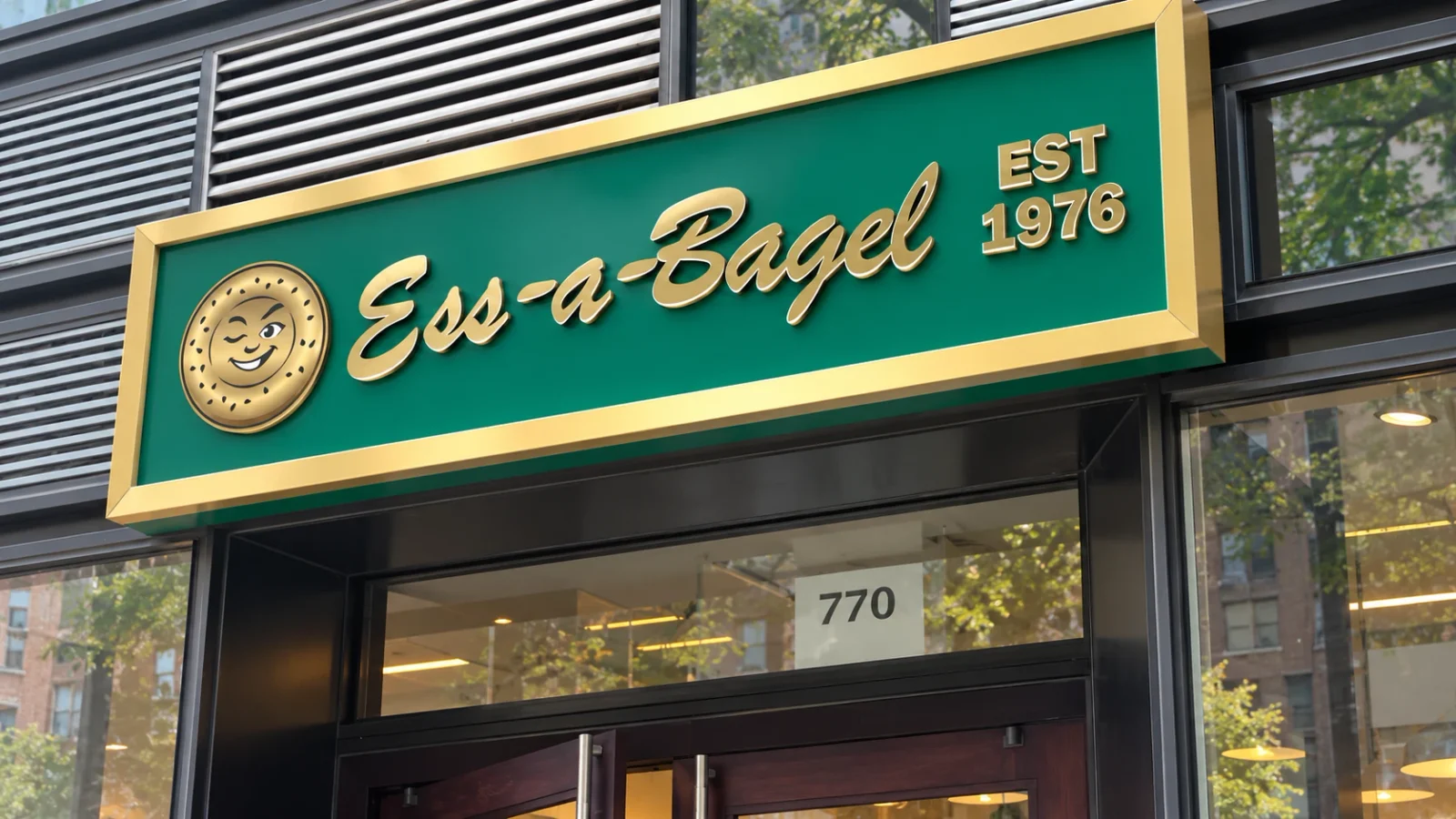
Ess-a-Bagel Third Avenue
Ess-a-Bagel’s Midtown flagship is now at 770 Third Avenue, on the corner of East 47th Street. The family business began in 1976 and expanded to Third Avenue in 1993; this newer home replaces the former 51st Street shop. Make the 770 address your destination when following this guide. A bagel with a simple schmear keeps breakfast focused on the bread and spread. For a fuller order, the Signature Favorite combines Nova salmon with scallion cream cheese, vegetables and capers. Plain, everything and sesame are among the bagel choices, so the bread is a decision alongside the filling. The current branch menu also offers whitefish salad and other fish preparations for visitors who want to explore beyond a standard cream-cheese order. The new room has sage walls, dark cabinetry edged in gold and glass deli counters. Framed photographs and press clippings connect the larger shop to the business’s history, while small café tables offer another way to spend the breakfast stop. Choose counter collection or time at a table according to the morning you have planned. This is a useful Midtown East breakfast before walking to Grand Central. A filled bagel can already be a substantial meal; leave the next food stop optional rather than order breakfast as the first of several compulsory large meals.
Coffee, bagels & baking
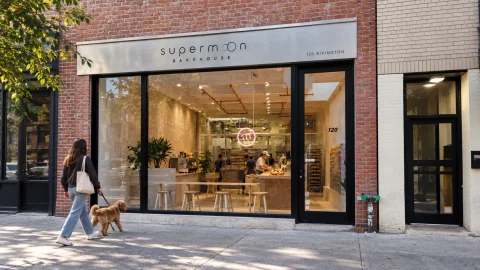
Supermoon Bakehouse
Supermoon is a worthwhile Lower East Side detour for a pastry that can be the point of the stop. The bakehouse hand-rolls its pastries, describes a multi-day croissant process and uses butter from Normandy. That gives the colourful finished pastries a foundation in lamination and time as well as their conspicuous fillings and toppings. Choose from what the counter is serving, with a croissant or filled cruffin offering a useful introduction. A cruffin brings laminated pastry into a muffin-shaped form, leaving room for filling inside and decoration above. The combinations change, so choose the pastry that appeals on the day instead of making an old social-media flavour the only reason to visit. The pink counter and iridescent presentation give the shop its own visual identity. A pastry and drink work as a focused breakfast or afternoon stop, especially when other Lower East Side food businesses are part of the day. One rich filled pastry may be enough alongside an existing lunch plan. Choose Supermoon for imaginative bakery work and a distinctive local setting. It is most useful as a deliberate pastry stop, with availability at the counter shaping the order.
Coffee, bagels & baking
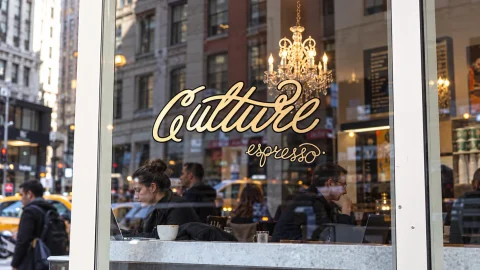
Culture Espresso Bryant Park
Culture Espresso gives a Midtown day a small independent stop with its own identity. The business opened in 2009 and combines coffee with a daily assortment of baked goods and cookies. The West 38th Street branch in this guide sits near Bryant Park, making the location useful without needing a separate cross-city excursion. A coffee and a cookie are enough to make this a deliberate stop. Choose a baked item from what is available rather than turn a café break into another large meal. It works particularly well when the rest of the day already contains a museum, a restaurant lunch or several timed commitments. Keep the branch in mind when following directions: Culture has other Midtown locations, and this entry is for the Bryant Park area. Choose it for a compact coffee-and-baking break during a Midtown walk. The park can provide a separate outdoor pause afterwards if the weather suits.
Coffee, bagels & baking
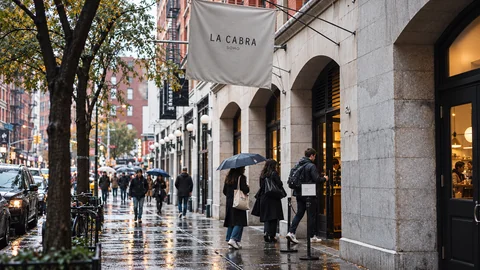
La Cabra SoHo
La Cabra gives coffee a place at the centre of a SoHo morning. The Lafayette Street café is the Danish roaster’s second New York location, with an open bar that makes the preparation part of the room. Its seasonal coffees can be approached through espresso or filter: two useful ways into the same changing selection, depending on whether you want a short, concentrated drink or a cup to spend longer with. The distinction matters when choosing this stop. A familiar milk coffee and a pastry make a straightforward breakfast; a filter coffee gives more of the visit over to the beans themselves. The selection changes, so the coffee’s origin and preparation on the day are more useful than arriving with a fixed order from an old menu. Staff can explain the available options without the visit needing to become a tasting appointment. Pastries give the coffee something substantial alongside it. Croissants sit in the display, while filled and seasonal pastries offer another direction. Their laminated layers and baked edges make a different sort of breakfast from the heavily decorated pastries at Dominique Ansel. Choose from the actual counter rather than expecting every pastry associated with La Cabra’s other locations to be present here. The restrained timber interior is part of the appeal, with a small seating corner and the working bar sharing the space. It suits a coffee-led pause between the streets east of Broadway and the shops deeper into SoHo. It is also a sensible meeting point for people who want different coffee preparations without committing to a full breakfast service. Seating depends on what is free; there are no table reservations. For a quick visit, takeaway keeps the same coffee choice without waiting for a seat.
Coffee, bagels & baking
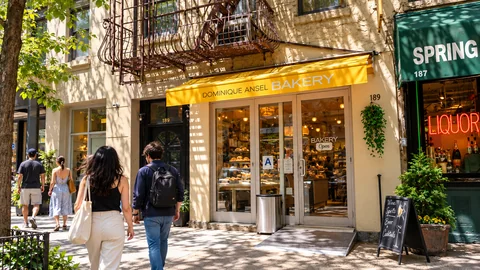
Dominique Ansel Bakery
The Cronut is the reason many visitors find this Spring Street bakery, but the pastry case offers several different reasons to stop. Dominique Ansel’s original New York shop combines a recognisable destination pastry with smaller baked things that make an easier breakfast or afternoon purchase. You can build the visit around a particular creation or simply choose what is available at the counter. The Cronut brings laminated pastry into a ring-shaped, filled creation whose flavour changes each month. That changing filling is part of its identity: a photograph from a previous season is not a reliable guide to the flavour you will buy. If having one is the purpose of the trip, the bakery’s separate preorder system matters more than the ordinary shop hours. It is a pickup order for the Spring Street bakery, with its own release window and quantity rules. The DKA offers a less decorated way to appreciate the baking. Its caramelised outside encloses a light, layered centre, making the contrast between crust and interior the point. Cannelés take that contrast elsewhere, with deeply coloured ridged shells and soft custard interiors. They are different pastries with different textures, rather than substitutes that need to be judged against the Cronut. Larger creations give the bakery a second role for celebrations and shared desserts. The raspberry and pistachio tart is one example from the shop’s range; its whole-tart format calls for a different purchase from choosing a single pastry with coffee. Seasonal availability and the order method determine what can be taken away on a particular day. This is counter service, with outdoor terrace seating when tables are available. There is no reserved table attached to a pastry purchase. That makes the bakery easy to fit into a SoHo walk, but a specific preorder needs its own pickup time. Keep the two plans separate: a casual browse can follow the neighbourhood visit, while a reserved pastry should anchor the arrival.
Coffee, bagels & baking
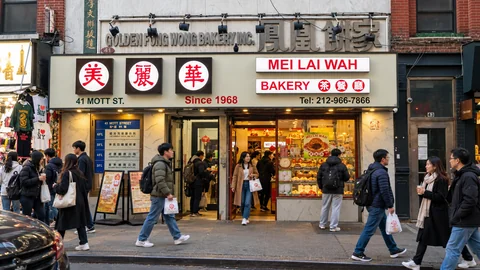
Mei Lai Wah
A pineapple pork bun makes a useful introduction to Mei Lai Wah. The name describes the patterned, sweet crust above the bread: inside is roast pork, rather than pineapple fruit. Breaking it open reveals the contrast that makes this bakery a destination—a crisp, crumbly top over soft bread and a savoury char-siu filling. It is a substantial little purchase, so a bun and tea can be the whole stop. The smooth-topped baked pork bun takes away that extra crust and leaves the bread and filling to carry the order. A steamed pork bun offers another change, with pale, pleated dough instead of the browned bakery shell. Trying two different forms makes more sense than buying several identical buns simply because the queue has made the choice feel urgent. For a shared order, the baked and pineapple versions show the difference clearly. There is more than bread on the menu. Shumai, shrimp dumplings and lotus-leaf rice lead towards a larger snack, while congee gives the visit a breakfast direction. Milk tea fits either order. Those choices make Mei Lai Wah useful at different points in a Chinatown walk: a quick bun to take away, or several small things when everyone wants something different. The address is now 41 Mott Street. Mei Lai Wah’s history reaches back to 1968 and its former Bayard Street shop, but a visit needs to follow the current bakery entrance. The bright name sign and working counter belong to this chapter of the business. Its separate Pell Street wonton bar should not be confused with the bakery when arranging to meet someone or collect food. Nom Wah and the Doyers Street lanes are nearby, so this is easy to combine with a neighbourhood visit without making two full meals of it.
Coffee, bagels & baking
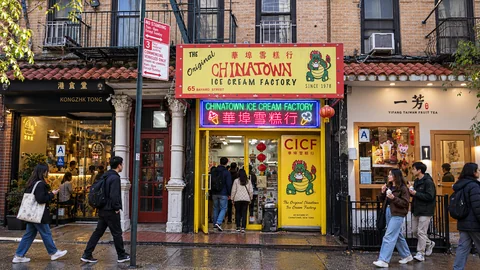
Chinatown Ice Cream Factory
Chinatown Ice Cream Factory gives dessert a clear place in the neighbourhood visit. The Bayard Street shop has been family-run since 1978, and its flavour list makes the reason to stop obvious. Black sesame, pandan, red bean and almond cookie sit comfortably among the choices, giving visitors something different from a standard vanilla-or-chocolate decision. The flavours point towards different kinds of sweetness. Black sesame brings the seed into the ice cream rather than using it only as a topping. Pandan gives another route, while lychee, taro and egg-custard flavours connect the freezer to ingredients found elsewhere in Chinatown. Zen Butter combines peanut butter and toasted sesame. A single scoop can be the whole visit; a combination is useful when two particular flavours are the attraction. The shop’s Regular and Exotic headings have their own joke. Familiar American flavours sit under Exotic, reversing the assumption about which tastes belong at the centre. That makes the handwritten boards part of choosing, rather than just a list to scan for the usual favourite. The available selection still governs the order on the day, especially when a visitor arrives for a particular flavour seen in a photograph. Ice-cream cakes give the business a second role for celebrations, with advance ordering rather than a spontaneous scoop purchase. For an ordinary Chinatown walk, the compact counter is easier to fit in after a meal. Kong Sihk Tong is immediately next door, while Mott Street and Doyers Street are close enough to connect several different stops without treating dessert as another restaurant sitting. The yellow sign and dragon mascot make this original Bayard Street shop easy to recognise when arriving.
Coffee, bagels & baking
Williams Candy
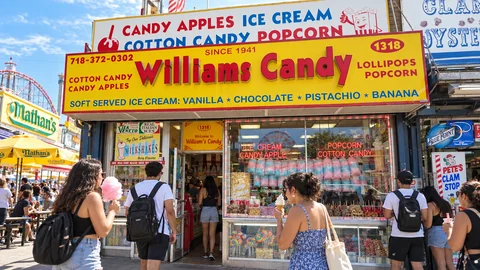
Williams Candy’s window gives away the main attraction before anyone reaches the counter. Apples on wooden sticks line the trays, with bright candy shells, chopped nuts, coconut and sprinkles turning the same fruit into several different treats. Bags of pink-and-blue cotton candy hang above them. It is a compact Surf Avenue shop built around the pleasure of choosing something from the display. The candy apple is the clearest starting point. A red shell makes one version crisp and sweet, while caramel and crushed peanuts add a softer coating and a nutty outer layer. Coconut-covered apples have their own texture. The apple inside matters too: the contrast between fresh fruit and the coating is what separates the treat from a solid piece of confectionery. There are other ways through the case. Caramel marshmallow sticks, fudge, popcorn and cotton candy belong to the same old-fashioned sweet-shop range. Jars of candy and nuts add smaller things to carry away. A single apple is a useful dessert purchase; a selection of different sweets makes more sense for a shared bag or a gift. Williams has been part of Coney Island since 1941. Its yellow sign and striped interior give the business a visual identity beyond the rides and beach. Unlike the outdoor concessions, the shop is known for continuing through the quieter months, though late opening varies with season and events. The entrance is at 1318 Surf Avenue, beside Nathan’s original restaurant and the neighbouring clam counter. The small room is a shop rather than a café with tables, so the visit centres on the case and the counter. Nuts, dairy and other allergens appear throughout the range; the different coatings do not imply separate preparation areas.
Coffee, bagels & baking
Levain Bakery Harlem
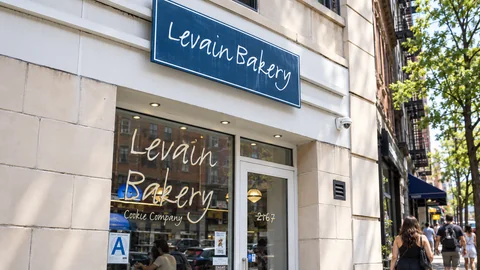
Levain’s Harlem shop is recognisable by its blue sign and the writing across the front window. Inside, stainless-steel counters and racks of baking trays make the production part of the visit. The room has the purpose of a working bakery, with bread and pastries sharing the counter with the cookies that made the name widely known. The chocolate-chip walnut cookie is the clearest introduction. It is a large, irregular mound rather than a thin, evenly spread biscuit, with chocolate and walnuts carried through a substantial dough. Dark chocolate chocolate chip offers a different balance, and dark chocolate peanut butter chip introduces another strong flavour and allergen. The bakery also lists a vegan and gluten-free chocolate-chip walnut version, with the important qualification that products are made in a shared bakery. The Harlem menu extends beyond cookies. Baguettes, sourdough and brioche provide a bread-led purchase, while blueberry muffins, loaf cakes and scones give breakfast another direction. Some buns appear only at weekends and seasonal items change. A visitor can therefore use the shop for a single cookie, a pastry and coffee or bread to carry away, rather than automatically buying a large gift box. Pam Weekes and Connie McDonald began Levain as a bread shop in 1995, with the cookie growing from their baking and athletic lives. The Harlem branch places that bakery identity in a different neighbourhood from the original West 74th Street shop. Ordering for collection should name 2167 Frederick Douglass Boulevard, especially when using a service that lists several New York locations. This is a focused food stop rather than a restaurant meal. The counter, baking racks and trays explain its appeal more clearly than a promise of a long café stay. Its long daily opening window makes it a useful beginning or end to a southern Harlem visit, with the current branch menu supplying the actual day’s choice.
Coffee, bagels & baking
Butler DUMBO
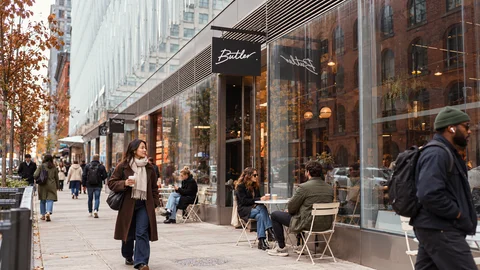
Butler gives DUMBO an early start. The Water Street café opens well before most nearby attractions, with pastries at the counter and a breakfast menu substantial enough to carry a morning on the waterfront. Its glass frontage belongs to a modern building among the neighbourhood’s older warehouses; inside, marble, pale tiles and pink pendant lights soften the exposed services overhead. Pastry chef Ryan Butler brought his second café here after opening in Williamsburg. That background shows in a counter that goes beyond a croissant and a muffin. A kimchi chipa combines tapioca-flour bread with cheese and kimchi, while the miniature sausage roll wraps seasoned heritage pork in puff pastry. Sweet options include a lemon-glazed avocado muffin finished with thyme and a sticky-date muffin made with almond flour, coffee and an apricot-bergamot filling. For a seated breakfast, the brioche sandwich brings together a sunny egg, bacon, cheddar and truffle aioli, with greens alongside. It is a richer order than the granola parfait, whose yogurt, fruit and honey make a lighter alternative. Coffee comes from Intelligentsia, with espresso drinks and filter coffee available separately from the food. Lunch has its own character. The rotisserie-chicken sandwich adds sherry-seared endive, Parmesan, lemon aioli and caperberries to focaccia. Roasted eggplant appears with cabbage, ricotta, cucumber, mint and muhammara, the pepper-and-walnut spread bringing a different flavour to the sandwich. The changing salads give the café another use beyond breakfast without making it an evening restaurant. Water Street puts Butler close to Empire Stores and the northern part of Brooklyn Bridge Park. It works as the first stop before a longer neighbourhood walk, or as an indoor food break between the streets and the waterfront. The café’s full meal service distinguishes this branch from Butler’s North Williamsburg kiosk; pastries, a quick coffee and a sit-down lunch are all plausible visits here.
Coffee, bagels & baking
Lincoln Station
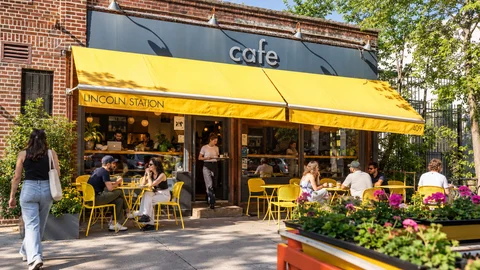
Lincoln Station is a useful place to arrive hungry. Coffee and baking are part of the attraction, but this Lincoln Place café also has the kitchen for a substantial breakfast or lunch. The yellow awning and pavement tables make the entrance easy to recognise; inside, communal timber tables share the room with a counter, shelves of provisions and colourful wall art. It has enough of a neighbourhood life to be a stop in its own right, rather than simply somewhere to wait for the museum to open. Breakfast can be as straightforward as an egg sandwich, or a more substantial combination of mashed avocado and fried eggs on multigrain bread. The bread and filling make that a proper meal rather than a small pastry accompaniment. Yogurt with homemade granola and blueberries offers another direction, while steel-cut oats come with maple syrup, toasted walnuts and sweet cream. Cakes, scones and cookies give the counter a different appeal when the visit is mainly for coffee. Rotisserie chicken carries the lunch menu beyond standard café sandwiches. The chicken sandwich uses ciabatta, with mayonnaise, parsley, capers, red onion and garlic bringing richness and a sharper edge to the filling. Broccoli and ricotta provide a meat-free alternative, with pickled raisins and pine nuts making it more individual than a generic vegetable sandwich. The ricotta and chicken sandwiches give the lunch menu two quite different centres. A kale salad or soup makes a smaller order possible. The kale bowl pairs chopped leaves with red onion and grated cheese; it belongs alongside the sandwiches without needing to become a side for everyone at the table. Draft beer and wine also make an early evening visit plausible. The café’s identity stretches across coffee, meals and drinks, although the counter and online menus change with the time of day. The original branch stands just south of Brooklyn Museum, on the cultural edge shared by Crown Heights and Prospect Heights. Brooklyn Botanic Garden is another natural neighbour, with its Washington Avenue approach to the east. A café meal here can sit before or after either visit without moving the outing into a different part of Brooklyn. Lincoln Station now also has a Seventh Avenue branch; the Lincoln Place room has its own pickup address.
Coffee, bagels & baking
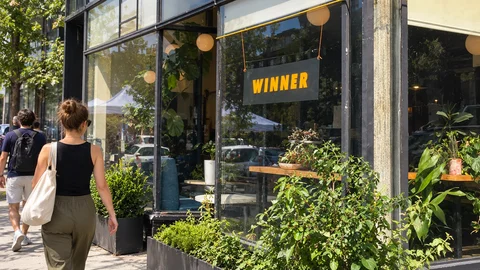
WINNER Bakery
WINNER Bakery changes with the oven’s schedule. Morning pastry, lunchtime sandwiches and later takeaway dinners all come from the Seventh Avenue shop, with bread arriving in stages rather than one complete display at opening. The yellow WINNER lettering in the window marks the Park Slope bakery. It is a takeaway address with limited outdoor seating, so the food can become part of a neighbourhood walk or a meal to carry home. Sourdough is central to the bakery’s identity. The daily loaf and ciabatta arrive in the morning; focaccia follows around midday, with sourdough baguettes later. Different shapes have different uses: a loaf to share across meals, a baguette for a smaller purchase, or a slice of focaccia eaten on the move. Their release times explain why the counter can look different from one visit to the next. A late arrival does not guarantee the same bread selection as an early one. Pastry gives the morning its own range. Sourdough croissants and chocolate croissants sit alongside cinnamon rolls and monkey bread, whose croissant dough is folded with cinnamon and sugar and finished with buttermilk glaze. A vegan lemon-polenta loaf offers another sweet choice. Coffee comes from Café Integral, with tea from In Pursuit of Tea. For a savoury breakfast, the house English muffin holds soft scrambled eggs and white cheddar, with ham available as an addition. Sandwiches make the bakery useful beyond a pastry stop. Chicken salad combines pulled rotisserie chicken, herbs, celery, Duke’s mayonnaise and wholegrain mustard on ciabatta. Ham and cheese uses jambon de Paris, cheddar, mustard and butter in a baguette. The vegan bánh mì has its own substantial filling: mushroom pâté, pickled carrot and daikon, cucumber, jalapeño, cilantro, fried onion and spicy mayonnaise. It is a separate sandwich with a distinct flavour, rather than a dairy-free version of the chicken order. The dinner counter brings rotisserie chicken by the half or whole bird, using Hudson Valley Fresh pasture-raised heirloom chickens. Chicken-fat potatoes add a rich side, with garlic, thyme and salt; a vegan preparation is available on request. The dinner menu follows the bakery’s takeaway format. A chicken and sides can serve a different purpose from the individual sandwiches earlier in the day. Seventh Avenue puts the shop among Park Slope’s everyday businesses, with Prospect Park reached uphill to the east. Limited outdoor seats are first available, and a takeaway order remains the dependable format. WINNER’s other venues have different menus and arrangements; Runner Up’s reserved supper is a separate experience from this bakery.
Explore New York on the map
16 places to visit. Select a pin for details and add your favourites to your itinerary.
04 / In pictures
The whole guide, in pictures.
82 images from the places in the guide, full screen. Choose any one to open the viewer.
04 / Keep planning