Oharaimachi & Okage Yokocho
Try soft Ise udon, bonito tekone sushi and Akafuku mochi in the pilgrimage-town streets beside Naiku.
01 / The experience
Ise udon, bonito tekone sushi and Akafuku mochi beside Naiku
Pair Naiku with Ise udon, bonito tekone sushi and Akafuku mochi in the adjoining pilgrimage-town streets.
Ise udon gives lunch here a clear local starting point. The thick, soft noodles are mixed with a little concentrated sauce made with tamari and dashi, rather than sitting in a deep bowl of soup. It is quite a change from Nagoya's firm miso-nikomi udon. A plain serving puts the noodle texture first, while toppings such as egg, tororo or prawn tempura make a fuller meal.
For fish and rice, tekone sushi is the other obvious choice. Thick slices of bonito are marinated in a sweet-savoury soy seasoning and served over vinegared rice. The dish is associated with the fishing communities of the Ise-Shima region. Around the food precinct, versions use locally grown Koshihikari, with larger sets adding other dishes. It is a good alternative if you would rather make lunch a seated rice meal and leave the smaller snacks for afterwards.
Akafuku mochi supplies a particular sweet to finish with. Smooth red-bean paste covers the rice cakes, its three ridges representing the flow of the Isuzu River and the mochi standing for pebbles beneath. That turns a feature of the nearby landscape into part of the confection. A small serving during the outing and a box to take away have different roles; one belongs to lunch, the other to what you want to bring back from Ise.
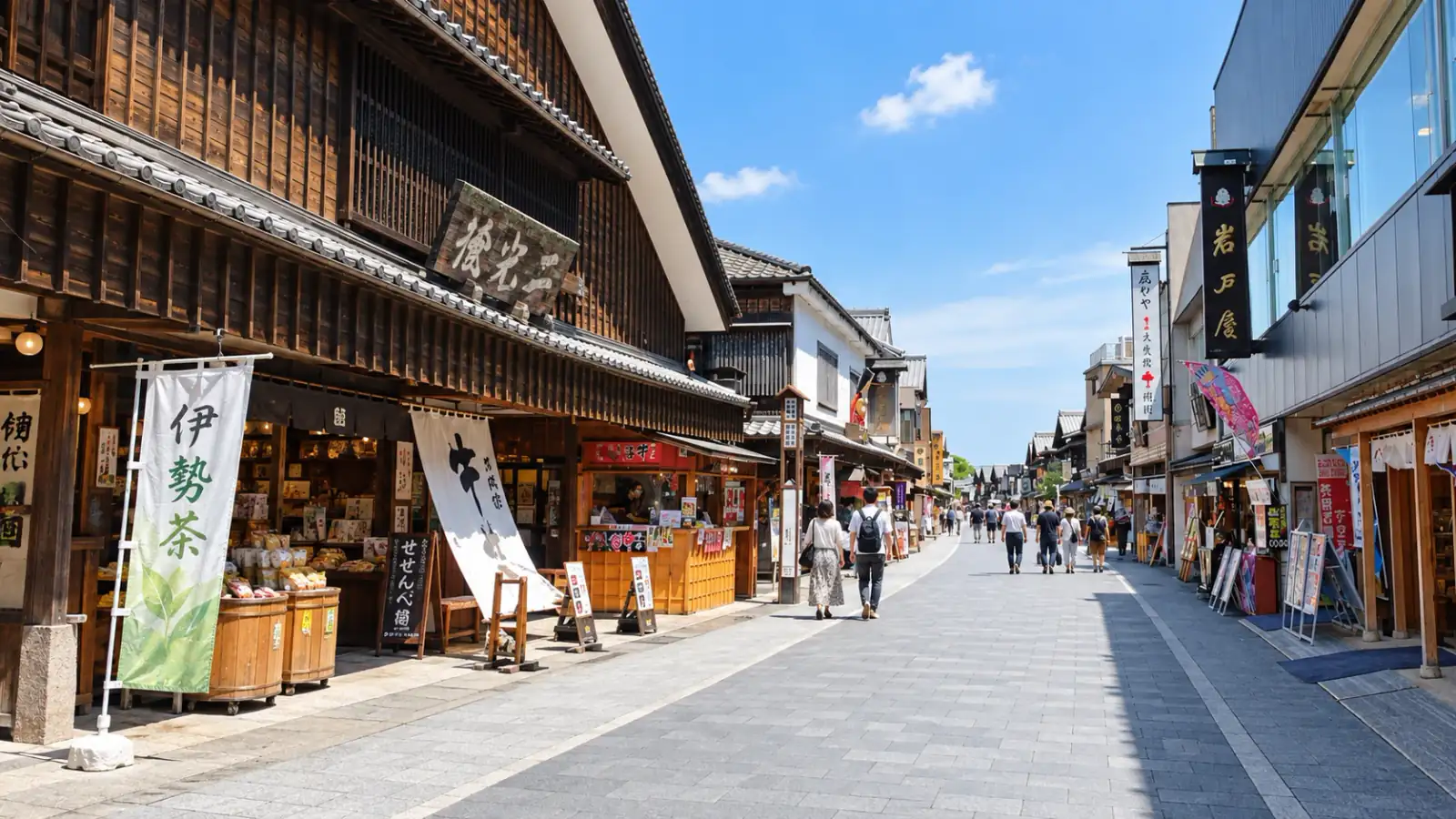
The two neighbouring areas have slightly different settings. Oharaimachi is the approach street outside Naiku, running beside the Isuzu River. Okage Yokocho branches into a precinct of shops and eating places, with recreated and relocated buildings evoking the Ise routes of the Edo and Meiji periods. The result is a food-and-browsing outing connected with the shrine approach, rather than one restaurant or a single indoor market.
After the wooded paths of Naiku, that change of scene is part of the pleasure. You can give the shrine the first part of the day and make the streets a proper lunch stop, with noodles or fish followed by a sweet. They can also be the focus for someone more interested in regional food and shopfronts than a longer shrine visit.
For a day from Nagoya, one substantial lunch and a smaller extra make a useful starting plan. It leaves room to enjoy the buildings and browse between meals without turning every counter into another order. The local dishes are the strongest reason to spend time here: soft udon, marinated bonito and the river-shaped mochi each add something distinctly Ise to the holiday.
Highlights
- 01
Free streets; meals extra
- 02
Allow 90 minutes–2 hours for lunch and browsing
- 03
Daytime kitchens; separate wheelchair-loan arrangements at Naiku
04 / Before you go
Plan your visit
Admission & cost
Free streets; meals extra
No precinct entrance fee. Allow roughly ≈ JPY 2,250 per adult for a casual lunch and snacks as an editable spending estimate; premium meals cost more.
When to visit
Current April precinct hours: 09:30–17:30 weekdays, to 18:00 on weekends and holidays. Individual shops, kitchens and last orders vary.
Allow 90 minutes–2 hours for lunch and browsing
Pair with Naiku on a free day. Food shops close earlier than the shrine; leave the local-bus and return-train margin outside your lunch window.
Arrival & access
Combine with Naiku on foot. From Isuzugawa use a suitable bus towards the Naiku area; confirm the stop against the operator’s map. The pin identifies the Okage Yokocho address, so use Naiku’s visitor directions separately for the shrine.
52 Ujinakanokiri-cho, Ise, Mie
Plan your visit
No district reservation. Restaurants have their own queues, kitchen hours and dietary arrangements. Tekone sushi usually contains raw fish; udon stock may contain fish. Akafuku boxes have a short shelf life shown on the printed expiry date. Any bookable experience is separate; no April 2027 performance is promised.
Location & nearby places
Continue exploring / Japan
More to explore
in Japan
Find another place for your itinerary, or explore all things to do in Japan.
 Adventure & active daysBicycle Journey Ise-Shima cyclingExplore experience →
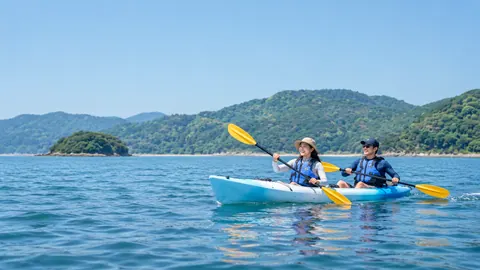 Sea & river experiencesOUTISE sea kayakingExplore experience →
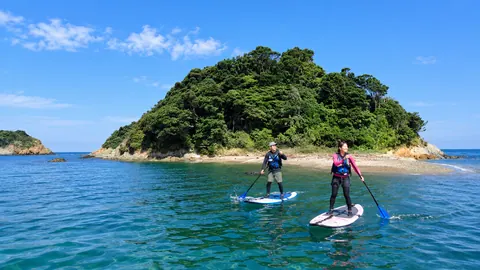 Sea & river experiencesOUTISE stand-up paddleboardingExplore experience →
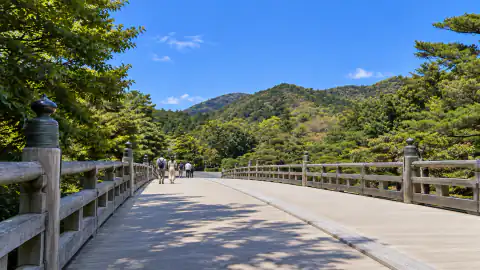 Landmarks & gardensIse Jingu NaikuExplore experience →
Good to know
Oharaimachi & Okage Yokocho: frequently asked questions
Are Oharaimachi and Okage Yokocho two separate Ise food areas?
Oharaimachi and Okage Yokocho sit beside each other on the same outing. Oharaimachi is the approach street outside Naiku; Okage Yokocho is the adjoining area of food shops, restaurants and recreated or relocated buildings.
How is Ise udon different from a usual bowl of udon soup?
Ise udon has thick, soft noodles with a little concentrated sauce, not a large bowl of soup. They feel very different from Nagoya’s firm miso-nikomi noodles. Fish stock can be used even in a plain-looking serving.
What fish is used in Ise’s tekone sushi?
Ise tekone sushi usually uses marinated bonito over seasoned sushi rice. The fish is normally raw, and menus offer different portions and larger sets.
How much should I budget for lunch and snacks near Naiku?
Near Ise Jingu’s Naiku, allow ≈ JPY 2,250 per adult for a casual lunch and snacks. A simple noodle bowl costs less than a fuller fish-and-rice set; drinks and extras add to the bill.
Is Okage Yokocho an original Edo-period street?
Okage Yokocho opened in 1993, bringing together reproductions and relocated buildings inspired by Ise’s Edo- and Meiji-period streets.
Do Okage Yokocho and Naiku share the same wheelchair-loan service?
Okage Yokocho and Ise Jingu’s Naiku run separate wheelchair-loan services. Arrange each loan with the relevant visitor-information team, including where you can use it and whether you need to change equipment between the precinct and shrine.