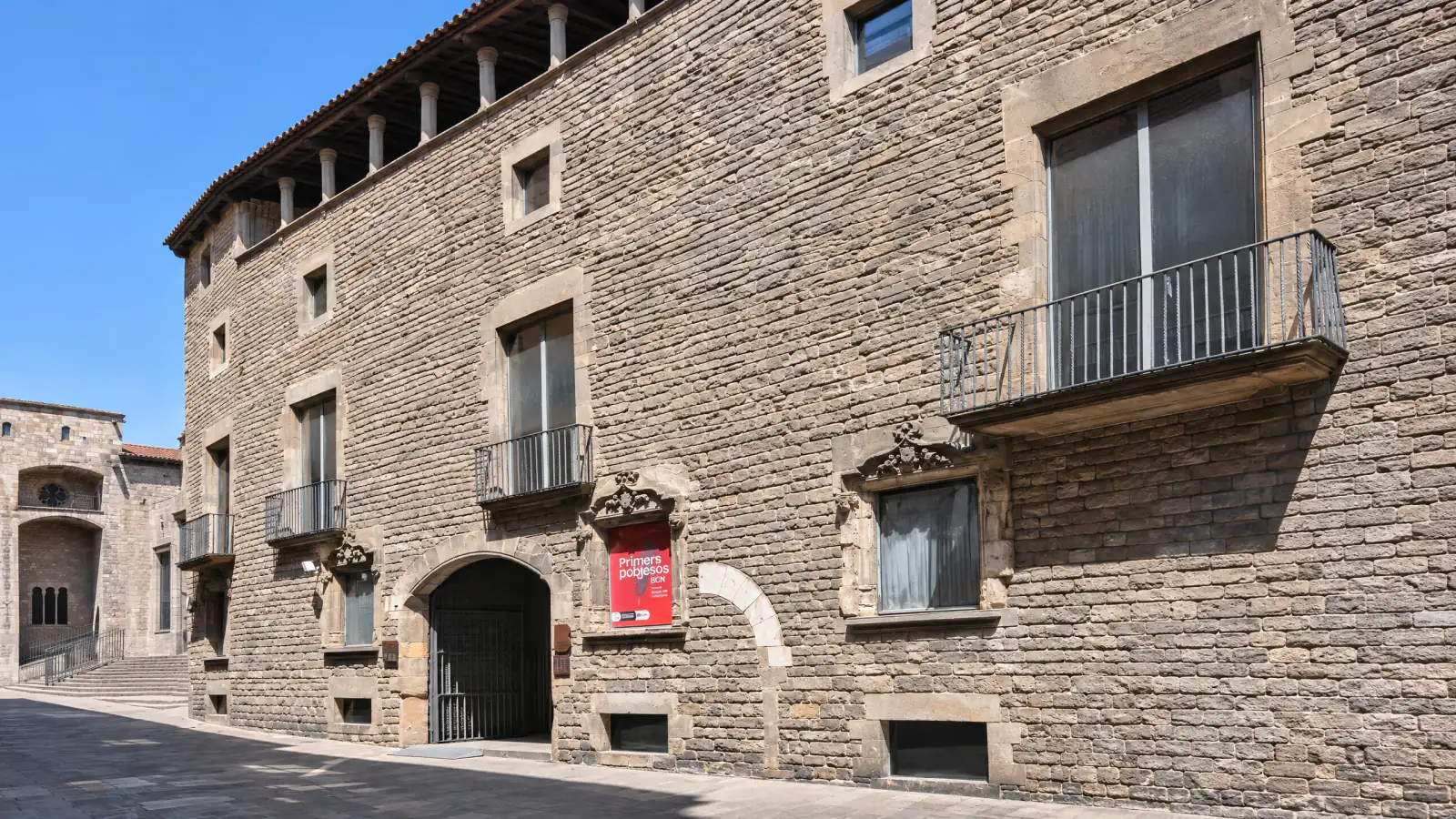
MUHBA Plaça del Rei
Walk above Roman Barcino’s buried streets and workshops, then see the medieval royal buildings above them.
01 / The experience
MUHBA Plaça del Rei
The descent from Casa Padellàs takes you into a different Barcelona. Above are the Gothic buildings of Plaça del Rei. Beneath them, the visitor walkways cross surviving walls, drains and workshops from Barcino, the Roman settlement that became Barcelona. Much of what you see belonged to a working quarter close to the city wall. The remains are low, and at first the spaces look similar. The plans beside the walkways help you connect one room to the next and see where a street once ran between them.
Trades beneath the Gothic Quarter
Look first for the traces of ordinary trades. The laundry and dye works are a reminder that this part of Barcino was a place to process cloth. Troughs and drains are the surviving clues. The fish-processing area tells a different story. Its tanks were used to salt fish and make garum, the fermented sauce used across the Roman world. Farther along, the remains of a winery include spaces for processing grapes and storing wine in large vessels. Seeing both businesses in place gives a better idea of daily life in an ancient city than a case of objects alone.
From Rome to the early Christian city
The later ruins show what happened as the city changed. The early Christian complex included a baptistery and buildings connected with the bishop. Look for the change in building layouts and the traces of patterned floors. The walkway brings some of these layers close together. It helps to pause at the site plans, especially when a later wall crosses one that belonged to the Roman trades.
The palace and chapel above
Back above ground, Plaça del Rei still has another part of the story. The repeated arches of the Saló del Tinell span the medieval royal hall. In the chapel of Santa Àgata, the painted altarpiece by Jaume Huguet gives you a much closer view of the craftsmanship at the royal complex. Take a minute outside for the broad steps and the tower above the square. The museum visit starts in Casa Padellàs, which was moved here from Carrer dels Mercaders. Work on the new site helped uncover the archaeological remains below.
For a short visit, spend most of your time underground. With more time, include the royal rooms and use the ticket’s wider MUHBA access for a separate visit to another site. Where another site has a reservation requirement, it still applies. The Temple of Augustus columns are nearby in a separate courtyard on Carrer del Paradís. They put a piece of civic Barcino alongside the working streets and rooms you have just seen at Plaça del Rei.
04 / Before you go
Plan your visit
Admission
- General admission
- €7.30 per person.
- Reduced admission
- €5.20 per eligible visitor. Under-16s enter free.
Opening hours
Tuesday to Saturday 10:00–19:00. Sundays and public holidays 10:00–20:00. Last entry 45 minutes before closing. Closed Mondays except public holidays, plus 1 January, 1 May, 24 June and 25 December.
See opening hoursGetting there
Plaça del Rei, Casa Padellàs
Enter the museum at Casa Padellàs on Plaça del Rei, at the Carrer del Veguer corner. The square is a short walk from Jaume I metro.
Tickets and entry
The Plaça del Rei admission ticket includes other MUHBA sites and is valid for six months. Sites that require a separate reservation, including Refugi 307, still need one.
The first Sunday of the month is free. Other Sundays are free from 15:00. Paid tickets are non-refundable except in documented cases of force majeure.
Location & nearby places
Continue exploring / Barcelona
More to explore
in Barcelona
Find another place for your itinerary, or explore all things to do in Barcelona.
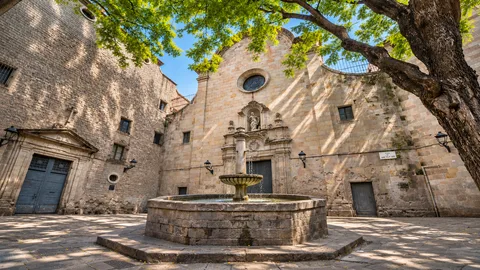 Gothic Quarter And HistoryPlaça de Sant Felip NeriExplore experience →
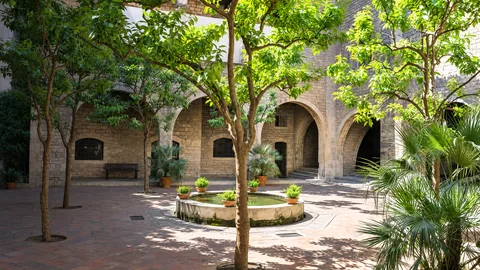 Museums Art And ArchitectureMuseu Frederic MarèsExplore experience →
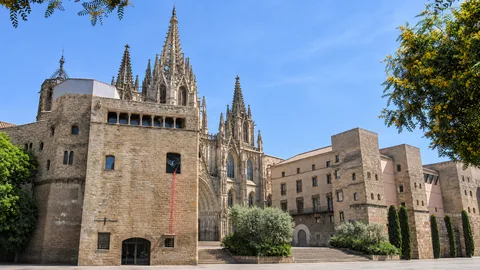 Museums Art And ArchitectureMuseu Diocesà de BarcelonaExplore experience →
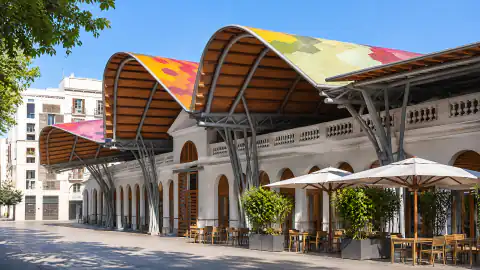 Food marketsMercat de Santa CaterinaExplore experience →