Montjuïc Castle
Cross Montjuïc Castle’s moat, explore the parade ground and climb to the terrace for views across Barcelona and its port.
01 / The experience
Montjuïc Castle
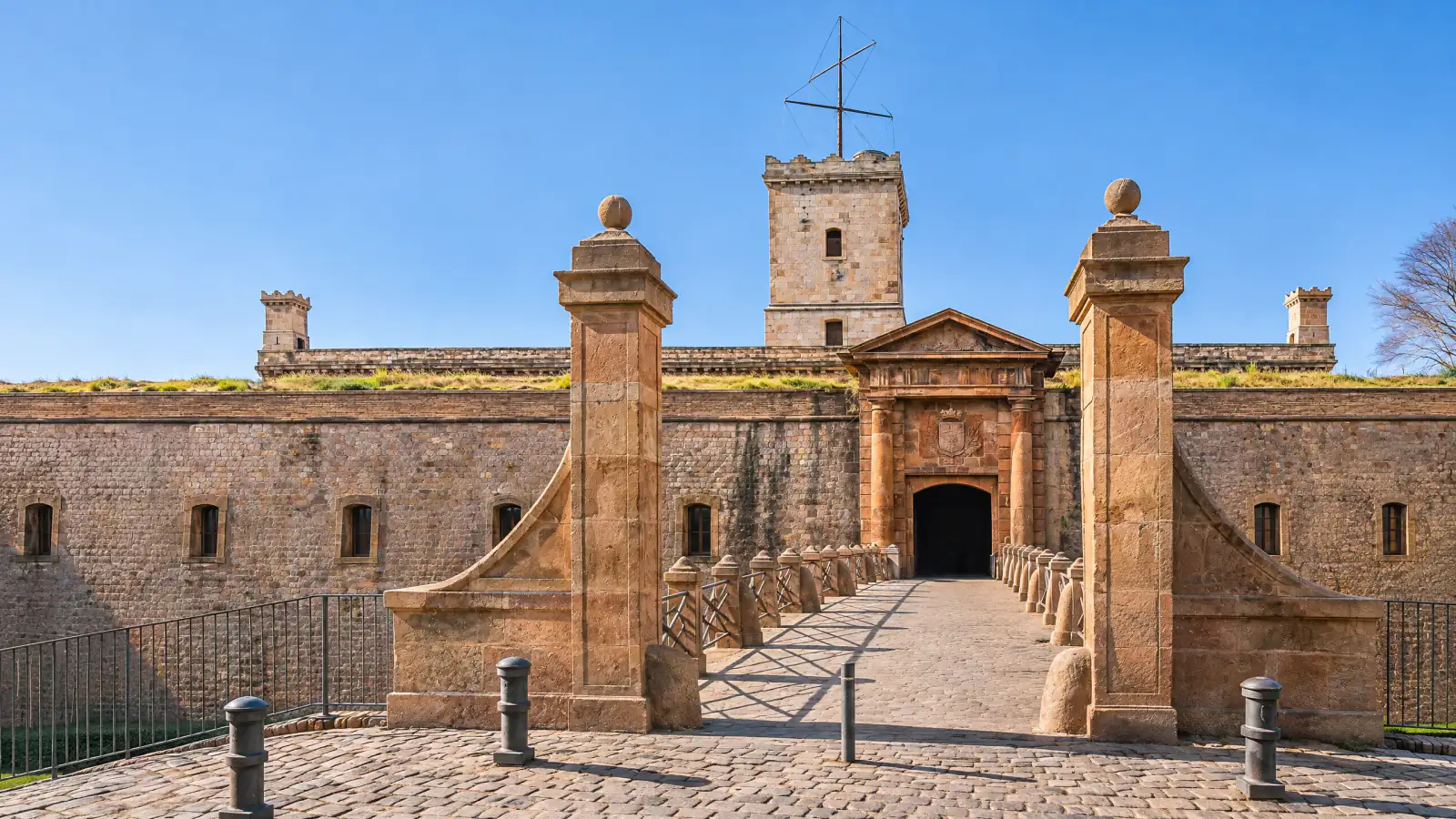
From the stone bridge into Montjuïc Castle, look down into the moat. Beds of clipped planting sit below the bridge arches, backed by stone and long stretches of ivy. The fortress was shaped around the slope of Montjuïc. Its outline is clearer from the bridge and the outside paths, where you can see the walls turn out into bastions and back across the moat.
Why the walls take this shape
A small fort was built around an earlier watchtower in 1640 during the Catalan Revolt. The structure you see on the hill largely dates from an eighteenth-century rebuilding planned by Juan Martín Cermeño. The engineer kept elements of the earlier castle and laid out four bastions across an uneven, roughly trapezoidal site. The hornwork and ravelin, both outworks beyond the main wall, help explain why there is so much masonry outside the central enclosure. The vaulted passage through the hornwork gives a ground-level sense of how these structures fit together. The old covered way follows the outside of the moat and now serves as a promenade.
The parade ground and the castle’s history
The parade ground opens up behind the gateway. Its cobbles run between low arcades and the rooms built into the perimeter. Walking under the arcade lets you see how little the building gives away from the outside. The Visitor Centre and the castle’s exhibitions give the fortress’s history a human scale. As well as defending the approaches to Barcelona, it was used to bombard the city and later as a prison. Lluís Companys, president of the Generalitat of Catalonia, was executed at the castle in 1940. That history gives the enclosed spaces a very different character from the open hill outside.
From the terrace to the working port
On the upper terrace the view swings from the city to the sea. The city side looks back across Barcelona and towards the hills beyond. From the seaward wall, look down to the basins, breakwater and working container terminals of the Port of Barcelona. The changes in view explain why this summit mattered to people watching the approaches from the Mediterranean. The terrace is reached by stairs, and the broad parade ground and exhibition rooms make up the lower-level visit.
Choose how to visit
The English guided tour adds an hour of architectural and historical context. If the main attraction is the view, the self-guided ticket gives you time to visit the terrace before the exhibition rooms. The Montjuïc Cable Car arrives near the bridge, and the hill’s gardens begin below the fortress. The nearby Botanical Garden has a different view of the same hillside, with planting arranged by climate along its sloping paths.
04 / Before you go
Plan your visit
Admission
- General admission
- €12 per adult.
- Reduced admission
- €8 per eligible visitor.
- Visitors under 16
- Free.
- English guided visit with general admission
- €16 per adult.
- Admission on Sundays
- Free from 15:00 and all day on the first Sunday of each month.
- English guided visit on free-access days
- €4 per person.
Opening hours
Daily 10:00–20:00 March–October and 10:00–18:00 November–February. Closed 25 December and 1 January. Castle admissions and exhibitions close 30 minutes before the site.
See opening hoursGetting there
Carretera de Montjuïc, 66, 08038 Barcelona
Take bus 150 from Avinguda de la Reina Maria Cristina by Plaça d’Espanya to its Castell de Montjuïc terminus. From Paral·lel (L2 or L3), take the funicular to Parc de Montjuïc, then the Montjuïc Cable Car to Castell or follow the uphill path for 20–25 minutes. Cross the stone bridge to the entrance.
The bridge and lower visitor areas are accessible. The paving is uneven, and stairs lead to the upper terrace. The castle has accessible toilets.
Tickets and entry
General admission includes the permanent and temporary exhibitions. The box office closes 30 minutes before the site closes. Tickets are nonrefundable except for duly justified force majeure.
The English guided tour runs at 13:00 on weekends and public holidays. Use the separate English tour booking link for free-access days.
Montjuïc Cable Car fares are separate from castle admission.
Location & nearby places
Continue exploring / Barcelona
More to explore
in Barcelona
Find another place for your itinerary, or explore all things to do in Barcelona.
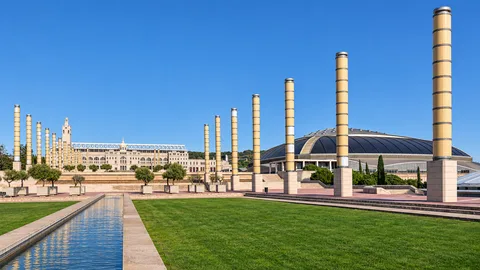 Race And CircuitHistoric Montjuïc street circuit walkExplore experience →
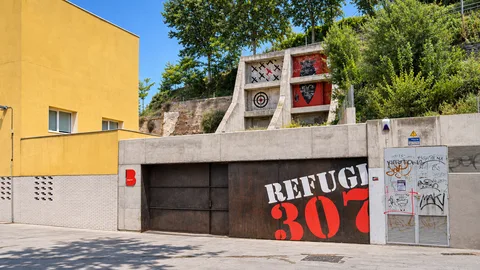 Gothic Quarter And HistoryRefugi 307Explore experience →
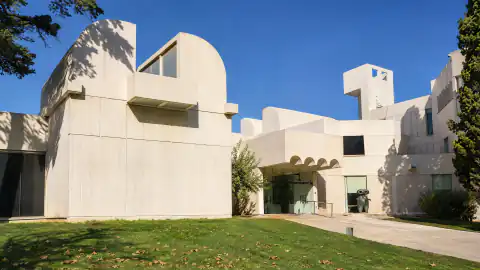 Museums Art And ArchitectureFundació Joan MiróExplore experience →
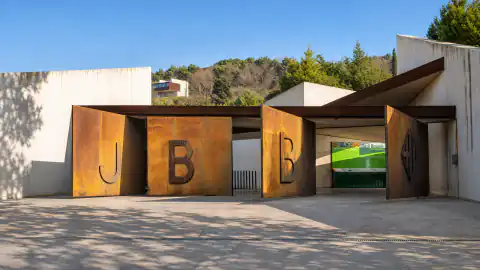 Beaches And MontjuicJardí Botànic de BarcelonaExplore experience →
Good to know
Montjuïc Castle: frequently asked questions
Is there step-free access to the upper terrace at Montjuïc Castle?
Stairs lead to the upper terrace of Montjuïc Castle in Barcelona. The main visitor areas below are accessible, with uneven historic paving in parts.
Does the Montjuïc Cable Car ticket cover entry to Montjuïc Castle?
Montjuïc Castle in Barcelona has a separate admission ticket. The Montjuïc Cable Car drops visitors at Castell station near the castle bridge.
When are English-language tours available at Montjuïc Castle?
Montjuïc Castle offers a public English-language tour at 13:00 on weekends and public holidays. On days when castle admission is free, the tour still requires its own ticket.