Graz Museum Schlossberg
Fortress history, a city panorama and a multimedia model inside the hill.
01 / The experience
Inside the hill’s fortress story
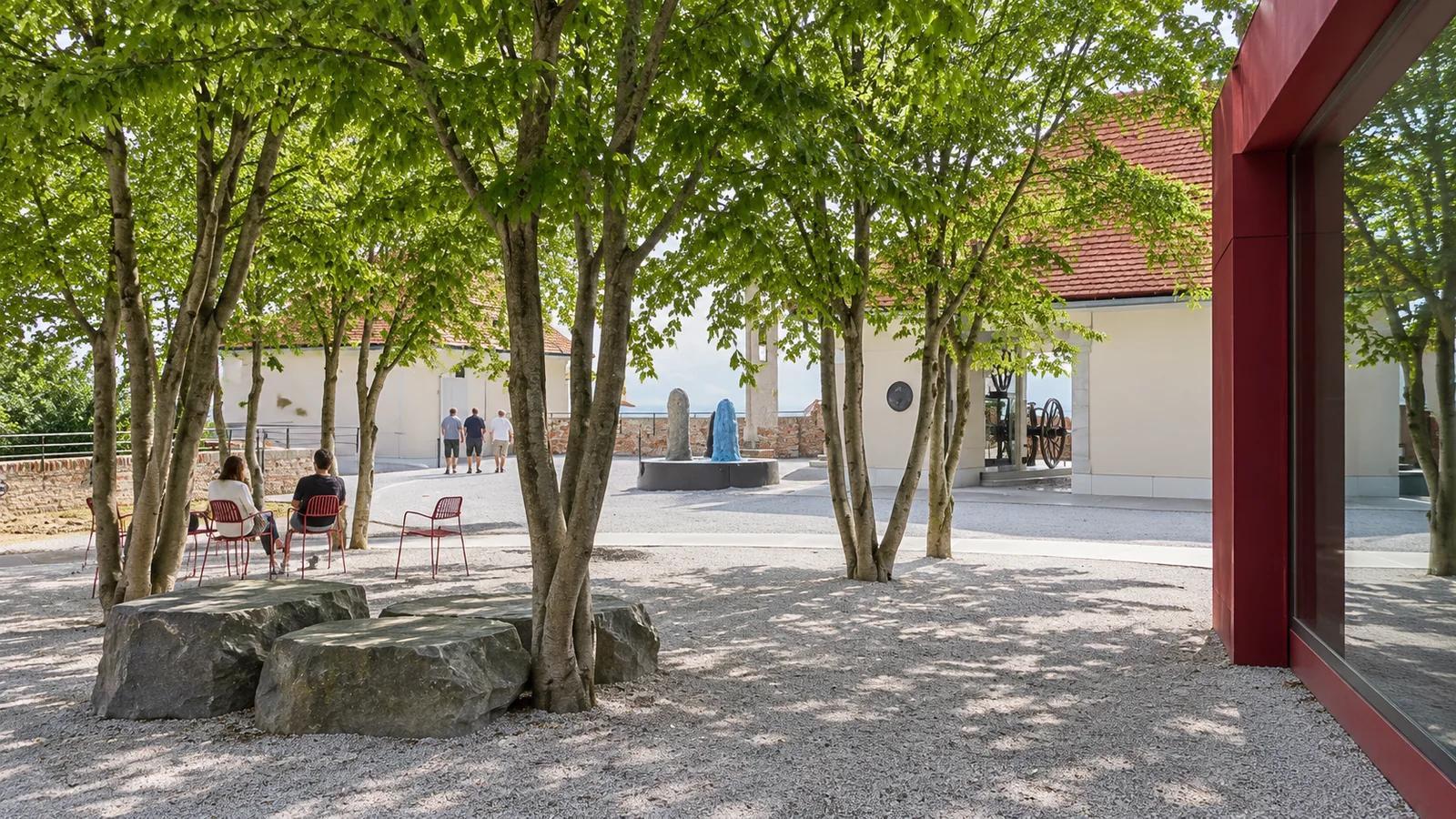
Graz Museum Schlossberg begins with an open courtyard among the hill’s former fortress buildings. Hornbeam trees, seating and the old fortress buildings create a place to arrive on the hill. The Wundergarten introduces the Schlossberg through creatures from local stories: the panther, stone dog, elephant and lion. For children, they offer a playful way into a place whose walls and monuments might otherwise need more explanation.
The setting is the former Stall- or Kanonenbastei, part of the hill’s defences. The museum’s architecture brings the historic site into a contemporary visitor experience, with pale surfaces, glazing and a courtyard designed to invite people in. You can see the change of use in the building itself: an enclosed military position has become a place for looking out, gathering and learning about the city.
The Kanonenhalle makes that relationship especially clear. Its panorama over Graz is paired with an interactive screen that lets you move between historic views of the city. The real skyline outside and its earlier forms become part of the same visit. The display connects the skyline with the cityscape’s earlier forms, making buildings in the real panorama part of the historical account.
The Geschichts-Parcours places the hill’s monuments within their historical context. Buildings and objects you may have passed outside return in the exhibition, connected to the Schlossberg’s life as a seat of authority, a fortress, a landscape garden and a place of recreation. Napoleon’s siege and the later transformation of the hill are part of that larger story, giving familiar landmarks a role beyond their appearance.
Below the bastion, the casemate contains a transparent multimedia model of the mountain. An audiovisual presentation reveals the interior, including the well and the extensive tunnel system. It is an effective change of scale: after looking across the city and walking the hilltop, you encounter the spaces hidden inside the rock. The illuminated model reveals relationships that remain hidden from the hilltop paths.
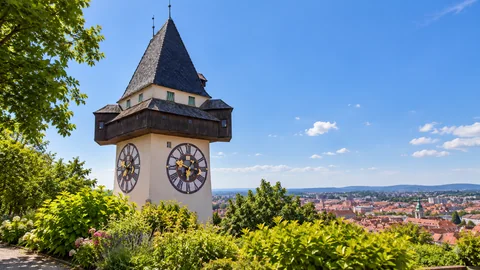
The interpretation also works through touch and sound. A lift reaches the casemate; tactile interpretation includes a panorama, and audio material is offered in German, English, easy language and audio-described versions. The result gives the visit several ways to work, whether your interest is the view, the fortress, the stories or the architecture. The museum and the outdoor Clock Tower make complementary stops, each with its own focus.
04 / Before you go
Plan your visit
Admission & visit options
Indicative adult admission €6, reduced €4; under 19 free. Combined city/Schlossberg museum ticket €9.
When to visit
Daily 10:00–18:00; last admission 17:45. Wundergarten is generally accessible 08:00–20:00.
Allow 1–1½ hours.
Getting there
Schloßberg 5a, 8010 Graz
Schloßberg 5a, reached via the hill paths, Schlossbergbahn or lift.
Plan your visit
Museum admission is available individually or as a combined ticket for both Graz Museums. Guided visits and workshops cost extra and require advance arrangements.
Accessibility
The museum describes all areas as accessibly connected, including a lift to the casemate, tactile panorama and audio-described interpretation.
Location & nearby places
Continue exploring / Austrian Grand Prix
More to explore
in Austrian Grand Prix
Find another place for your itinerary, or explore all things to do in Austrian Grand Prix.
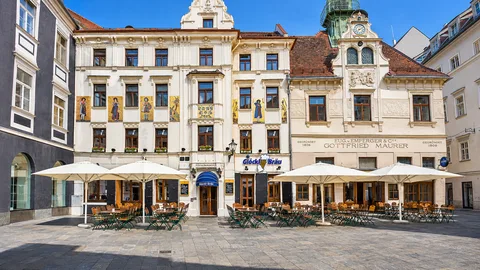 Cafés & casual diningGlöckl BräuExplore experience →
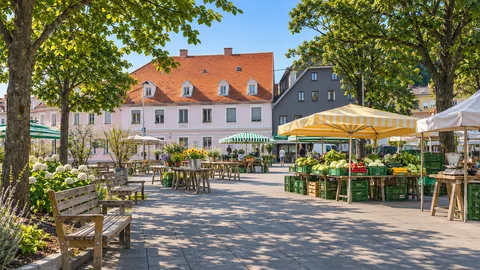 Markets And ShoppingLendplatz Farmers’ MarketExplore experience →
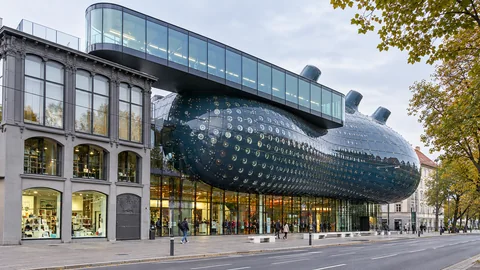 Museums & heritageKunsthaus GrazExplore experience →
 Lakes, gardens & viewpointsSchlossberg & Graz Clock TowerExplore experience →
Good to know
Graz Museum Schlossberg: frequently asked questions
Is Graz Museum Schlossberg the museum on Sackstraße?
Graz Museum Schlossberg is at Schloßberg 5a on the hilltop. The city museum at Sackstraße 18 is a separate site; a combined ticket is available.