Opéra
Grand avenues, Palais Garnier and classic café rooms around one of Paris’s great public squares.
01 / The experience
A monumental theatre and the streets around it.
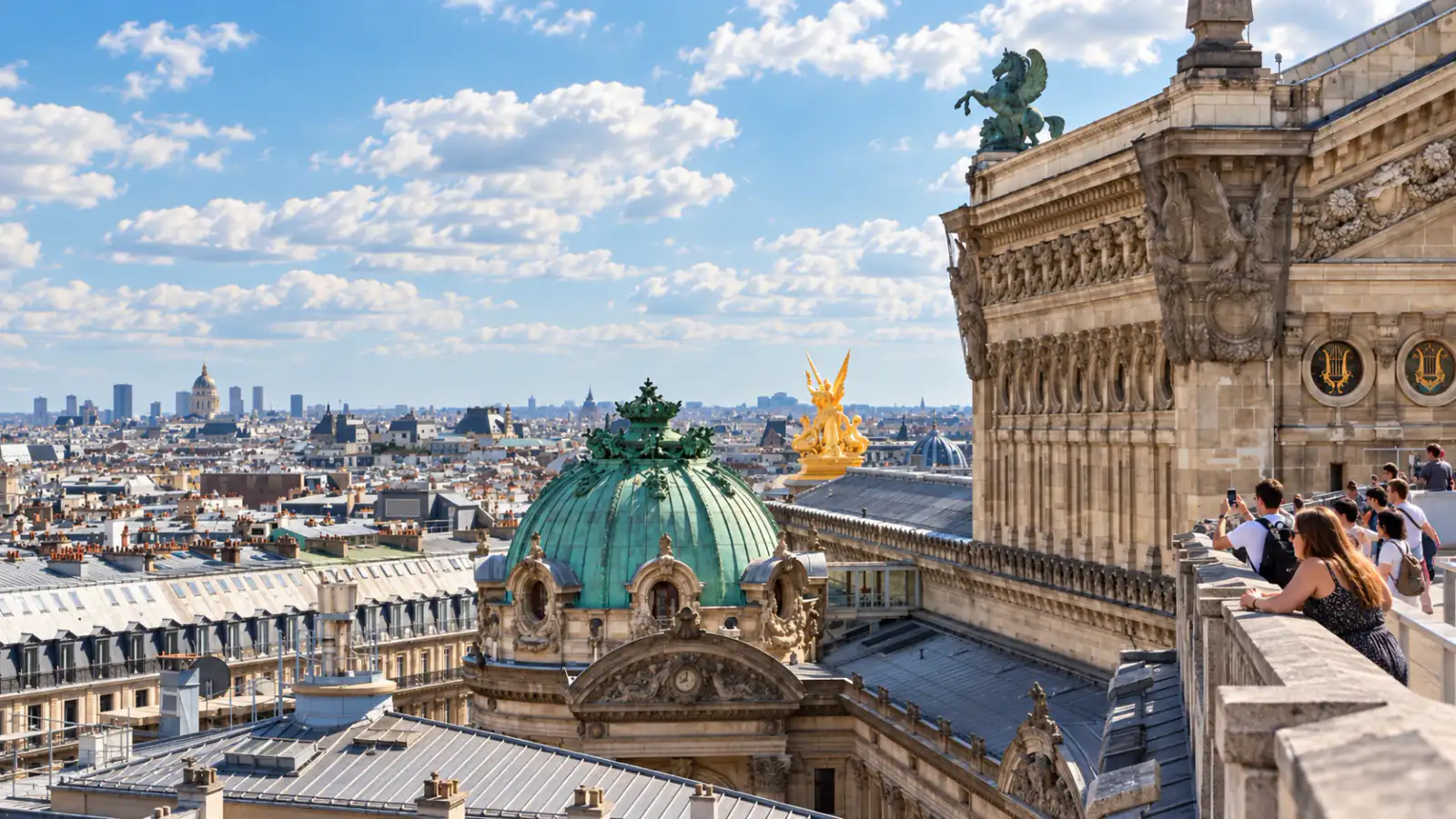
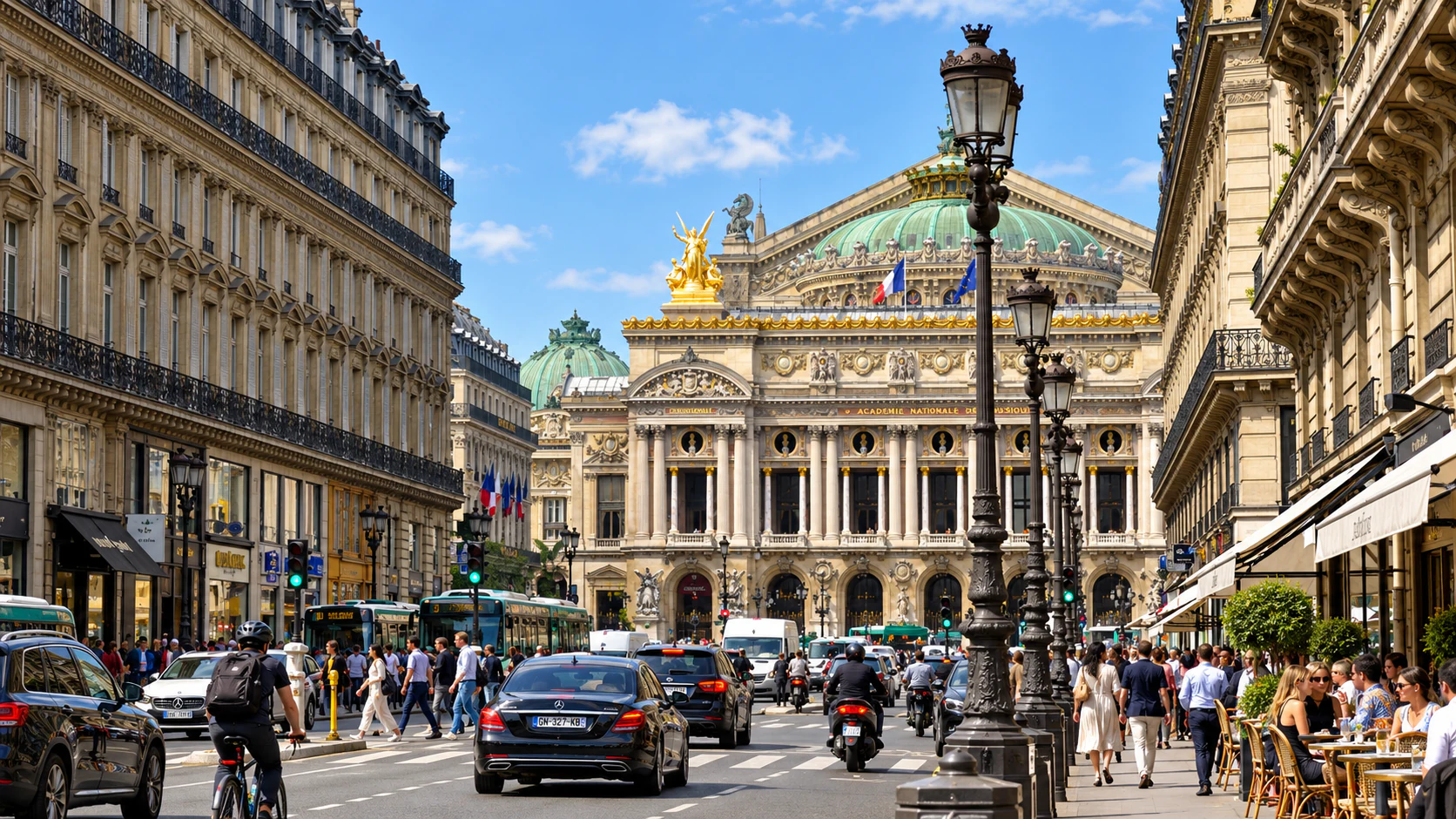
Palais Garnier gives the Opéra district a remarkably clear centre. Its sculpted façade faces a broad square, with streets and avenues opening away from the building. The setting allows the theatre to be seen as a public monument before any visit to its interiors, while the surrounding shops, offices and cafés keep the area in everyday use.
Palais Garnier and its surrounding streets
The building opened in 1875, designed by Charles Garnier within the nineteenth-century transformation of Paris. Its exterior announces a culture of public display: sculpture, varied architectural forms and the scale of the entrance all contribute to the approach. The square gives enough distance to read the whole façade, while a closer walk reveals the detail that a distant view compresses.
The surrounding Haussmannian streets give the theatre a wider architectural context. Recognisable blocks, repeated windows and long views along the boulevards make the neighbourhood feel planned at a large scale. At pavement level, shopfronts and cafés break that order into individual addresses. Garnier's marble columns, gilding and sculptural frontage stand out against those repeated street walls, while the broad approaches allow the theatre to remain visible as the visitor moves away from the square. The district's shopping and architectural identities are therefore closely connected.
Inside the theatre and across to Café de la Paix
Inside, the grand staircase and foyer continue that theatrical idea. These are rooms for an audience to move through, meet and look across, not only routes to the auditorium. Gilding, painted ceilings and reflections create a sequence in which the architecture becomes part of the spectacle. The auditorium, with its Chagall ceiling, adds another setting when it is available on the visitor route.
The theatre remains in use, and a daytime architectural visit differs from attending a performance. Rehearsals can affect the rooms that are open. That condition matters because the building has several worthwhile subjects beyond the stage: a visit centred on decoration and public spaces can be substantial even when the auditorium is closed.
Across the square, Café de la Paix belongs to the same grand Paris setting. Its Napoleon III decoration and French restaurant menu offer an indoor counterpart to Garnier, while the terrace looks back towards the theatre. A short café visit and a full restaurant meal use the address differently, with the room and the view giving both a clear sense of place.
Shopping streets and the northern continuation
Beyond the square, the broad shopping streets and department-store district introduce a more commercial version of Opéra. Their scale and flow contrast with the theatre's enclosed public rooms. Continuing towards the Grands Boulevards brings covered passages and entertainment façades into the walk, changing the architectural subject without losing the district's urban energy.
Montmartre is a more distant northern extension, with a transfer and an uphill landscape of its own. Opéra itself has enough substance for a focused outing around the square, one interior and a meal. Its particular character lies in the meeting of a monumental theatre with an active city district: the building is the anchor, while the cafés, shops and streets around it explain why the area remains busy throughout the day.
In pictures
The full gallery.
02 / The essentials
Opéra: visit essentials
- 01
Opéra
- 02
Allow 2–4 hours, longer with a performance or shopping
- 03
Public avenues and the square are separate from opera-house, café, shop and rooftop opening times. Rehearsals and performances can restrict daytime room access.
04 / Before you go
Plan your visit
Grand avenues, Palais Garnier and classic café rooms around one of Paris’s great public squares.
Admission
Exploring the public square and avenues is free. Opera-house visits, performances, meals and other paid interiors are separate purchases.
Check admissionChoose your visit
Public avenues and the square are separate from opera-house, café, shop and rooftop opening times. Rehearsals and performances can restrict daytime room access.
Confirm opening and service times for your visit.
Arrival & access
Opéra métro serves the square; Auber is another nearby rail approach. Choose the signed exit and building entrance that suit your booking, and check current services and accessible connections before travelling.
Place de l’Opéra, 75009 Paris
Allow for busy crossings and substantial station approaches. Ask Garnier about its accessible visit route and confirm the café entrance and suitable seating separately.
Plan admission
Book Palais Garnier visits or performances separately and check room access. Confirm Café de la Paix café, terrace or restaurant service. Choose any longer shopping, boulevard or Montmartre extension around those arrangements.
05 / Where it is
Find it
and what’s nearby.
Continue exploring