Musée d’Orsay
Impressionist art and sculpture in a former railway station beside the Seine.
01 / The experience
A railway station filled with the art of a changing century.
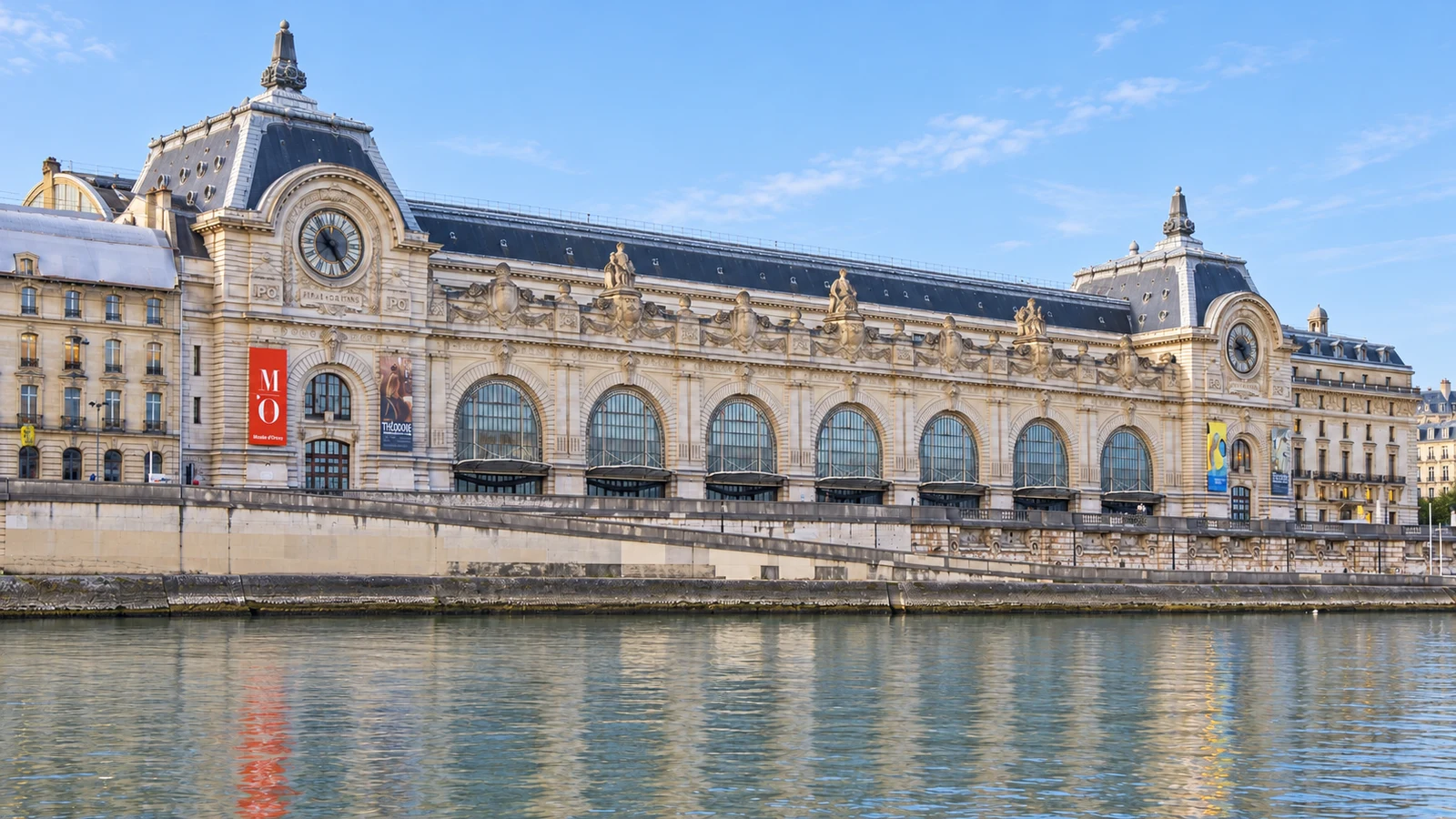
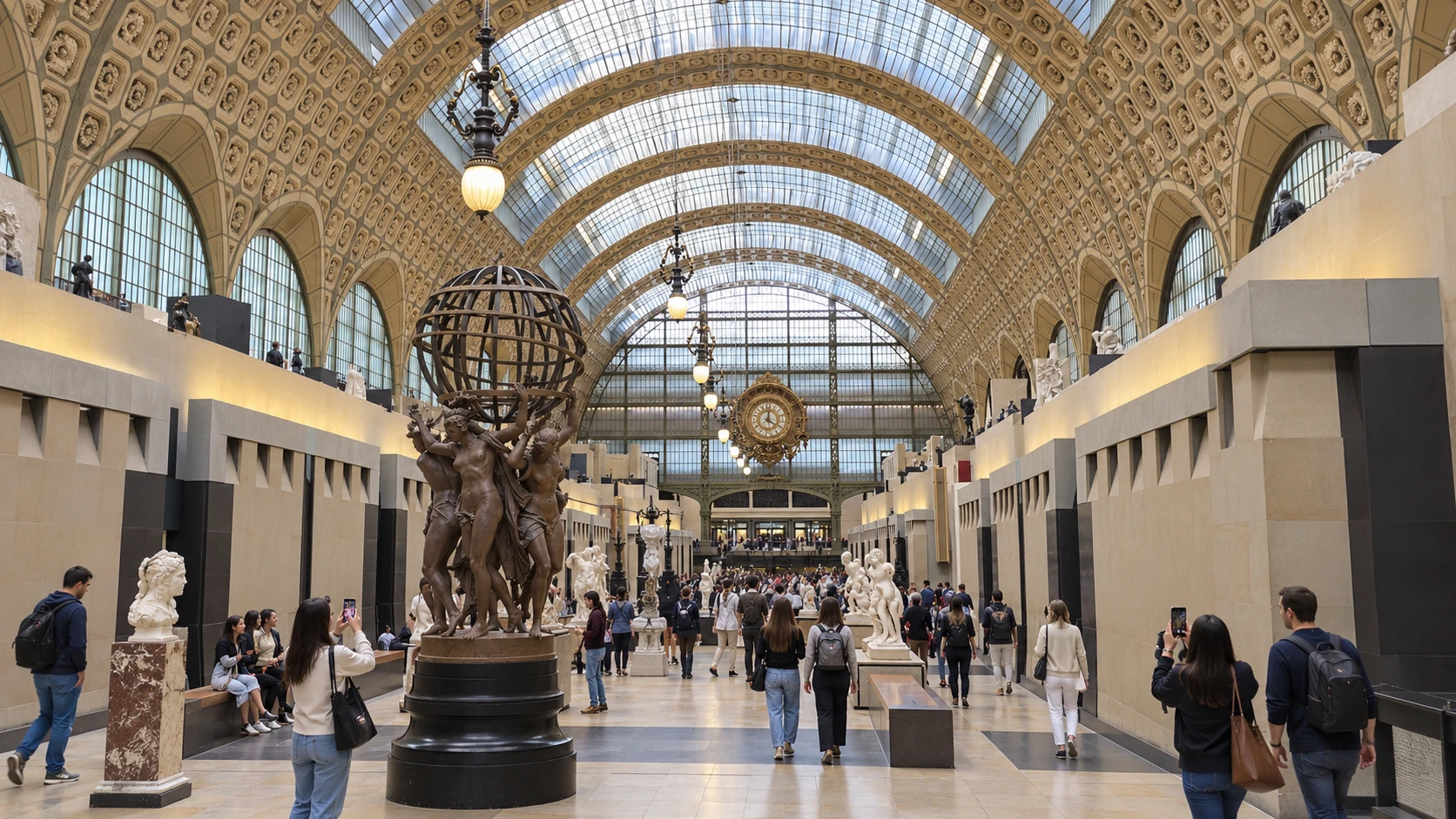
The long central hall at Musée d'Orsay still makes sense as a railway station. Its great span, light and monumental scale belong to the building opened for the 1900 Universal Exhibition, while sculpture now occupies the space where the station once worked. The architecture is therefore part of the museum's subject as well as its setting.
Painting and sculpture from 1848 to 1914
The collections cover Western art from 1848 to 1914, a period in which painting, sculpture, photography, architecture and decorative arts changed profoundly. Impressionism is the best-known attraction, but the museum's range makes the movement easier to understand beside the work that preceded and followed it. The visit is broader than a sequence of familiar paintings.
Manet, Monet, Renoir, Degas and Cézanne are central names, with Post-Impressionist works by artists including Gauguin and Van Gogh extending the story. Sculpture brings another way of looking, particularly in relation to the large hall and the changing viewpoints along its galleries. Decorative objects and photographs add the material and visual culture surrounding the paintings.
Choosing a route through the former station
A focused visit can follow one of those interests rather than attempting every room. The building rewards that approach because the large spaces and more enclosed galleries offer different conditions for looking. Moving between them makes the former station's structure continually visible, even when attention is on the collection.
The upper parts of the museum add views through the station's clocks and a different perspective on the Seine-side building. Temporary exhibitions bring more specific subjects into the programme, but the permanent collection and the surviving station architecture are already a substantial reason to come. Orsay's particular strength is the relationship between the two: the art of a rapidly changing era housed in one of that era's ambitious public buildings.
In pictures
The full gallery.
02 / The essentials
Musée d’Orsay: visit essentials
- 01
Saint-Germain & Seine
- 02
Allow 2–3 hours
- 03
Current tourism listing: Tuesday–Sunday 09:30–18:00; Thursday until 21:45. Check admission cut-offs and holiday opening with the museum.
04 / Before you go
Plan your visit
Impressionist art and sculpture in a former railway station beside the Seine.
Admission
Check the current admission price and ticket options before booking.
Check admissionChoose your visit
Current tourism listing: Tuesday–Sunday 09:30–18:00; Thursday until 21:45. Check admission cut-offs and holiday opening with the museum.
Opening and service times can change on public holidays.
Arrival & access
Follow the museum’s entrance instructions for the Esplanade Valéry Giscard d’Estaing.
Esplanade Valéry Giscard d’Estaing, 75007 Paris
The tourism listing identifies accessible entrance and facilities; check the museum’s visitor guidance for your arrival route.
Plan admission
Choose an admission date and time directly with the museum. Check current prices, eligibility for concessions and exhibition conditions.
05 / Where it is
Find it
and what’s nearby.
Continue exploring
More of Paris, around your visit.
Explore Paris by day or by appetite
06 / Good to know
Musée d’Orsay: frequently asked questions
01Is Musée d’Orsay free on the first Sunday of the month?
Yes, but an online time-slot booking is mandatory for the free first-Sunday visit. Free admission does not mean unrestricted walk-in entry.