Louvre & Tuileries
Royal Paris, open garden paths and a generous pause between the Louvre and the Seine.
01 / The experience
From palace courtyards to green chairs beside the water.
Stone façades, gravel paths and open water give the Louvre–Tuileries district its sequence. The palace courtyards form one kind of space, framed by long walls and sculpted architecture; the garden opens that enclosure into broad paths, trees and basins. The transition is immediate enough to be part of an ordinary walk, without requiring a museum visit to make the area worthwhile.
The Louvre palace and the garden’s history
The Louvre is the district's great indoor anchor. Its collections stretch across periods and places, but the former palace is also a powerful outdoor presence. Around the pyramid and the courtyards, the relationship between the modern entrance and older stonework becomes visible at a much larger scale than a single photograph suggests. The façades continue to shape the walk even after the museum entrance has been left behind.
The garden's name recalls the tile works that occupied the site before Catherine de' Medici built the Tuileries Palace in 1564. André Le Nôtre reshaped the grounds from 1664, establishing the formal garden that still gives the area its strong lines. Sculpture by artists including Maillol, Rodin and Giacometti adds a later cultural layer to that older design.
The Tuileries basins and the Orangerie
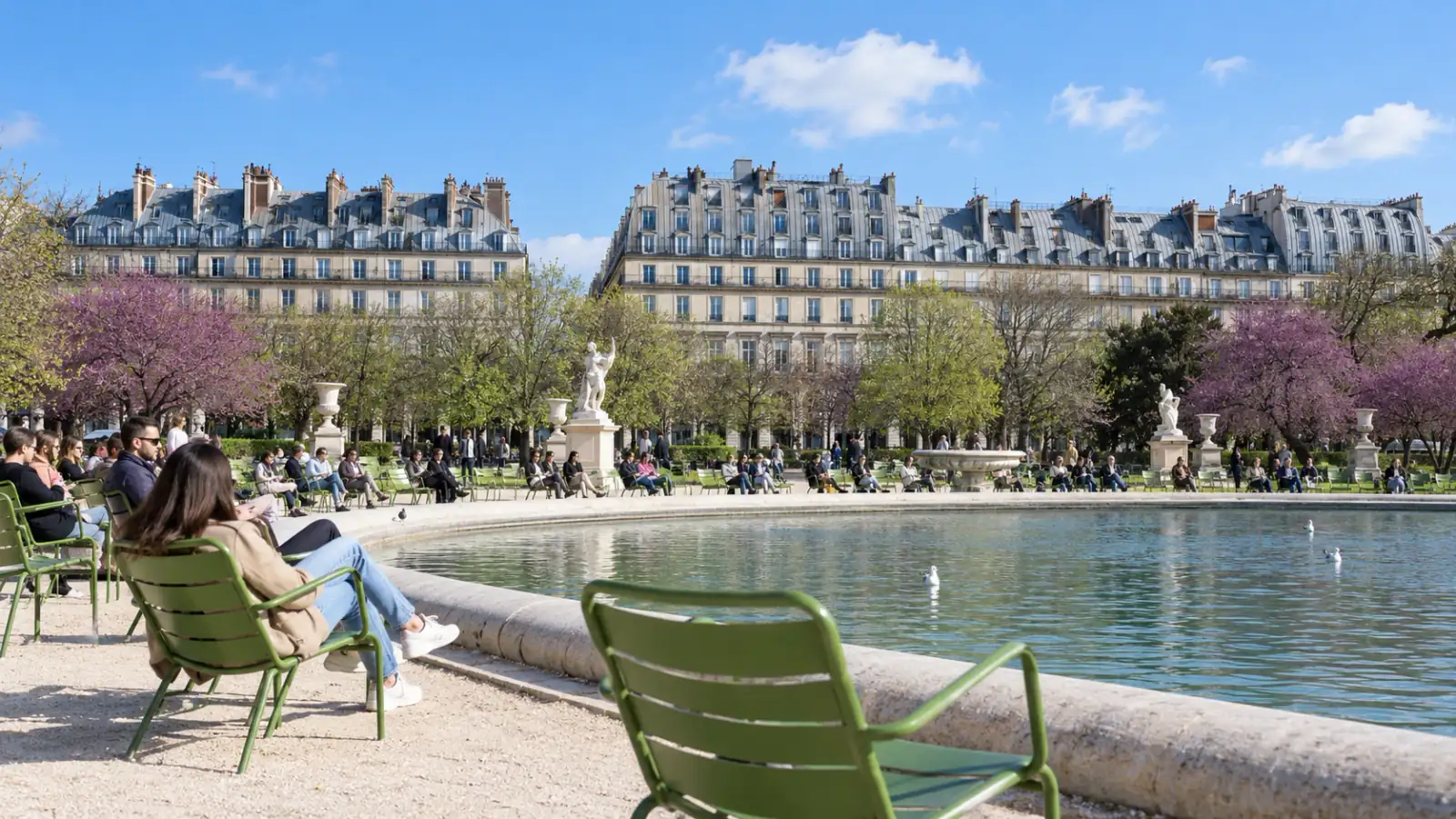
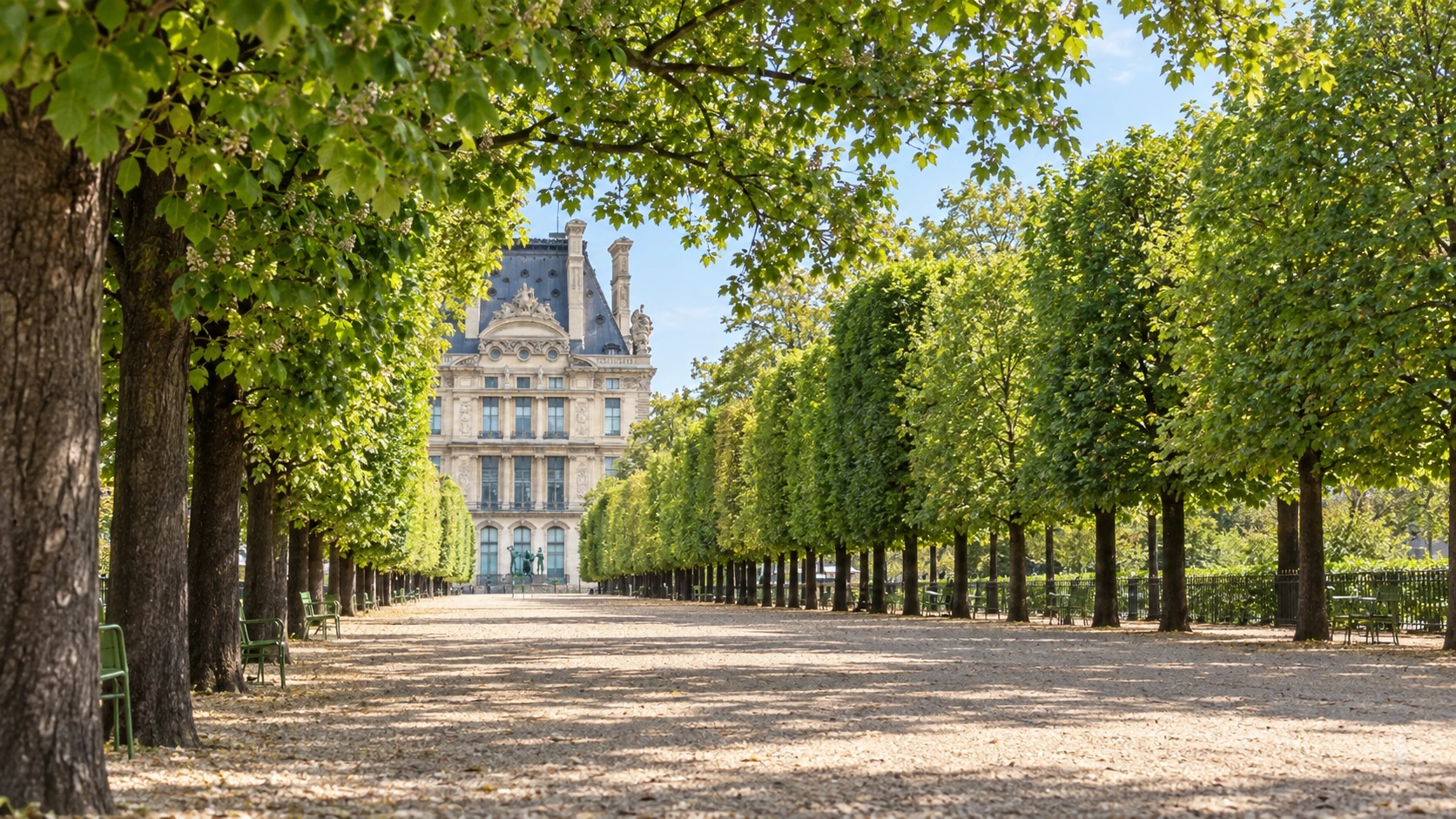
The Tuileries provide a different order. Long views organise the garden, while the basins and green chairs create places where people sit within that formal layout. The main paths have a broad public character; the tree-lined sections and edges offer a more enclosed setting. Sculpture and planting interrupt the larger geometry, making the garden interesting both as a designed landscape and as a place still used every day.
Towards the garden's western end, the Orangerie adds a smaller-scale museum choice. Monet's Water Lilies rooms have an enveloping quality quite unlike the Louvre's range of separate galleries. The lower collection introduces another part of painting's history, so the museum has more substance than its best-known panoramic rooms alone. Its garden setting makes the passage between outdoor landscape and painted landscape especially natural.
Rue de Rivoli, Angelina and the Seine
Rue de Rivoli forms the northern edge of the area, with shops and cafés looking towards the garden. Angelina's historic tea room brings an elaborate interior to that side of the walk. Pastries and hot chocolate can be the reason to stop, while the salon's decoration makes a seated visit different from buying something at the counter. The choice is a specific food experience within the district, rather than another monument to tick off.
The Seine defines the southern side. Moving towards the river changes the view from garden axes and palace walls to quays, bridges and the buildings opposite. These edges make the district easy to understand as a piece of Paris: palace and garden in the middle, boulevard on one side and river on the other. Different routes reveal different parts of the same arrangement.
A day here can therefore have several genuine centres. Painting may take the largest share of the visit, or the architecture and outdoor spaces may be the main interest. The museums have their own timed admissions and closing days, while the public garden follows its gates and seasonal arrangements. Those practical differences matter, but they do not change the district's central attraction: the close relationship between a former royal palace, a formal garden and the ordinary Paris life continuing through both.
In pictures
The full gallery.
02 / The essentials
Louvre & Tuileries: visit essentials
- 01
Louvre & Tuileries
- 02
Allow half a day outdoors, or a full day with museum visits
- 03
Public garden gates have seasonal opening and closing times; museums, cafés and temporary events keep separate hours.
04 / Before you go
Plan your visit
Royal Paris, open garden paths and a generous pause between the Louvre and the Seine.
Admission
Ordinary public garden access is free. Museum admission, meals, guided visits and special events are separate purchases.
Check admissionChoose your visit
Public garden gates have seasonal opening and closing times; museums, cafés and temporary events keep separate hours.
Confirm opening and service times for your visit.
Arrival & access
Use Tuileries métro for the rue de Rivoli side, Palais-Royal–Musée du Louvre for the museum end or Concorde for the western end. Follow your museum booking’s entrance instructions rather than treating the garden reference pin as a doorway.
Jardin des Tuileries, 75001 Paris
Expect gravel paths, long distances, exposed sections and busy crossings. Confirm open gates, museum assistance and the appropriate step-free entrances before choosing a route.
Plan admission
The outdoor walk needs no general district ticket. Book each museum separately, confirm the correct entrance and leave time for security and queues. Louvre and Orangerie normally close Tuesday; reconfirm holiday exceptions. Reserve dining where required.
05 / Where it is
Find it
and what’s nearby.
Continue exploring
More of Paris, around your visit.
Continue your Paris day
06 / Good to know
Louvre & Tuileries: frequently asked questions
01Can I walk through the Tuileries Gardens late in May or June?
The listed spring closing time is 21:00, extending to 23:00 in June, July and August. Visitors start being cleared thirty minutes before closing. The garden is free, but these hours do not apply to the Louvre’s indoor galleries.