Jardin des Tuileries
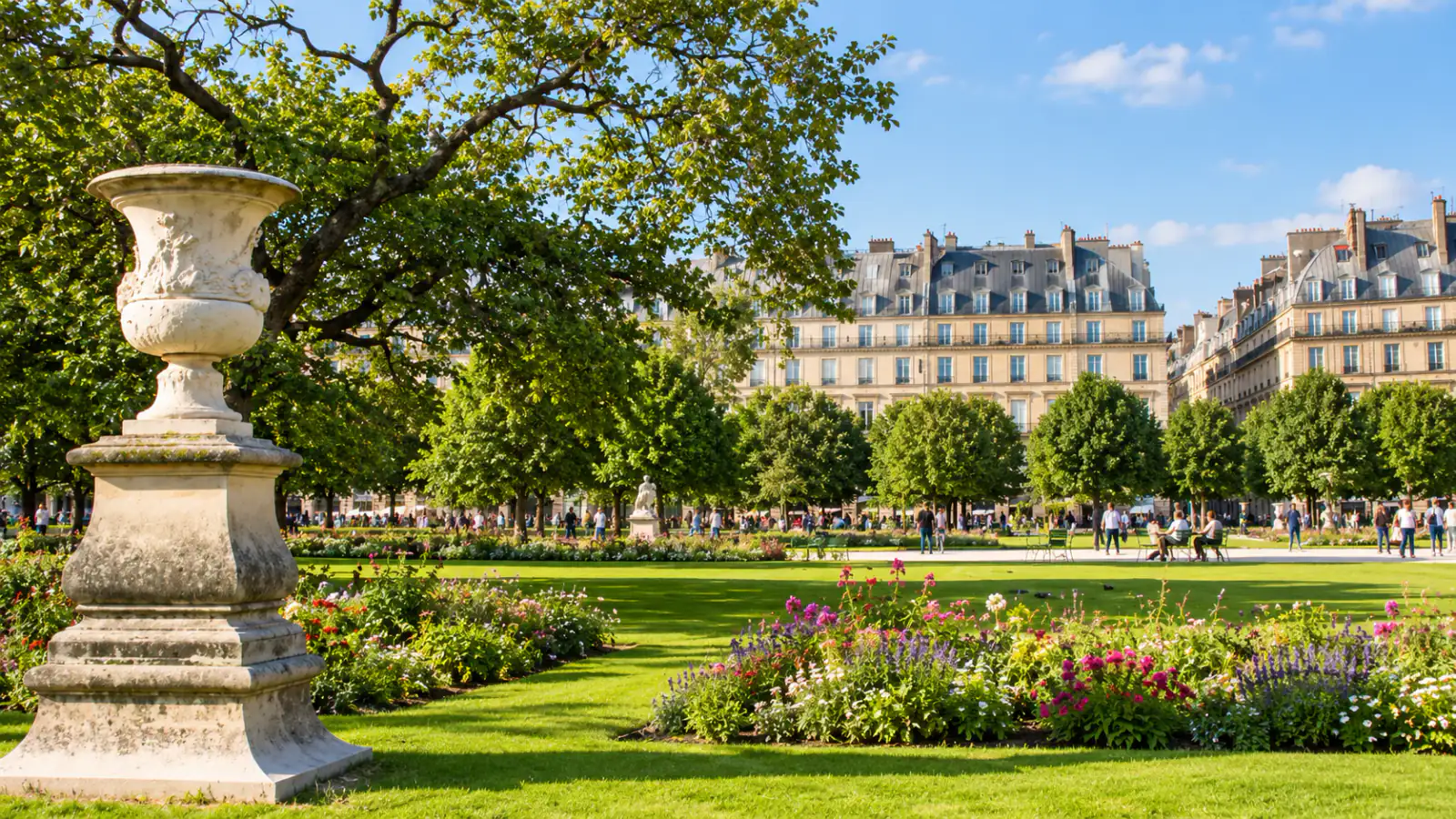
Formal garden axes, sculpture and green chairs between the Louvre and Place de la Concorde.
01 / The experience
A royal garden used as an everyday Paris park.
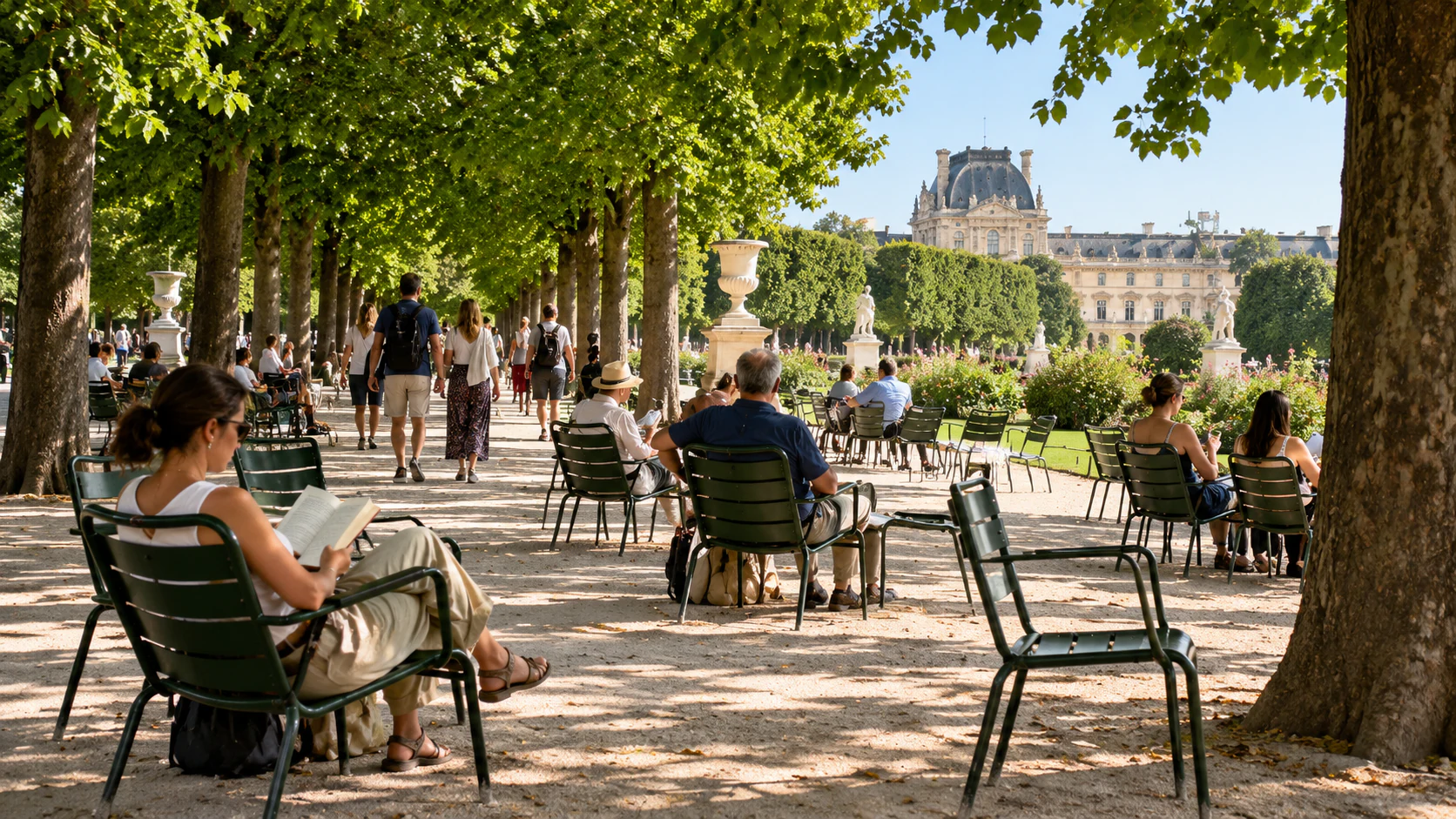
Green metal chairs give the Tuileries a particularly Parisian scale. They sit beside basins and along gravel paths within a landscape designed around much larger lines: the long axis towards Place de la Concorde, avenues of clipped trees and the palace frontage to the east. The garden works both as a formal composition and as a public park where people read, meet and pause between parts of the city.
Water, sculpture and the garden’s long views
Its name comes from the tile works that preceded Catherine de’ Medici’s palace and garden in the sixteenth century. André Le Nôtre reshaped the grounds in the seventeenth century. The Tuileries Palace has gone, but the landscape’s relationship with the Louvre still shapes the approach. Walking from the Cour du Carrousel into the garden makes that transition especially clear.
Sculpture interrupts the long views. The collection includes works associated with Maillol and Rodin, alongside other periods and materials. These are outdoor works encountered within a planted setting, rather than an enclosed sculpture museum. A short route can follow a few pieces; a longer circuit takes in the basins, terraces and shaded avenues that give them different backgrounds.
From the Louvre to the Orangerie
The western end offers two distinct indoor possibilities. Musée de l’Orangerie is known for Monet’s enveloping Water Lilies rooms; the Jeu de Paume has its own exhibition programme. Each is a separate visit with its own entrance and opening arrangements. The garden itself remains worthwhile without either admission.
The surrounding edges change the walk. Rue de Rivoli brings arcades and the Angelina tea room, while the southern terrace opens towards the Seine. Returning through a tree-lined path gives a different experience from following the central axis, with the palace, water and city streets remaining close by.
In pictures
The full gallery.
02 / The essentials
Jardin des Tuileries: visit essentials
- 01
Louvre & Tuileries
- 02
Allow 1–2 hours
- 03
Ordinary garden entry is free; museums and concessions charge separately.
04 / Before you go
Plan your visit
Formal garden axes, sculpture and green chairs between the Louvre and Place de la Concorde.
Admission
Ordinary garden entry is free; museums and concessions charge separately.
Opening & visit
Garden gates follow seasonal opening times; severe weather or events can close sections.
Arrival
Use Tuileries métro for the rue de Rivoli edge, Concorde for the western end or Palais Royal–Musée du Louvre for the palace approach.
Place de la Concorde / rue de Rivoli, 75001 Paris
Plan your visit
No reservation is needed for ordinary garden entry. Louvre and Orangerie museum visits use their own admission.
Accessibility
Broad paths include gravel and exposed stretches; choose suitable gates and allow for uneven surfaces.
05 / Where it is
Find it
and what’s nearby.
Continue exploring
More of Paris, around your visit.
Continue your Paris day
06 / Good to know
Jardin des Tuileries: frequently asked questions
01Is the Jardin des Tuileries free?
Ordinary garden access is free. Museum tickets, meals and paid attractions within or beside the garden are additional.
02Where are the Tuileries Garden entrances?
There are approaches from rue de Rivoli, Place de la Concorde and the Louvre end. Use an open signed gate; events and works can change access.
03How long should I spend in the Tuileries?
Allow an hour for a direct walk and basin stop, or two for sculpture and the garden’s different terraces. Museum admission adds substantial time.
04Are the Tuileries open at night?
The garden has seasonal gate-closing times. It is not an unrestricted all-night route between the Louvre and Concorde.
05Is the Tuileries Garden wheelchair accessible?
Broad paths are available, but gravel, slopes and gate arrangements affect the route. Use the Louvre’s current garden-access information to choose an approach.
06Can I combine the Tuileries with the Louvre and Orangerie?
Yes, but they are separate museum visits. A garden walk links them geographically; choose timed admissions that leave room for security and a meal.