Studio Museum in Harlem
Black art, the Stoop and a new museum building on West 125th Street.
01 / The experience
A museum built around artists and Harlem.
Black art, the Stoop and a new museum building on West 125th Street.
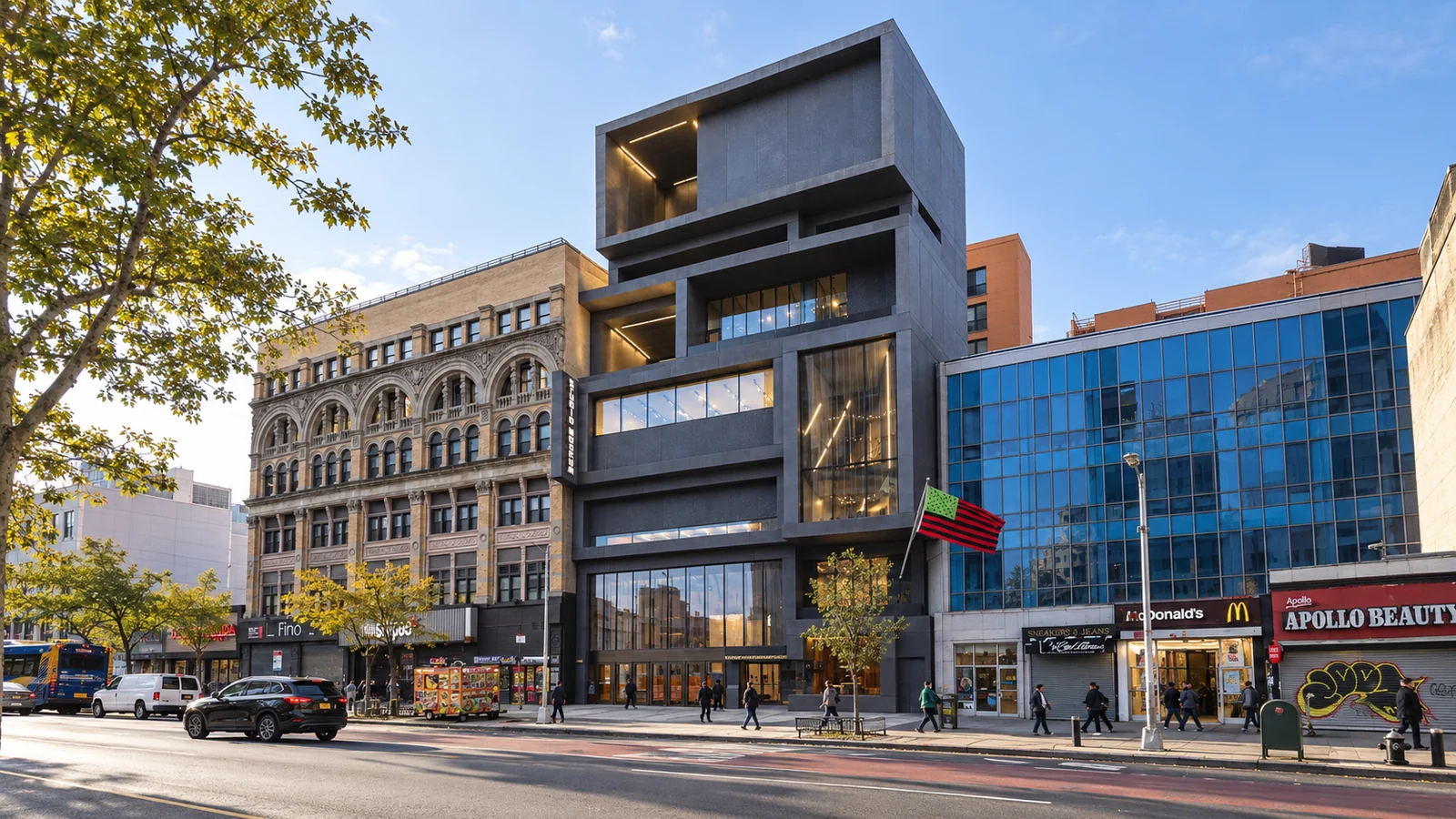
The Studio Museum’s new building makes the institution’s relationship with Harlem visible from West 125th Street. Dark structural frames surround stacked volumes, while the street entrance leads towards a stepped public space known as the Stoop. The architecture refers to the neighbourhood’s doorways and stoops without turning the museum into a reproduction of a brownstone.
Founded in 1968, the museum supports artists of African descent and work shaped by Black culture. Its history includes exhibitions, education and an artist-in-residence programme. That combination is important to the visit: this is a place where art is made and discussed as well as collected. The galleries bring painting, photography, sculpture and installation into spaces of different sizes rather than one continuous white room.
The collection provides connections across generations. Artists represented include Faith Ringgold, Jack Whitten, Alma Thomas and Barkley L. Hendricks, though the works on view change. The museum’s digital guide gives artists and curators a voice alongside the objects, making it useful when a particular work invites more than its label can explain.
Several long-term installations connect the building to the institution’s earlier life. David Hammons’s flag uses the red, black and green of the Pan-African flag within the structure of the United States flag. Glenn Ligon’s Give Us a Poem works with the brief phrase associated with Muhammad Ali, while Houston E. Conwill’s The Joyful Mysteries consists of seven bronze time capsules. The latter began in the museum’s former sculpture garden and carries that history into the new setting.
The visit can extend beyond the exhibition floors. Education workshops and the Teen Studio occupy the third floor, the Helen Frankenthaler Reading Room is on the fourth, and the sixth-floor terrace stair introduces another setting. Access to programmed spaces follows the day’s arrangements. Downstairs, the café operated by Settepani and the Studio Store give the building a public life beyond a single exhibition.
Pay-what-you-can admission and free Studio Sundays make this a particularly useful cultural anchor for Harlem. Sunday still requires a ticket, and individual workshops or events follow their own arrangements. The museum’s stepped architecture also has an accessible counterpart: lifts serve the floors, wheelchairs are available, and sensory kits can be requested from visitor staff.
In pictures
The museum and collection
In pictures
Art, learning and gathering
In pictures
Galleries and rooftop
04 / Before you go
Plan your visit
Admission
Pay what you can
Admission is pay what you can; $16 is a suggested adult contribution, not a compulsory minimum.
Exhibitions and programmed rooms change. Free Sunday admission still requires a ticket.
Opening
Wednesday–Thursday and Saturday–Sunday 11:00–18:00; Friday 11:00–21:00. Monday–Tuesday closed.
Arrival
144 West 125th Street, New York, NY 10027
Use the new museum entrance on West 125th Street, not its former temporary off-site locations.
Tickets & visits
Pay-what-you-can tickets can be booked online or at the museum. Suggested adult contribution $16; seniors 65+, students and visitors with disabilities $9. Children 16 and under and care partners enter free. Studio Sundays are free but still require tickets.
Accessibility
Lifts serve the museum floors. Wheelchairs and sensory kits are available from visitor staff. The 125th Street A/B/C/D station has lifts; the 2/3 station does not.
Location & nearby places
06 / Good to know
Studio Museum in Harlem: frequently asked questions
01How do I arrange this visit?
Pay-what-you-can tickets can be booked online or at the museum. Suggested adult contribution $16; seniors 65+, students and visitors with disabilities $9. Children 16 and under and care partners enter free. Studio Sundays are free but still require tickets.
02What access arrangements matter?
Lifts serve the museum floors. Wheelchairs and sensory kits are available from visitor staff. The 125th Street A/B/C/D station has lifts; the 2/3 station does not.