In depth
Bahrain Pearling Path in Muharraq
Follow Muharraq’s pearling streets from the shaded visitor centre to divers’ courtyard houses, merchant buildings and the Pearl Museum at Siyadi Majlis.
Story · Visit · Route · Links
Visitor Essentials & Quick Answers
Where should I start Bahrain’s Pearling Path in Muharraq?
The Pearling Path Visitor and Experience Centre near Suq Al Qaysariyyah is the mapped starting point for a land arrival. Bu Mahir suits an arrival by boat.
How far is Bahrain’s Pearling Path, and how long does the walk take?
The Pearling Path’s urban route is roughly three kilometres. Allow two to three hours for selected interiors, or a longer half-day for a fuller visit.
Where is the Pearl Museum on Bahrain’s Pearling Path?
The Pearl Museum is inside Siyadi Majlis in Muharraq, alongside the decorated reception spaces of a pearl-trading family.
Can I walk the Muharraq Pearling Path independently?
Bahrain’s Pearling Path can be walked without a guide. Use the visitor centre’s map and current advice on open buildings; private guiding is available by arrangement.
Whose houses can I explore on Bahrain’s Pearling Path?
The Pearling Path represents divers, captains, suppliers and merchants. Their buildings show different relationships between family rooms and pearl-trade business spaces; public interior access varies.
Can I take a boat from Bahrain National Museum to the Pearling Path?
A boat programme connects Bahrain National Museum with Bu Mahir when operating. Arrange the fare, boarding and return sailing before travelling.
Choose your depth
Essentials or more detail?
See visiting essentials, or read more about the history and places nearby.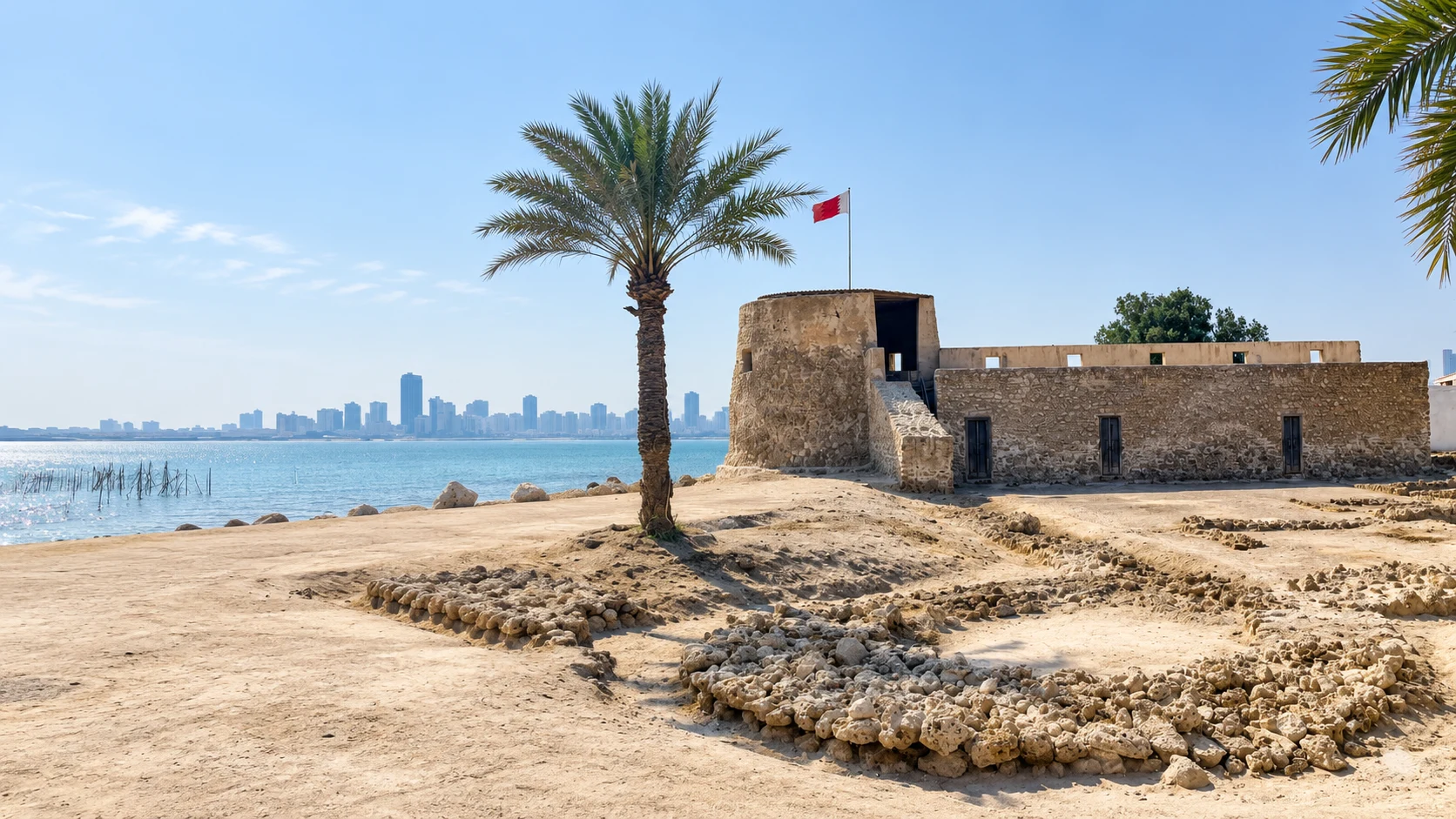
01 The experience
What to expect.
The Pearling Path runs through a city whose most valuable cargo could fit in a hand. In Muharraq, pearls paid for courtyard houses, trading rooms and storehouses, while the work of finding them took men away from home for months. The route connects those two worlds: the shore where crews departed and the streets where their catch became money, credit and buildings.
Its appeal lies in the differences between the stops. A captain needed somewhere to recruit divers and negotiate advances. A supplier stocked the equipment and provisions that kept boats at sea. A successful merchant received buyers in a room designed to express his standing. The buildings make these relationships visible, sometimes through an elaborate reception space, sometimes through the position of a door across an alley from the family home.
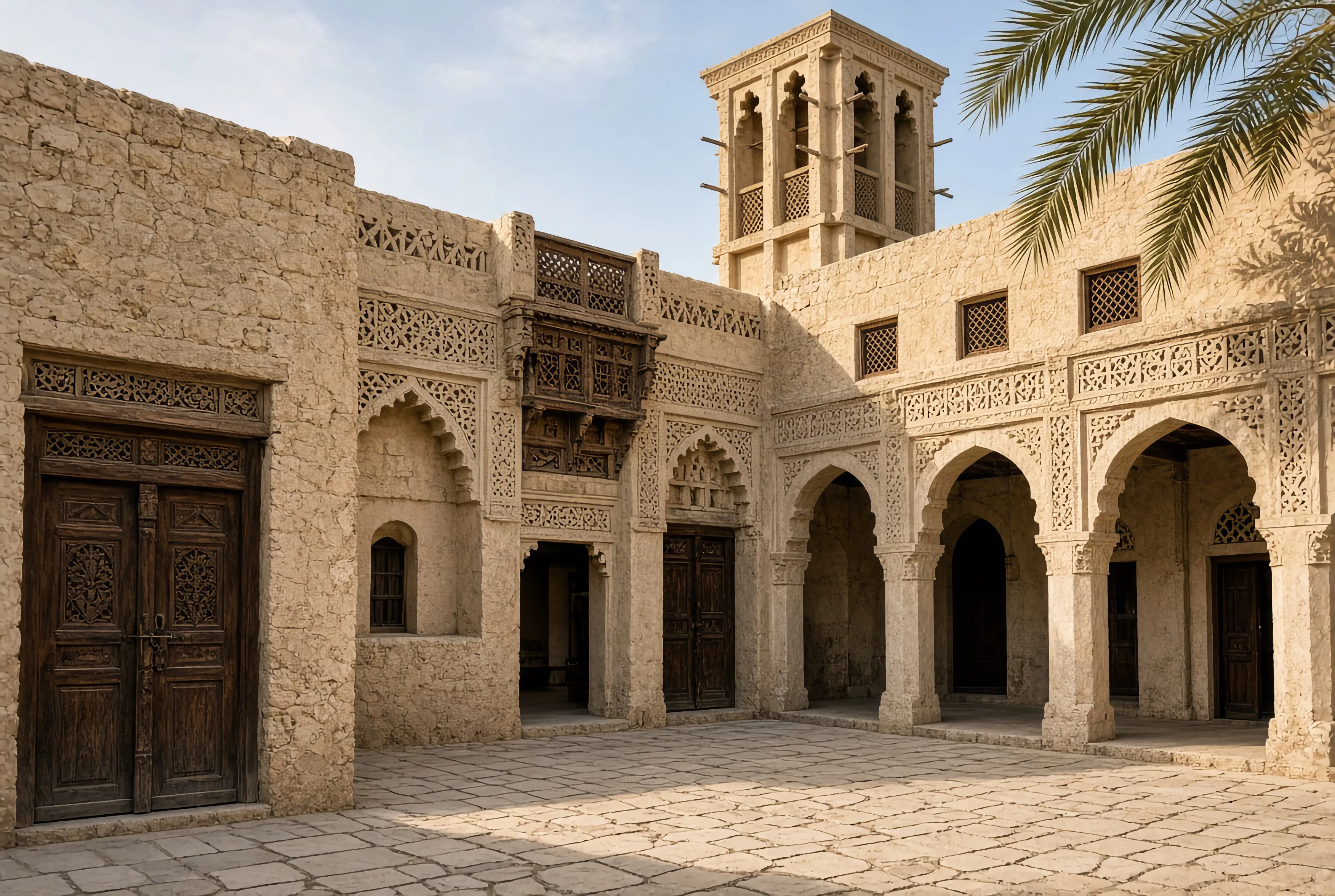
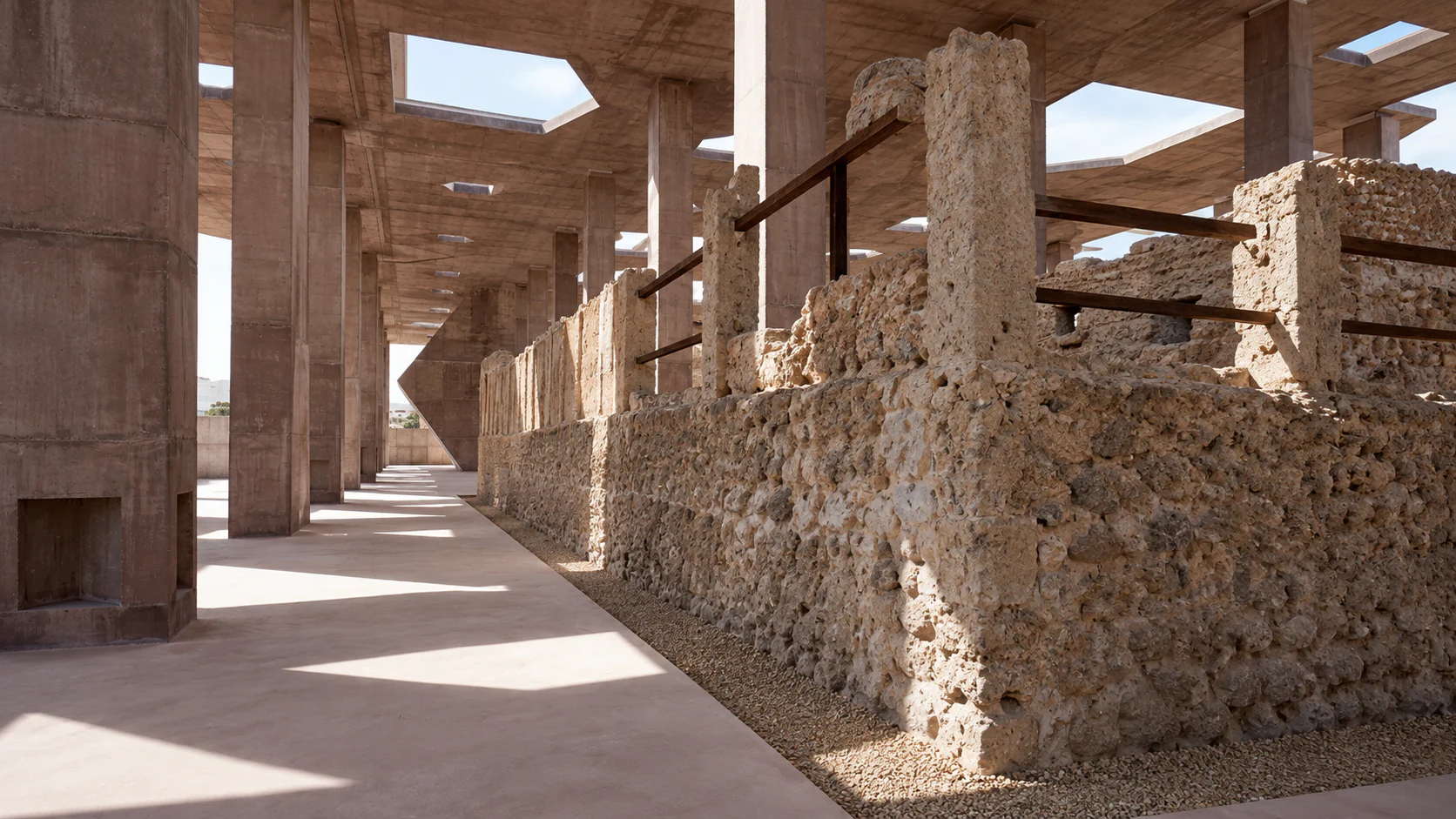
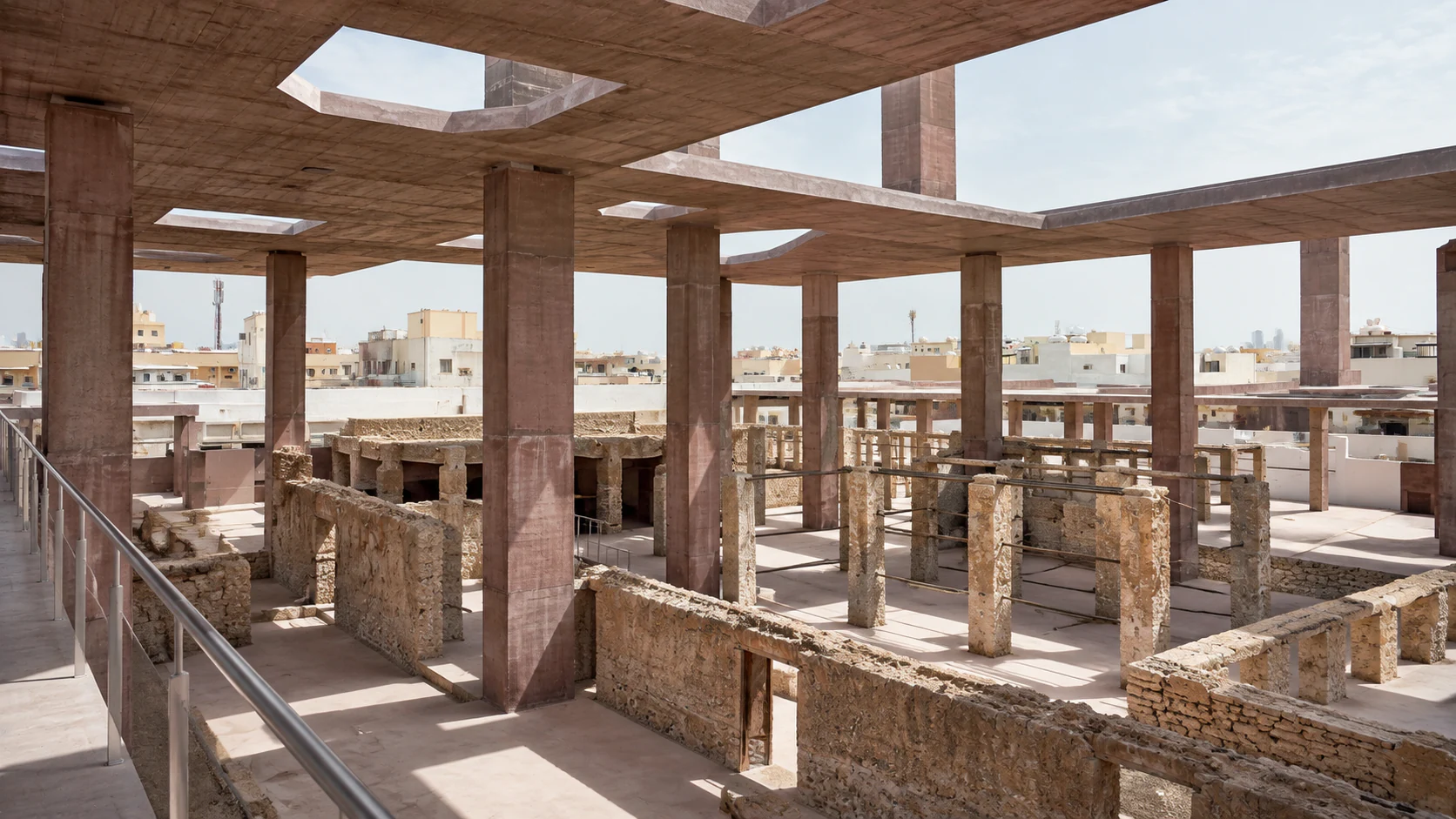
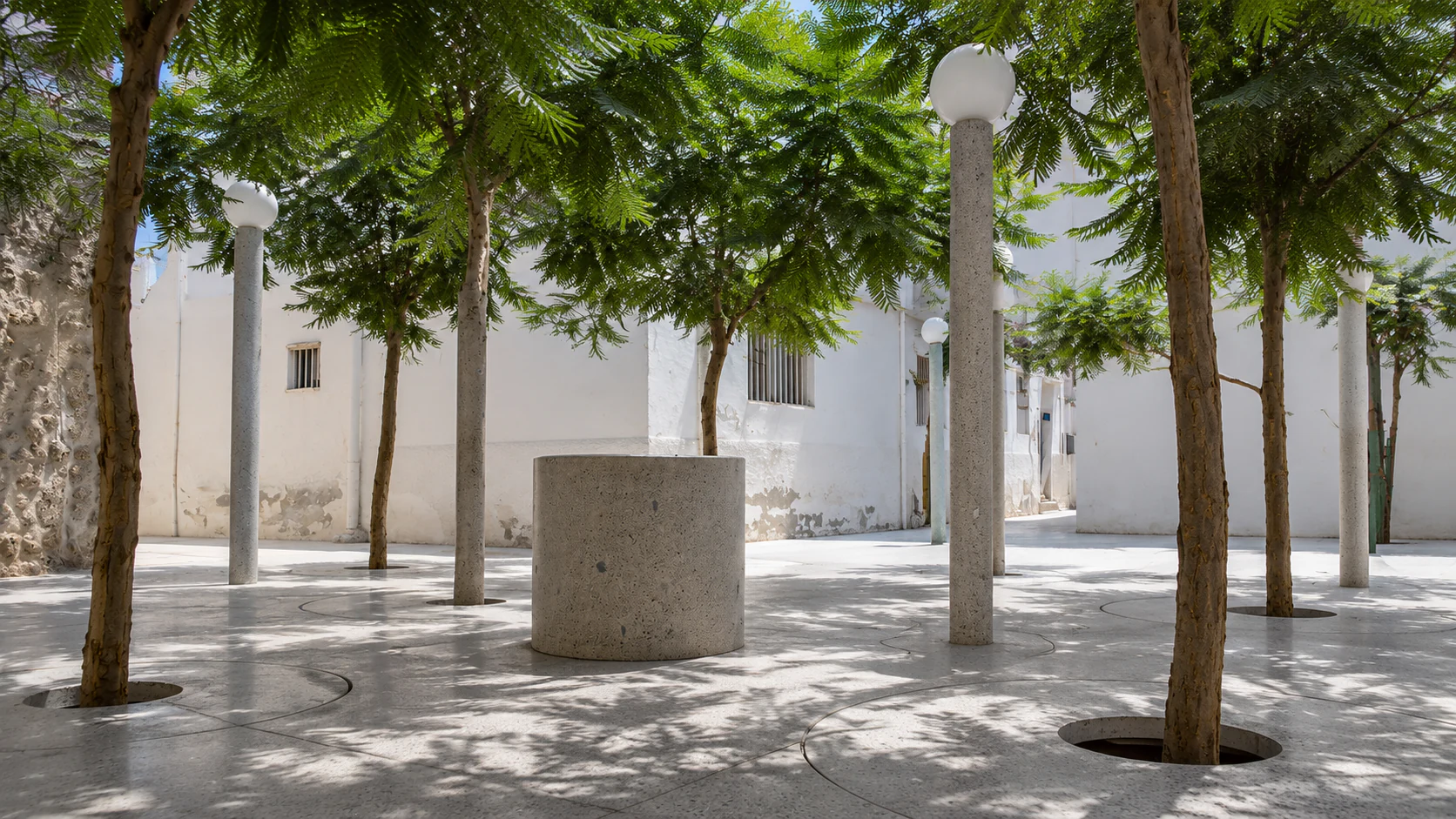
Muharraq is still a residential city. The walk passes local streets and shops between the restored properties, with contemporary architecture threaded through the older fabric. Pearl-shaped lamps mark the way. Shaded squares create places to pause, and the tall concrete canopy of the main visitor centre shelters the remains of market warehouses. New work is part of the experience, alongside historic coral-stone walls and carved decoration.
Three ways into the story
For a first visit, the Visitor and Experience Centre beside Suq Al Qaysariyyah is the most straightforward starting point. It introduces the market quarter and lets you choose a manageable stretch towards the captain’s house and Siyadi complex. The existing guide map marks this centre.
A sea arrival begins at Bahrain National Museum, across the water in Manama, with a boat to Bu Mahir when the service is running. The fort and shore give a powerful opening to the story of departure. This version takes longer and requires a return plan as well as time in the city.
Siyadi Majlis offers a third starting point. Its Pearl Museum places actual pearls and jewellery alongside the architecture of a trading family. This is a good anchor for visitors whose main interest is the gem itself, particularly when a long outdoor walk would be uncomfortable.
A route made of several kinds of heritage
UNESCO’s inscription brings together buildings, a surviving shore and offshore oyster beds. The walking path is the urban part of that larger landscape. The reefs are not a stop reached by following the streetlamps, and an ordinary heritage walk is not a pearl-diving excursion.
Within the city, houses and commercial buildings explain different links in the same economy. They are not interchangeable examples of an old Bahraini house. Comparing a modest captain’s majlis with the Siyadi trading rooms reveals the distance between organising a crew and financing an international pearl business.
The story also extends beyond prosperous men. Divers and haulers carried physical danger and debt. Women maintained households during the diving season, while healers treated the consequences of work at sea. Those experiences give the route its human depth and make a visit more than an architectural survey.
How much to include
Allow two to three hours for a selection of buildings and the market quarter. A fuller shore-to-city visit, especially with the boat and time inside the Pearl Museum, needs a longer half-day. The complete urban route is roughly three kilometres, with detours and interiors adding to the time.
The visitor spaces normally open Wednesday to Monday, 10:00–18:00. Individual interiors have their own arrangements, so build the walk around the buildings open that day. An exterior-only circuit can still reveal street patterns and architecture, but the reception rooms and museum displays are a substantial part of the visit.
The story
History & character.
A city tied to a seasonal sea
Muharraq’s neighbourhoods grew around family and tribal connections, mosques and places of gathering. The pearling fleet joined these districts to the offshore oyster beds and to buyers much farther away. Geography shaped the work: boats needed a harbour, crews needed supplies, and the catch needed traders who could connect a local season to international demand.
The great diving season, Al Ghus Al Kabir, took crews away for roughly four months. Departure and return were public moments on the shore, involving families as well as the people aboard. The waterfront was both a place of work and a place where the city watched for news. Bu Mahir’s surviving fort and shore preserve that relationship in a landscape transformed by reclamation.
The old waterfront is not everywhere beside the water today. This is especially important when looking at houses whose windows or reception rooms once faced boats. Their current urban setting can obscure an earlier maritime role; the buildings become easier to understand when the historic shoreline is part of the picture.
Diver, hauler and captain
The diver collected oysters, while his hauler managed the rope that brought him back to the boat. The captain organised the voyage, the crew and its commercial relationships. These roles depended on each other, but did not carry equal financial power or physical exposure.
The equipment and provisions mattered as much as the jewel at the end. Ropes, sailcloth, repair materials, food and drinking water supported a long season. The route’s suppliers’ houses and warehouses show the industry that surrounded the act of diving. A pearl economy needed boats, shops, food sellers and construction trades as well as divers and buyers.
Nukhidhah House makes recruitment and negotiation tangible. The name refers to a boat captain, and the surviving property is Jassim Ajaj’s majlis, built in the 1920s. It accommodated the social and business side of his occupation, including visits from crew members and prospective divers. His family residence stood separately nearby, allowing work and hospitality to function without opening the household to every caller.
Credit and unequal rewards
Pearling required money before the season produced a catch. Merchants financed captains; captains advanced support to crews and their families. A poor season could leave a diver owing money into the next year. The financial risks of the business therefore reached into homes as well as onto boats.
Archival accounts describe disputes over debts and the sale of catches. Reforms in the 1920s attempted to change that system, including the keeping of accounts and treatment of inherited obligations. These records complicate the image of pearling as a universally prosperous tradition. The most lavish surviving rooms belonged to people who occupied a very different position from an indebted diver.
British administrative records have their own perspective and vocabulary. They are useful evidence for the workings and disputes of the trade, but a visitor should not mistake an official report for the voice of every person involved. The houses, route interpretation and material evidence provide other ways into the same history.
Women and the household
The seasonal absence of men placed much of the responsibility for domestic life with women. Al Jalahma House is particularly revealing: its interlocking courtyards, stairs and reception spaces allowed parts of the building to change use as visitors arrived and left. Privacy was organised through movement, not simply through a single permanently closed room.
This adds another layer to the architecture. A grand reception room could be a statement of commercial success, a place for visitors, or part of the family’s living space at different times. The distinction between public and private was managed within the house and across the lane between related buildings.
A trade with distant buyers
At the top of the commercial hierarchy, families such as the Siyadis dealt with buyers from India and Europe. Reception architecture played a role in those negotiations: the room received the visitor and expressed the merchant’s resources. The family’s house, majlis, mosque and shops connected wealth, domestic life, worship and everyday commerce.
Pearls also moved through smaller traders. Murad House and its separate majlis show another scale of business, with family space on one side and a room for receiving guests and negotiating on the other. Seeing the different properties together is more informative than treating every richly decorated building as the residence of an identical kind of merchant.
Decline and a different economy
The natural-pearl trade suffered severely in the early twentieth century, especially as cultured pearls entered the market and the international economic crisis reduced demand. The 1930s brought a profound change to the livelihoods that had shaped Muharraq. Houses built or enlarged near the end of the boom preserve ambitions formed before that collapse.
The decline did not erase maritime knowledge, music or family memory. Nor did it leave the city frozen. Some buildings continued in use, others deteriorated, and modern development altered streets and shorelines. The heritage project works within that uneven inheritance.
From surviving properties to a connected path
The World Heritage inscription came in 2012. Restoration and new public spaces subsequently helped connect surviving structures into a route that can be read on foot. The wider Revitalisation of Muharraq programme received the Aga Khan Award for Architecture in 2019.
The award recognised a programme of urban repair and renewed social use, not a single restored mansion. Its squares, cultural spaces and contemporary buildings help explain why the walk looks different from an enclosed historic attraction. The city remains the setting and the subject.
Look closer
Highlights and hidden details.
Visitor and Experience Centre
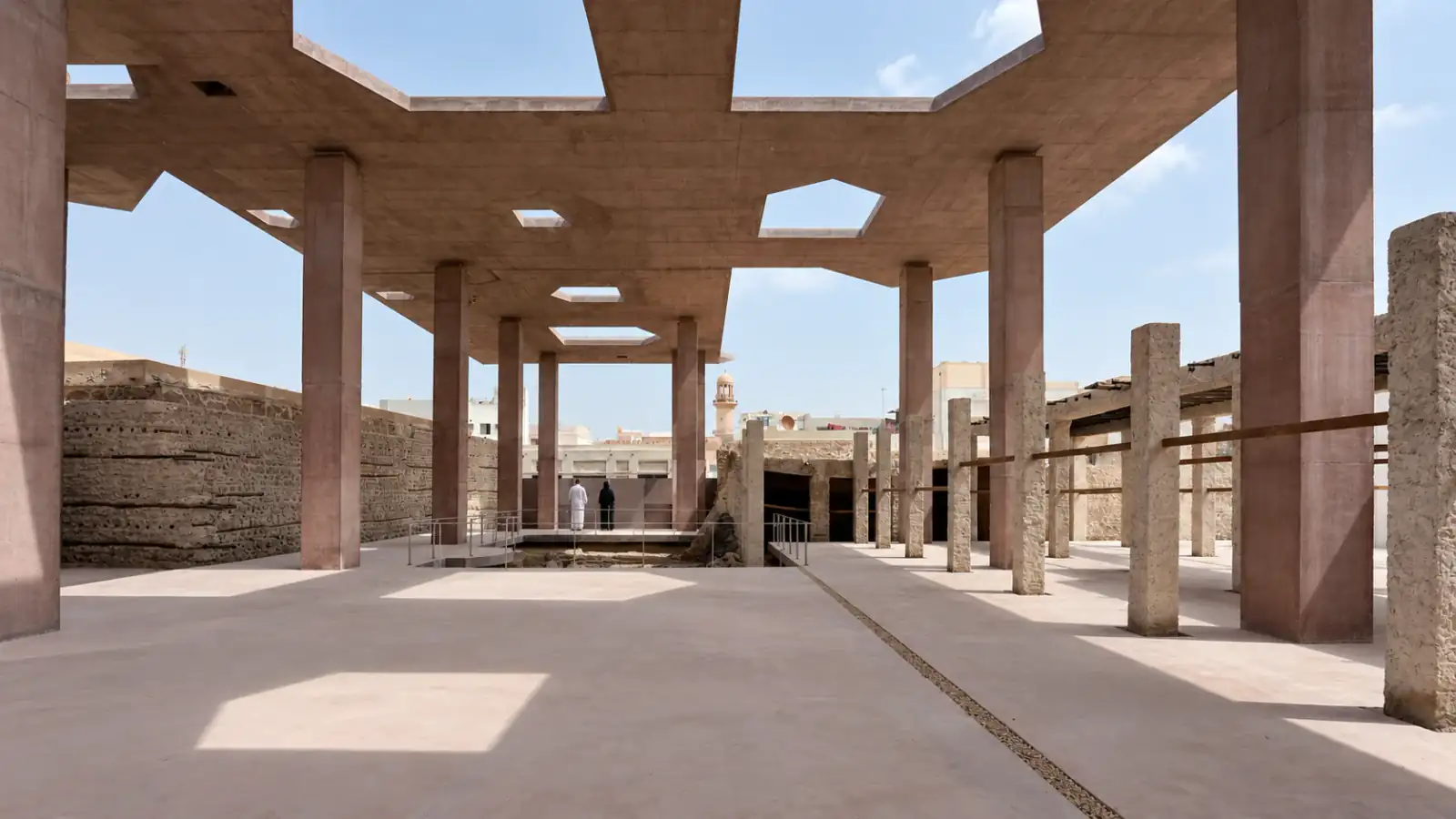
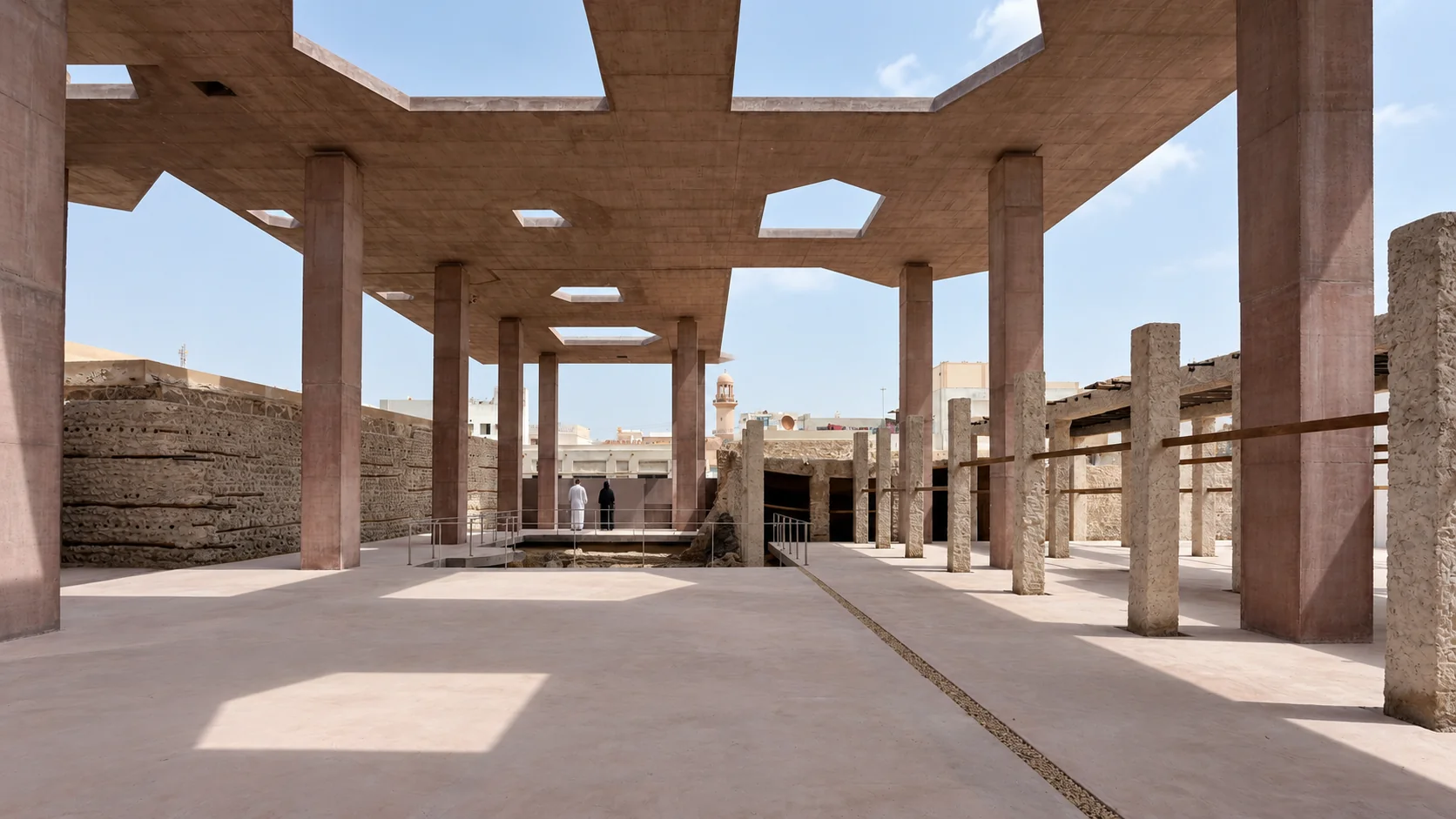
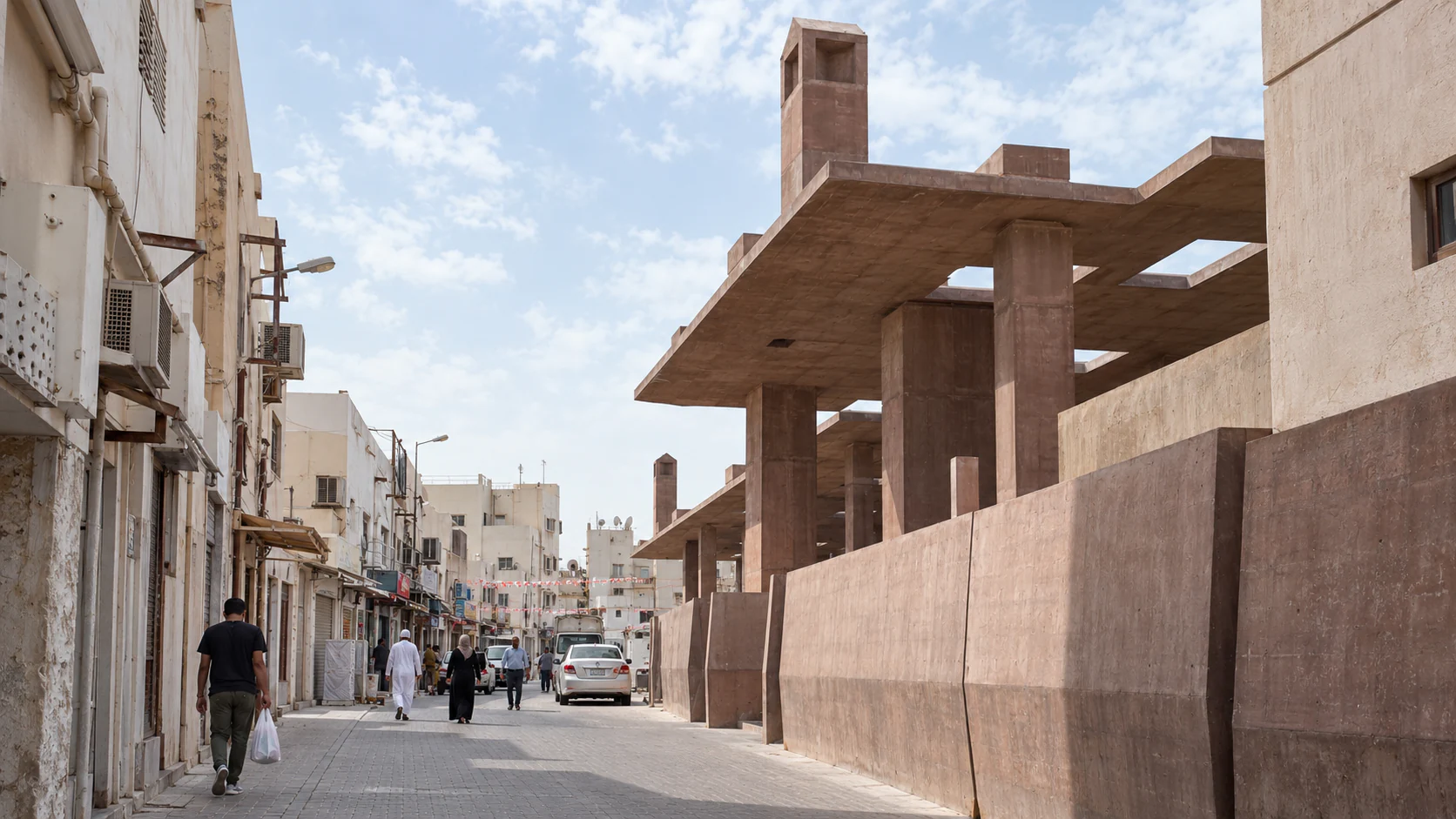
Valerio Olgiati’s canopy introduces a contemporary scale to the old market quarter. A fine grid of columns stands around the surviving warehouse fabric, making the distinction between old walls and new shelter visible. It is a useful place to begin with the route map before entering the surrounding streets.
The space also explains why storage belongs in a pearling story. Timber, supplies and boats supported the fleets long before a pearl reached a merchant’s table. The centre gives these less glamorous parts of the economy a prominent place in the visit.
Qal’at Bu Mahir and the shore
The remaining tower and wing mark a fort associated with Muharraq’s seaward approach. Its position connected protection of the harbour with the departures and returns of the fleet. Begin here when the maritime setting matters more to your visit than covering many interiors.
The surviving structure is only part of the historic fort. Read the visible remains alongside the interpretation rather than imagining that every original tower is still standing. The nearby visitor centre is the practical introduction to this end of the path.
Al Ghus House
Al Ghus House represents a more modest courtyard dwelling within the pearling community. Its small scale is a useful contrast with later merchant residences. The exact occupational identity of its first builder is uncertain; the operator discusses a captain, deputy or boatbuilder rather than naming a proven diver-owner.
Its plan matters more than a grand façade. Rooms and a liwan, or sheltered colonnade, gather around a courtyard. Similar patterns could serve households with very different levels of wealth.
Badr Ghulum and Turabi houses
Badr Ghulum’s house introduces the cost of diving to the body. A barber and traditional healer established his practice in Muharraq in 1912, and the property developed into a place where divers and other residents sought treatment.
This stop connects sea labour with urban care. It belongs beside the account of credit and merchant wealth: the industry created a need for services whose importance is easy to miss in a story told only through jewellery.
Al Jalahma House
Courtyards, stairs and circulation are central to Al Jalahma’s character. The property offers a way to understand women’s use of domestic space during the diving season and the flexible division between family rooms and reception areas.
Look for the relationship between routes through the house, rather than reducing it to a list of decorative features. Interior access determines how much of that spatial arrangement you can see.
Al Alawi House
A provisions trader’s residence brings the supporting trades into focus. Mahmoud Muhammad Al Alawi supplied boats with goods and equipment and operated freshwater boats. His two-storey house and corner wind tower connect commercial prosperity to the practicalities of keeping a fleet at sea.
The former waterside location also matters. Reclamation has changed the surroundings, so today’s distance from the shore should not determine how you read the house’s original purpose.
Fakhro House
Yousif Abdulrahman Fakhro’s boat and timber business produced a large waterfront residence. Extensions grew with the family and its resources, including reclamation that made more room beside the sea. House and dock belonged to the same commercial landscape.
Part of the property remains associated with family residence. Follow the visitor route and the boundaries of any opened areas rather than treating the entire complex as public exhibition space.
Murad House and Majlis
The house and separate reception building face each other across a small public space. This arrangement makes the organisation of hospitality and trade unusually clear: the family dwelling and the merchant’s guest room had different roles.
Murad’s scale and decoration also provide a comparison with the Siyadi complex. The path contains several levels of commercial success, not a uniform row of palaces.
Suq Al Qaysariyyah and the storehouses
The market was part of a working port economy. Shops and amarat, or storehouses, handled everyday goods as well as the supplies and materials needed by the pearling fleets. A bag of rice, timber for a boat and a pearl sale belong within the same network.
The market area has also received contemporary additions and rehabilitation. Spend time looking at the mix of old shop fronts, new shade and active commerce; this is one of the places where the route most clearly meets the present city.
Nukhidhah House
Jassim Ajaj’s 1920s majlis was a captain’s place of business and hospitality. Its guest rooms helped accommodate divers arriving for the season, while the separate family house protected domestic privacy.
The modest scale gives the stop particular value. Success depended on relationships with crews and traders, and this building shows where those relationships were maintained on land.
Pearl Museum at Siyadi Majlis
The Siyadi Majlis is the route’s strongest meeting of architecture and the pearl itself. The museum includes ancient pierced pearls and jewellery from the Dilmun and Tylos periods, alongside natural Bahraini pearl jewellery.
The decorated reception spaces recall negotiations with international buyers. Siyadi House, Majlis and Mosque form a related complex, but have different functions and access arrangements; the museum visit centres on the majlis.
Details to look for.
Doors across a lane
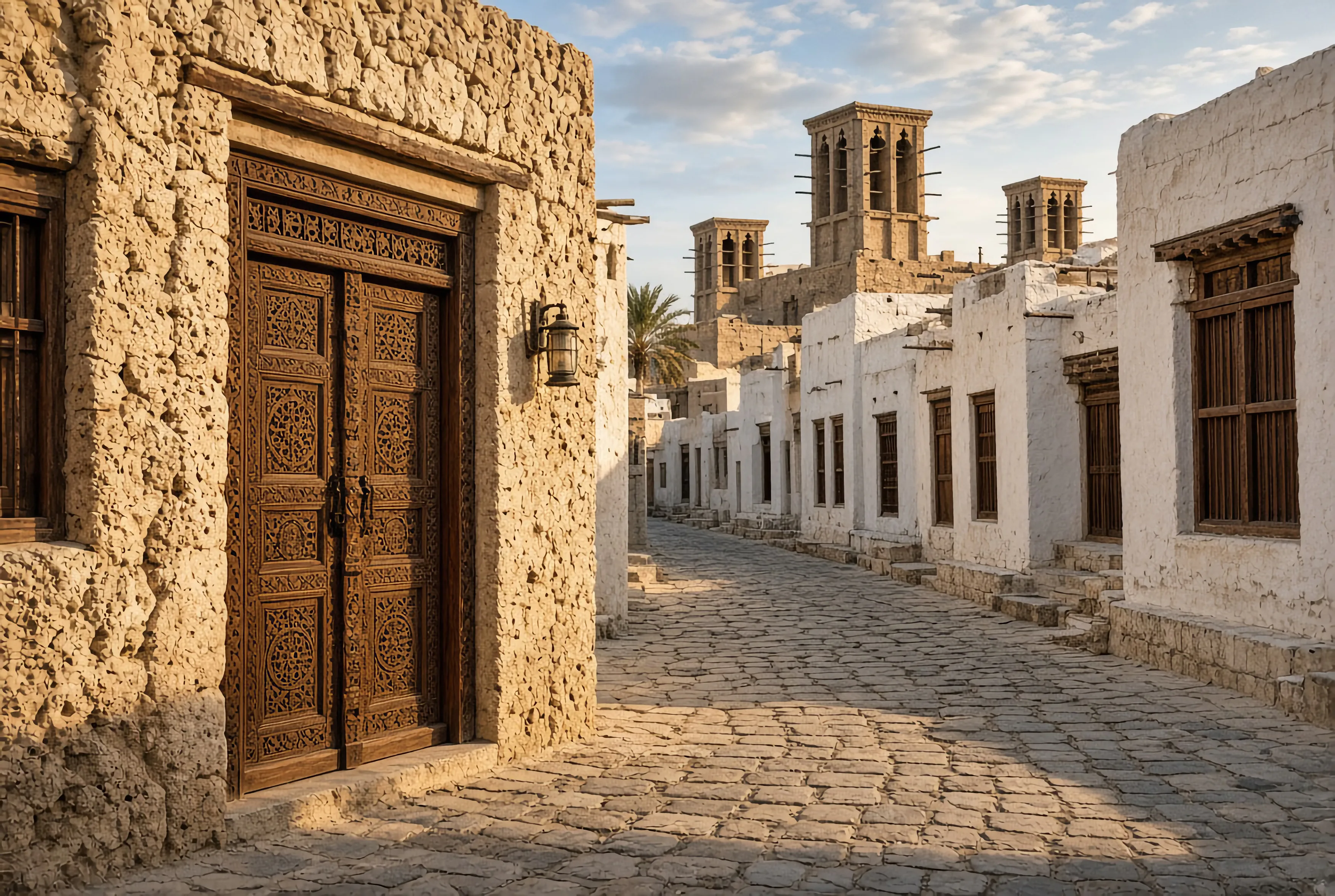
At Nukhidhah House, the separation between the captain’s majlis and his family home makes work and privacy legible at street scale. The distance is small, but a guest crossing the threshold entered a business and hospitality space rather than the whole household. Murad’s separate house and majlis provide a larger comparison.
That arrangement helps explain why reception rooms feature so prominently along the path. The pearl trade depended on meetings, introductions and negotiation, much of it conducted outside a modern shop or office.
A shoreline missing from the street
Several properties were once much closer to the water. A view now occupied by roads or buildings may previously have connected a household to its boats. Fakhro and Al Alawi are particularly useful places to consider that change.
The shore is therefore part of the architecture’s meaning even where it is no longer visible from a window. The Bu Mahir end of the route restores some of the physical connection between city and sea.
The wind tower and the courtyard
Al Alawi’s wind tower is a conspicuous element, but the courtyard and shaded edges also shaped domestic life. A house can be understood through how air, movement and privacy were organised together.
Compare the tower’s outward presence with the more inward arrangement around a courtyard. This is an architectural observation, not a promise that every historic cooling system is operating during a visit.
Pearl-coloured wayfinding
The streetlamps use white concrete with nacre, the pearly material associated with shells. Their colour and finish connect contemporary wayfinding to the route’s subject without pretending to be old street furniture.
They are useful when following the path through a dense neighbourhood, but a lamp is not evidence that the next doorway is a public entrance. The visitor map remains the guide to individual stops.
Two systems beneath one roof
The main centre’s columns and the warehouse walls do not follow the same arrangement. That difference allows the new structure to shelter earlier remains without disguising itself as a rebuilt warehouse.
Looking across the space makes the contrast clearer than a close-up of a single column. It is one of the best places on the route to consider how historic remains can be reused without making all the architecture appear the same age.
A public square as part of conservation
The new squares are more than gaps between attractions. They give a dense district breathing space and places for residents as well as visitors. The wider restoration programme links improvements to ordinary urban life with the preservation of particular houses.
Their role becomes clear during a walk: the transition from narrow lane to open space changes how a group can gather, consult a map or pause without occupying a residential doorway.
04 / Before you go
Plan your visit
A self-guided or guided walk through the houses and markets of old Muharraq.
Admission and guiding
Ask about your selected buildings
The visitor centre supplies interior admission details.
Request a separate quote for private guiding or the National Museum–Bu Mahir boat.
Visiting hours
- Visitor spaces · Wednesday–Monday
- 10:00–18:00
Closed Tuesday. Access to individual houses and the Pearl Museum is arranged through visitor information.
Getting there
Visitor and Experience Centre
Near Suq Al Qaysariyyah · Muharraq
This is the mapped starting point for the market-quarter walk. For the boat to Bu Mahir, depart from Bahrain National Museum.
Plan your heritage visit
Contact the visitor centre for the interiors open on your date, the Pearl Museum and any guided options. A guide is optional.
The regular National Museum–Bu Mahir boat programme runs every 45 minutes except Tuesday, with the last departure at sunset. Confirm the day’s sailings before travelling.
Accessibility
The route uses neighbourhood lanes and historic buildings with differing surfaces, thresholds and stairs. Request a shorter route and specific interior access advice from the visitor centre.
A market-quarter visit
For a first land arrival, the Visitor and Experience Centre beside Suq Al Qaysariyyah gives the most flexible beginning. The canopy and warehouse remains introduce the preparation and supply side of pearling before the walk reaches the captain’s and merchants’ reception buildings.
Tell a driver which centre you want. Bu Mahir is a different starting point beside the shore. The saved place and map point refer to the market-quarter centre; the visitor map then supplies the actual lane sequence to each open house.
The operator identifies several car parks and a parking plot near the centre. Starting there avoids trying to take a vehicle through narrow residential lanes to individual houses. This also makes it easier to shorten the walk after your first indoor stop.
A pearl-and-architecture visit
Visitors most interested in jewellery can make Siyadi Majlis the anchor. Its Pearl Museum gives the objects a setting within the trading family’s reception architecture. Continue to Nukhidhah House to compare a captain’s professional world with the reach of a grand merchant.
This comparison needs fewer stops than a complete path visit. Allow time inside the museum rather than using all the available window to walk between exteriors. Siyadi House and the mosque have different functions from the museum and are not assumed to share its access.
A shore-to-city visit
Arriving at Bu Mahir by boat starts with the relationship between fleet and city. It is the stronger version for visitors who want the sea to frame the history. It also adds boarding, waiting and an onward walking connection to the day.
The end of a chosen route may be some distance from the jetty. A return boat requires time to reach Bu Mahir again; a road pickup can suit a visit finishing around Siyadi. Establish that practical endpoint when selecting your route at the centre.
Open rooms and outdoor lanes
The most rewarding sequence depends on the interiors available that day. A visitor map can connect the buildings, but it does not turn every historic doorway into a public entrance. One or two open rooms with different functions can tell more than a complete exterior circuit.
The public streets are also part of a living neighbourhood. An evening walk gives a different experience of the lamps, squares and architecture, while the indoor collections and reception rooms require a visit during their opening programme.
Shortening the distance
The shaded squares help break up the outdoor route, but much of the walking remains exposed. For a shorter outing, stay around the centre and market and add one selected house. Bu Mahir and the southern properties can form another visit.
A half-day allows a broader route with interiors and a pause. Use the published practical arrangements for hours, admissions and the regular boat programme when choosing that sequence; private guiding and day-specific sailings are arranged through visitor information.
Visit your way
Access and family planning.
Choose buildings as well as a distance
The Pearling Path runs through neighbourhood streets and historic properties. A walkable exterior stretch and an accessible interior are different questions. The surface, doorway, stairs and visitor circulation can vary from one stop to the next.
Tell the visitor centre which buildings matter to you and whether you need step-free access, seating or a shorter outdoor route. For a wheelchair user, a useful answer names the entrance and rooms that can be reached; a general statement that the heritage area is accessible is not enough to plan a visit.
Street-level conditions
Expect narrow lanes, changes of paving, thresholds and road crossings. The squares create places to pause, but continuous shade and seating at every point are not guaranteed. A short circuit around the centre may suit visitors who cannot cover the full urban route.
The shore and city are linked by a pedestrian bridge. Lift operation and the suitability of the crossing for your needs should be included in the centre’s route advice. Do not rely on a long detour through unfamiliar streets if a lift or entrance is unavailable.
Boat access
Boat boarding has its own physical requirements at the National Museum and Bu Mahir. Ask about the gangway, steps, assistance and space for your mobility equipment before choosing a sea arrival. Permission to visit a building does not answer those boarding questions.
A road arrival allows you to begin at a visitor centre without depending on the boat. Arrange a specific pickup point for the end of your chosen stretch if walking back would be difficult.
Sensory and quieter visits
The walk moves between bright outdoor spaces, shaded areas and interiors. Some visitors may prefer fewer stops with more time in each. Ask about group visits or events on the date, and the availability of a quieter time in the Pearl Museum or centre.
There is no confirmed route-wide hearing-loop, tactile or audio-description service in this guide. Visitor information can advise on the support actually available for the buildings you want to enter.
A short route with a clear question
For younger children, the market-quarter centre and one open house are a better starting point than a promise to finish every stop. The question “what did a boat need before it could sail?” links storehouses, supplies, crew and the sea without requiring a long lesson in trading terminology.
Look for a courtyard, a shaded edge and a door leading to a different kind of room. Comparing two spaces gives children something concrete to notice. There is no need to turn a private doorway or a closed house into a stop.
Pearls and the people who found them
The Pearl Museum can anchor a visit for children interested in objects. The small scale of pearls contrasts with the houses and city built from their value. Ask how something so small could pay for so much, then connect the answer to the many people who worked in the industry.
The diving story includes danger, debt and long separations. Explain those parts in a way suited to the child’s age rather than describing every diver as a wealthy treasure hunter. Badr Ghulum’s healing practice is one way to connect work with its consequences.
Boat or walking day
A boat trip can make the shore connection memorable, but it adds waiting, boarding and a return sailing. Families who want a short visit may find a road arrival at the main centre simpler. There is no guaranteed departure at the moment you finish a museum visit in Manama.
Strollers will encounter changing surfaces and thresholds. Use a shorter outdoor circuit if a particular interior has stairs, and arrange care or feeding stops around actual facilities at the centre. A permanent children’s workshop programme is not promised; ask about activities running on your date.
Self-guided walk
Explore beyond the venue.
A practical, step-by-step route connecting this experience with more of Sakhir.Begin at the market-quarter centre
Allow roughly 20–30 minutes for orientation at the Visitor and Experience Centre. Find the current route map, identify open interiors and locate the market buildings around the canopy. The first theme is preparation: timber, provisions and storage made the diving season possible.
This is the starting point saved by the guide. If you are arriving by boat, begin at Bu Mahir instead and ask for the current walking connection into the city.
Read the market and storehouses
Continue through the Suq Al Qaysariyyah area, following the mapped route. Look at how narrow commercial fronts and larger storage spaces served different scales of trade. The street remains useful even when you do not enter every property.
Allow about 20–30 minutes, longer if you stop in shops. Active shops are places of business; ask before photographing merchandise or the people working there.
Compare a captain’s majlis
Follow the route towards Nukhidhah House when it is open. Jassim Ajaj’s reception building gives a specific answer to the question of how a crew was organised on land. Compare its scale and separate family-house relationship with the commercial surroundings you have just left.
Allow about 20 minutes at an open stop. Interior time varies with access and any guide-led visit; use the centre’s map for the actual lane sequence.
Finish around Siyadi
Make Siyadi Majlis and the Pearl Museum the main indoor stop of the northern section. Allow around 40–60 minutes if you want to look closely at jewellery and the reception spaces. The contrast with the captain’s majlis links financial reach to architecture.
Respect the separate functions of Siyadi House and the mosque. Finish at the agreed road pickup point if you are not walking back to the centre.
Add the southern houses and Bu Mahir
For a longer outing, include the southern part of the path and the fort, using the official map and the centre’s advice on open houses. Al Ghus, Badr Ghulum, Al Jalahma, Al Alawi, Fakhro and Murad each add a different relationship to the pearl economy.
A whole-route visit should be planned as a half-day with flexibility for interiors and a break. These themes are not a turn-by-turn street itinerary or a promise of entry into every building. If returning by boat, work backwards from the available sailing at Bu Mahir.
Make a record
Photograph it thoughtfully.
Show a house in its street
A wide street view can explain more than a crop of plasterwork. Include the lane, doorway and neighbouring building so the scale of the property is visible. At a house and separate majlis, photographs from a public position can show how the two spaces relate.
The residential setting requires care. Keep cameras away from private rooms and ask before making identifiable portraits of residents, workers or visitors. A heritage route is still part of people’s daily surroundings.
Courtyards and reception rooms
Where photography is permitted, use the doorway or shaded colonnade to show how the courtyard connects rooms. A room detail works best after a wider view establishes its place in the building. Do not move furniture, touch delicate surfaces or cross a barrier to improve a composition.
Interior rules may differ between houses and museum displays. Follow the instructions at the entrance and beside objects, including any limits on flash or equipment. Commercial work requires permission from the responsible authority.
New architecture
The visitor centre offers views that include both the fine concrete structure and the earlier warehouse walls. Keep enough of each in the frame to show their different alignments. In the squares, the lamps and paving provide another way to record the contemporary route.
These spaces may be used by residents or events. Work from the public circulation area without obstructing a doorway, narrow lane or accessible route.
Shore and fort
At Bu Mahir, a wider view connects the surviving fort to the water. It conveys the maritime starting point better than presenting the tower as an isolated castle. Boat photography should be made from a safe position with the crew’s instructions taking priority over a desired angle.
Late light can suit the exterior architecture, but the last sailing and closing of interiors are practical limits. Do not organise an interior visit around an assumed sunset opening.
See it
In pictures.
8 views, full screen. Tap any one to open the viewer.Around here
Make more of the area.
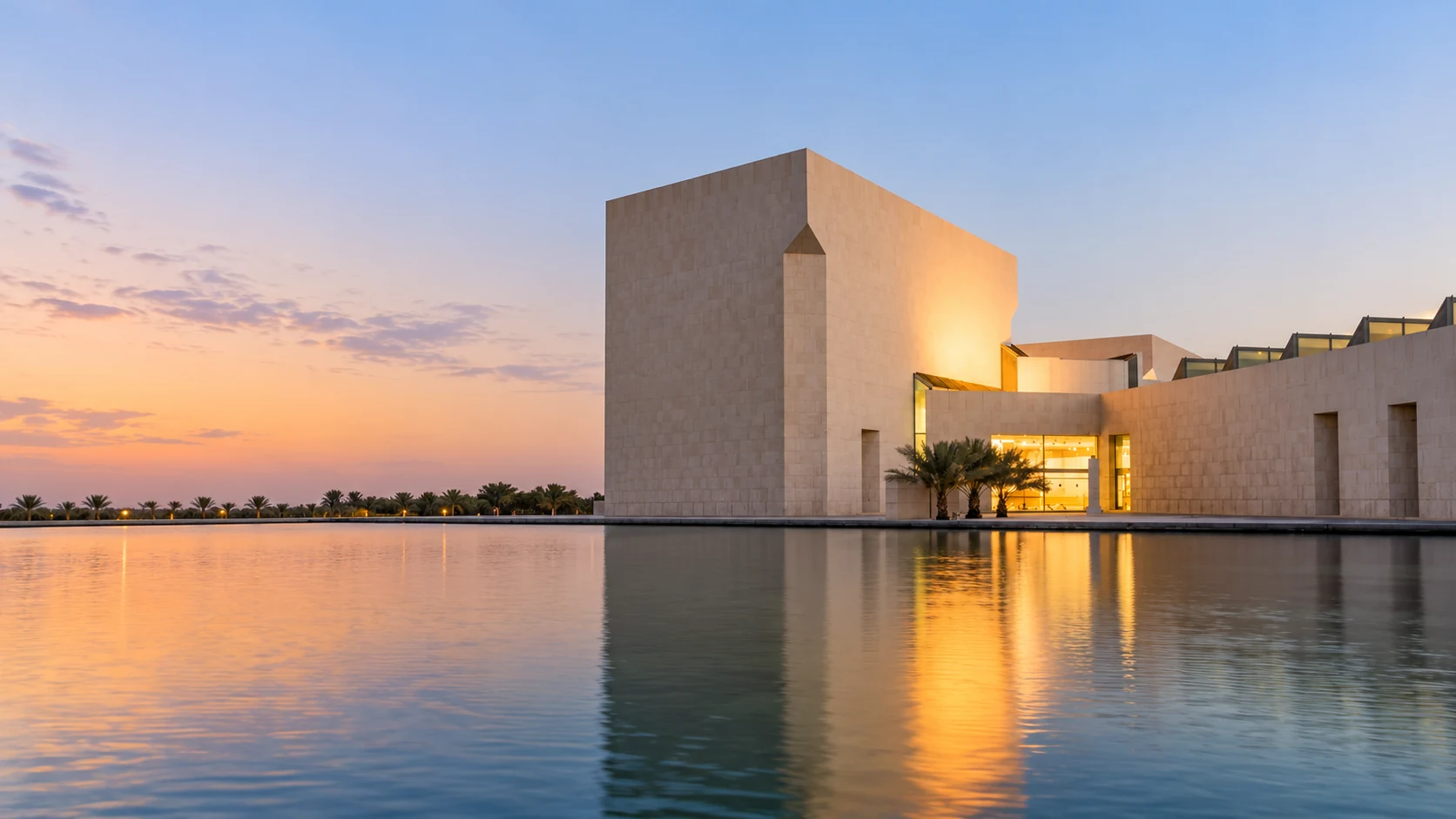
Bahrain National Museum gives the pearl story a longer setting through archaeology, trade and the traditions of everyday life. It is also the departure area for the Bu Mahir boat when the service is running.
Pairing the two works best as a longer cultural outing rather than trying to fit a complete museum visit into a short wait for a sailing. Both close their regular visitor programme on Tuesday.
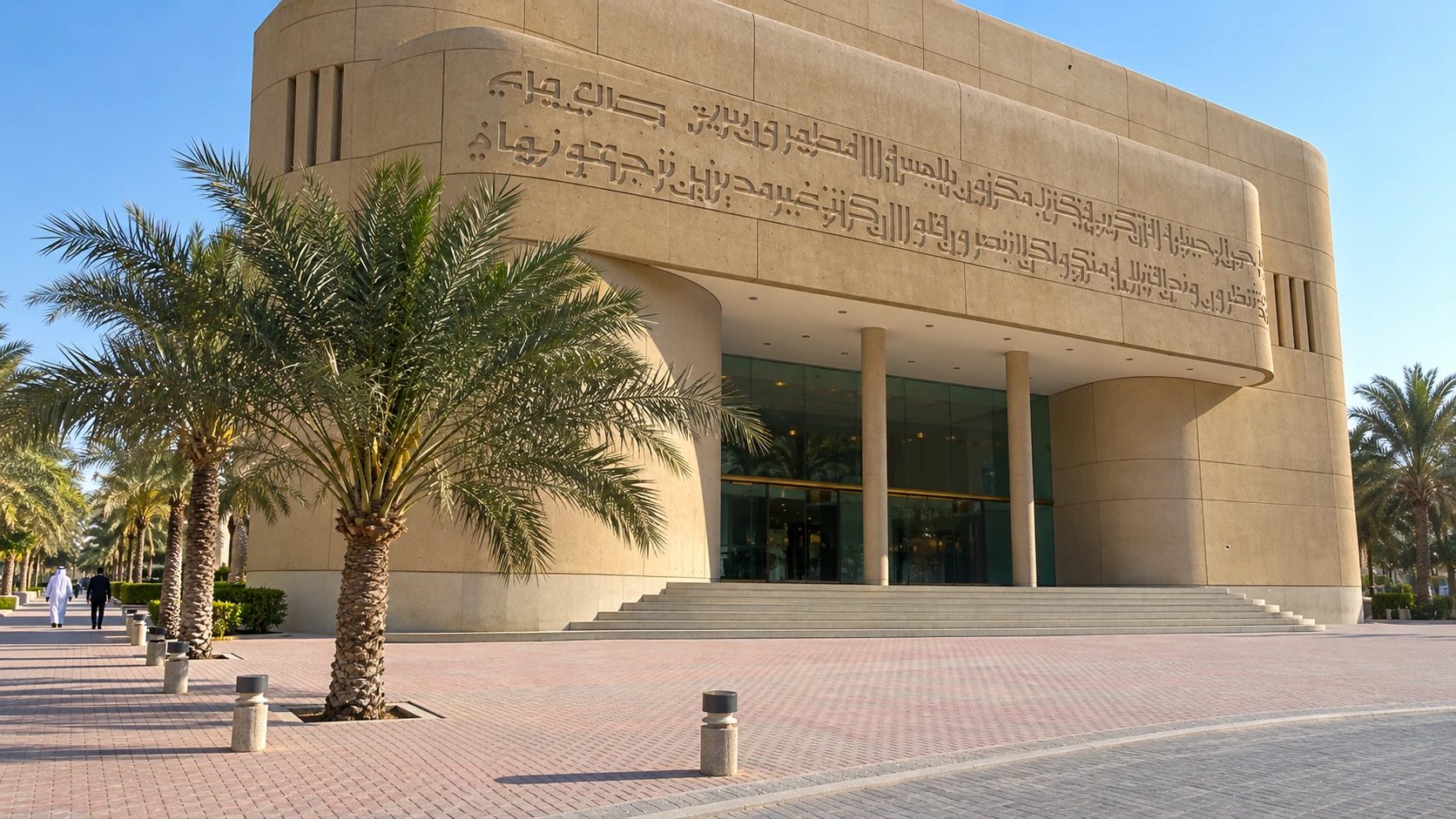
Beit Al Quran provides a different cultural visit in Manama, centred on manuscripts and Islamic arts. It suits an interest in decorated surfaces and skilled handwork that might begin with the houses along the path. Treat it as a road connection with its own visiting hours.
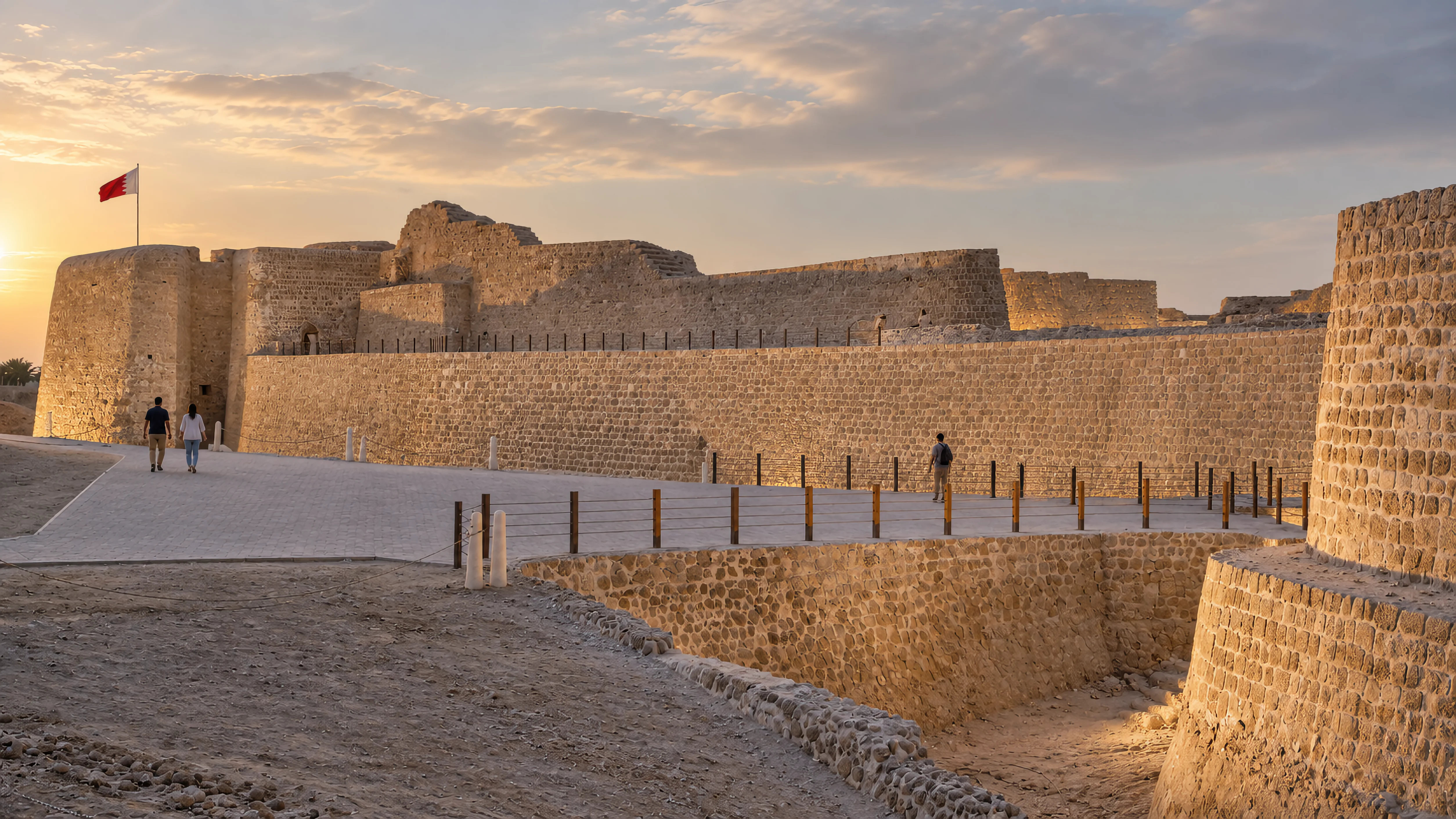
Bahrain Fort moves the maritime story back to the ancient harbour and settlement of Dilmun. Pearling Path explains a much later city and economy; the two sites complement one another without covering the same historical period.
The fort is on Bahrain’s northern coast, not an extension of the Muharraq walk. Allow a separate transfer and enough time for its site museum.
Good to know
Questions, answered.
What is Bahrain’s Pearling Path in Muharraq, and what does it include?
Bahrain’s Pearling Path is a heritage route through historic Muharraq associated with the pearl economy. The wider UNESCO property also includes a surviving shore, Bu Mahir Fort and offshore oyster beds. The urban walk connects houses, reception buildings, shops and storehouses.
Is the Pearling Path in Muharraq an indoor attraction or an outdoor walk?
The Pearling Path includes outdoor neighbourhood streets between visitor spaces and historic buildings. Shade and interiors provide breaks, but much of the walking is exposed to the weather.
Where should I start walking Bahrain’s Pearling Path in Muharraq?
For a first land arrival on the Pearling Path, start at the Visitor and Experience Centre near Suq Al Qaysariyyah. Bu Mahir’s visitor centre suits a sea arrival, and Siyadi Majlis is another starting point. The guide map marks the market-quarter centre.
How long is the Pearling Path walk, and how much time should I allow?
The Pearling Path’s urban walking route is roughly three kilometres. Allow two to three hours for selected stops, and a longer half-day for more interiors, the southern section or boat connections. Actual time depends on the buildings open that day.
Can I walk Bahrain’s Pearling Path without a guide?
Bahrain’s Pearling Path can be walked independently. A guide can add useful detail about family histories, the old shoreline and the workings of the pearl economy. Guiding arrangements and prices are supplied by visitor information.
Which historic houses on Bahrain’s Pearling Path are open to visitors?
Access to Pearling Path houses varies. Some properties retain private uses, and the heritage designation does not make every room a public attraction. Ask the centre which interiors and museum spaces are open for your visit.
What are the Pearling Path visitor spaces’ opening hours and closure day?
Pearling Path visitor spaces normally open Wednesday–Monday, 10:00–18:00, with Tuesday closure. Individual buildings can have separate arrangements. An after-hours street walk does not provide the same indoor access.
How much does visiting the Pearling Path and Pearl Museum in Muharraq cost?
For Pearling Path admission prices, ask the visitor centre about your selected buildings and the Pearl Museum. There is no single all-properties price promised by this guide. Request private guiding and boat prices separately.
Where is the Pearl Museum at Siyadi Majlis, and what can I see there?
The Pearl Museum is within Siyadi Majlis, part of the Siyadi complex in Muharraq. It includes ancient pearls and jewellery alongside natural Bahraini pearl pieces. Siyadi House and the mosque are related buildings with different roles.
Can I reach the Pearling Path by boat from Bahrain National Museum?
The Pearling Path boat connection runs from Bahrain National Museum to Bu Mahir, with departures listed every 45 minutes except Tuesday and the last departure at sunset. Confirm the day’s operation, fare and return sailing before travelling.
Does walking Bahrain’s Pearling Path include pearl diving or an oyster-bed trip?
Walking the Pearling Path does not include pearl diving. The offshore oyster beds belong to the wider heritage landscape. A recreational diving or pearl-searching trip is a separate operator activity with its own meeting point, conditions and price.
Is Bahrain’s Pearling Path accessible with a wheelchair or stroller?
The Pearling Path includes varying surfaces, thresholds, stairs and road crossings. Ask for a specific accessible itinerary through the buildings you want to see. Boat boarding and the pedestrian bridge need their own access advice.
Is the Pearling Path in Muharraq suitable for children?
For younger children on the Pearling Path, a short visitor-centre and house visit works better than committing to every stop. The boat adds boarding and waiting. The Pearl Museum, courtyard plans and stories of boat supplies give different ages concrete things to explore.
Is photography allowed in the Pearling Path’s historic houses and museum spaces?
Photography on the Pearling Path follows each building’s rules; ask before photographing people. Some houses have private areas, and museum displays may have restrictions. Commercial photography needs the relevant permission.
Should I combine the Pearling Path with Bahrain National Museum or Bahrain Fort?
Bahrain National Museum complements the Pearling Path with broader history and the Bu Mahir boat departure area. Bahrain Fort offers a much earlier harbour story, with a separate road transfer and site museum.
Editorial notes
Sources and further reading.
Sources for this guide
Research review: 28 October 2026. Historical interpretation uses the official site/operator, UNESCO, institutional collections and the original research or architecture publishers identified below. Current admission and contact details retain the accepted visitor contract. Suggested visit lengths and route orders are Above.Guide editorial recommendations, not operator schedules.
Source register
S01. Operator visitor information
Evidence reviewed: Direct page read, 28 October 2026. Visitor centres; 10:00–18:00 Wednesday–Monday; Tuesday closure; named parking options; National Museum–Bu Mahir programme every 45 minutes except Tuesday until sunset. Day-specific operation and prices are enquiry items.
S02. UNESCO: Pearling, Testimony of an Island Economy
UNESCO: Pearling, Testimony of an Island Economy
Evidence reviewed: Direct page read, 28 October 2026. 2012 inscription; heritage scope includes seventeen buildings, three oyster beds, shore and fort; merchant, residential and commercial architecture; conservation within a living city. Historic inscription text is not an opening schedule.
S03. Operator: the path in detail
Evidence reviewed: Direct page read, 28 October 2026. Overview of the shore, Bu Mahir, Al Ghus and Badr Ghulum; uncertain builder of Al Ghus; surviving fort fabric; different occupations represented by the route. Building history does not imply unrestricted public entry.
S04. Operator: pearling history
Evidence reviewed: Direct page read, 28 October 2026. Neighbourhood organisation, crew roles, advances and indebtedness, the seasonal relationship between sea labour and city life. Used alongside archival evidence rather than as a romantic account of uniformly shared wealth.
S05. Operator: new architecture
Evidence reviewed: Direct page read, 28 October 2026. Architect credits; Olgiati centre incorporates warehouse remains under a new canopy; market rehabilitation; bridge and parking structures. Describes design, not a guarantee of every lift or facility operating.
S06. Operator: Siyadi Majlis / Pearl Museum
Operator: Siyadi Majlis / Pearl Museum
Evidence reviewed: Direct page read, 28 October 2026. Pearl Museum within the majlis; ancient pierced pearls, Dilmun/Tylos jewellery and natural Bahraini pearl collections; relationship of house, majlis and mosque. Does not publish a universal interior admission price.
S07. Operator: Siyadi House
Evidence reviewed: Official indexed page read, 28 October 2026. Separate family residence and private-use distinction; relation to the broader complex. The museum is not described as occupying every building named Siyadi.
S08. Operator: Nukhidhah House
Evidence reviewed: Direct page read, 28 October 2026. Jassim Ajaj’s 1920s majlis, crew relationships, guest accommodation and separate nearby family house. Name retained with a plain-language explanation of a captain.
S09. Operator: Al Jalahma House
Evidence reviewed: Direct page read, 28 October 2026. Flexible reception and domestic spaces; women’s use of the house during diving season; corridors, stairs and courtyards. Used for spatial interpretation, not an unsupported claim of current full-house access.
S10. Operator: Al Alawi House
Evidence reviewed: Direct page read, 28 October 2026. Provisions trade, freshwater boats, courtyard and corner wind tower; house formerly close to the sea. No claim that the cooling system is currently operating for visitors.
S11. Operator: Fakhro House
Evidence reviewed: Direct page read, 28 October 2026. Timber and boat trade, waterfront growth and reclamation; continuing family-residence use in part of the property. Private boundaries retained in the visitor account.
S12. Operator: Murad House
Evidence reviewed: Official indexed page read, 28 October 2026. Separate residence and majlis around a public space; merchant hospitality and different architectural scale. A family property is not converted into a new independent bookable venue.
S13. Qatar Digital Library: pearl diving and trade
Qatar Digital Library: pearl diving and trade
Evidence reviewed: Institutional archival article read, 28 October 2026. Context for advances, catch sales, financial risk and indebtedness, with references to the British Library India Office records. Historical administration is treated as a perspective, not the voice of all divers.
S14. Archival record: File 8/3, Pearling industry
Archival record: File 8/3, Pearling industry
Evidence reviewed: Digitised archival page read, 28 October 2026. Primary administrative account of diver debt, provisioning charges and sales. Used narrowly to corroborate the existence of financial disputes; no verbatim colonial terminology imported into the narrative.
S15. The Diver’s New Papers, JESHO
Evidence reviewed: Research abstract and available text read, 28 October 2026. Historical research on the barwa, debt and the relation between labour and mobility; used to avoid flattening all credit arrangements into an identical timeless practice.
S16. OFFICE: Pearl Path, project 133
OFFICE: Pearl Path, project 133
Evidence reviewed: Architect project page read, 28 October 2026. Public squares, nacre concrete, wayfinding lamps and bridge design in collaboration with Bureau Bas Smets. Design description kept separate from live access and maintenance.
S17. Aga Khan Development Network: Muharraq laureate
Aga Khan Development Network: Muharraq laureate
Evidence reviewed: Award-body page read, 28 October 2026. 2019 award for the wider Revitalisation of Muharraq; restoration, public space, community uses and urban life. The award is not attributed to one house or only to the canopy.
S18. Bahrain Tourism: Pearling Path
Bahrain Tourism: Pearling Path
Evidence reviewed: Official indexed page read, 28 October 2026. Approximately three-kilometre urban route and complementary account of named houses. Distance is rounded; it is not a newly surveyed path or a routing-engine measurement.
How to read the guide
The history and highlights describe the subject; they do not promise access to every historic space or the continued display of one object. Current entrance instructions and conservation closures take priority over a suggested route. Opening hours, admission and transport arrangements should be reviewed again before 15 February 2027 for the race travel period.
Descriptions of objects follow the institution’s published collection accounts. A photograph or a reconstructed display is not used to infer an unrecorded date, owner or archaeological findspot. A suggested family activity is an editorial way to explore the displays, not an advertised staffed workshop.
Access and current programmes
Detailed room-level step-free access, equipment loans and specialist sensory support are not confirmed for every part of these visits. The practical advice therefore names the questions to put to visitor information and retains physical limitations, without promising facilities that have not been established. Boat operation and boarding conditions require day-specific advice from the operator.
Historical architectural descriptions do not confirm current lift operation, ticket availability or access inside a private property. Temporary exhibitions and performance programmes can change; past events have not been carried forward as current offers.
Counting and distance
UNESCO’s overview describes seventeen buildings. The operator’s detailed account uses a different grouping of structures and clusters; these are not added together into a new total. Tourism describes an approximately three-kilometre urban path, while the architects describe a longer corridor. The walk length is rounded, with extra time for interiors and detours.
The generic visitor page’s short list of open properties is not treated as a complete current room-by-room opening table. The newer specific Siyadi Majlis page identifies the Pearl Museum; visitors are directed to the centre for the buildings accessible on their date.
Opening hours, prices, programmes and access arrangements can change. Confirm critical details with the venue.
Continue exploring / Bahrain
More to explore
in Bahrain
Find another place for your itinerary, or explore all things to do in Bahrain.
 Bahraini & casual diningNaseef on the Saada waterfrontExplore experience →
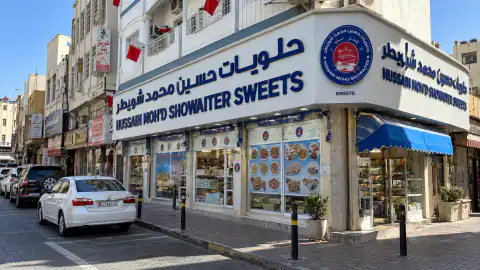 Cafés & bakeriesHussain Mohammed Showaiter Sweets in MuharraqExplore experience →
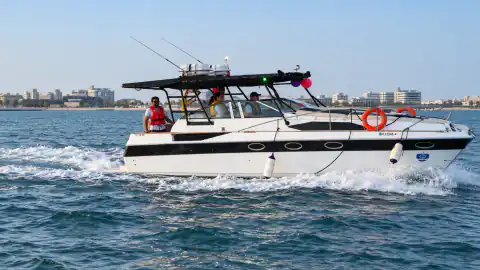 Yacht charters & marineBig Brain Concept private yacht cruiseExplore experience →
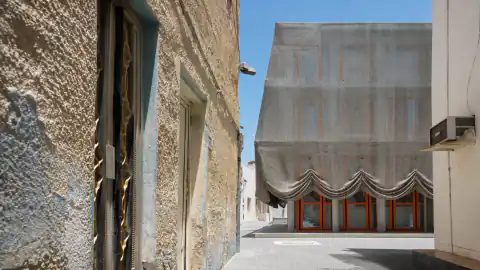 Concerts & entertainmentDar Al MuharraqExplore experience →