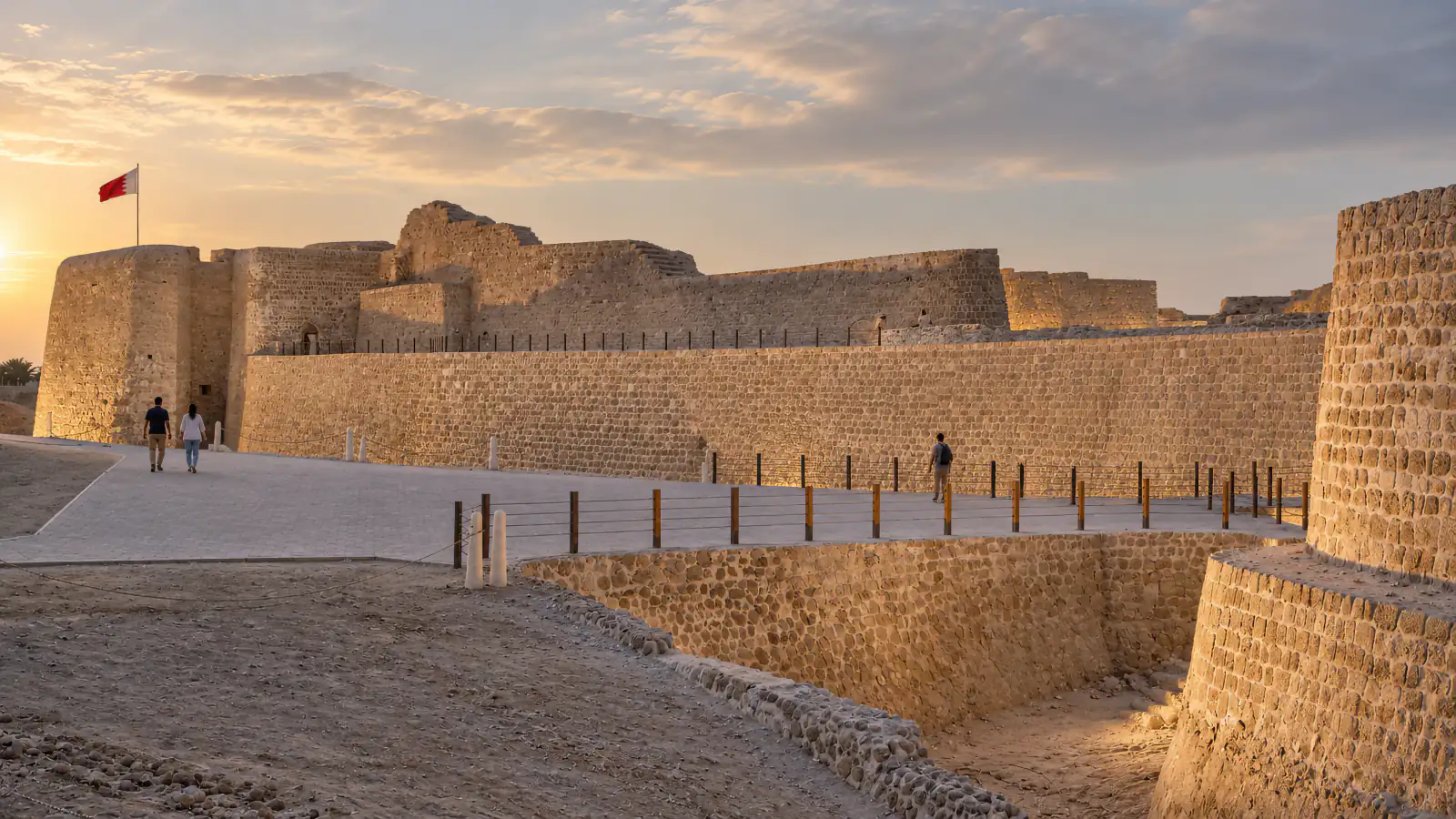
In depth
Bahrain Fort
Explore Dilmun’s ancient harbour settlement, the hilltop fortress and a site museum filled with seals, ceramics and objects from Bahrain’s trading past.
Story · Visit · Route · Links
Visitor Essentials & Quick Answers
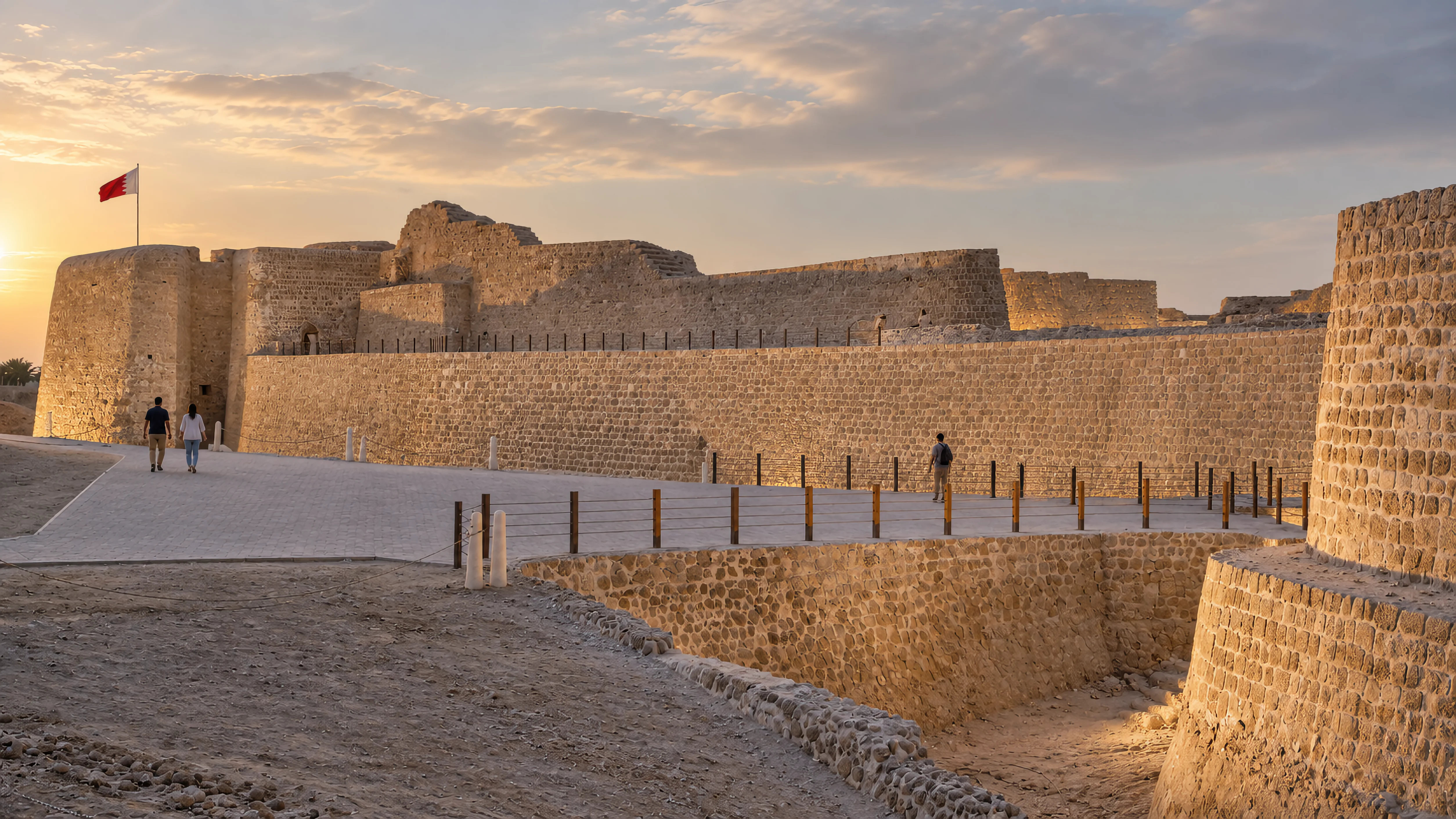
What history can I explore at Bahrain Fort, Qal’at al-Bahrain?
Bahrain Fort stands above successive settlement layers associated with Dilmun, Tylos and Islamic Bahrain. The later fortress is one part of a much older archaeological landscape.
Where should I arrive for Bahrain Fort and its site museum?
Use Bahrain Fort Museum’s visitor area in Karbabad for a combined visit. The map pin marks Qal’at al-Bahrain itself; ask visitor information for the appropriate entrance approach.
How long should I allow for Bahrain Fort and its museum?
Allow two to three hours for Bahrain Fort’s five museum galleries, archaeological remains and open fortress route.
Should I visit Bahrain Fort Museum before the archaeological site?
Bahrain Fort Museum introduces Qal’at al-Bahrain’s settlement layers and finds before the outdoor walk. Its five chronological galleries help explain the low archaeological remains.
Does Bahrain Fort have level, step-free outdoor paths?
Bahrain Fort’s outdoor routes include uneven surfaces, slopes and steps. Ask visitor information for a route suited to your mobility needs.
Is Bahrain Fort Museum the same as Bahrain National Museum?
Bahrain Fort Museum is at Qal’at al-Bahrain in Karbabad. Bahrain National Museum is a separate institution on the Manama waterfront facing Muharraq.
Choose your depth
Essentials or more detail?
See visiting essentials, or read more about the history and places nearby.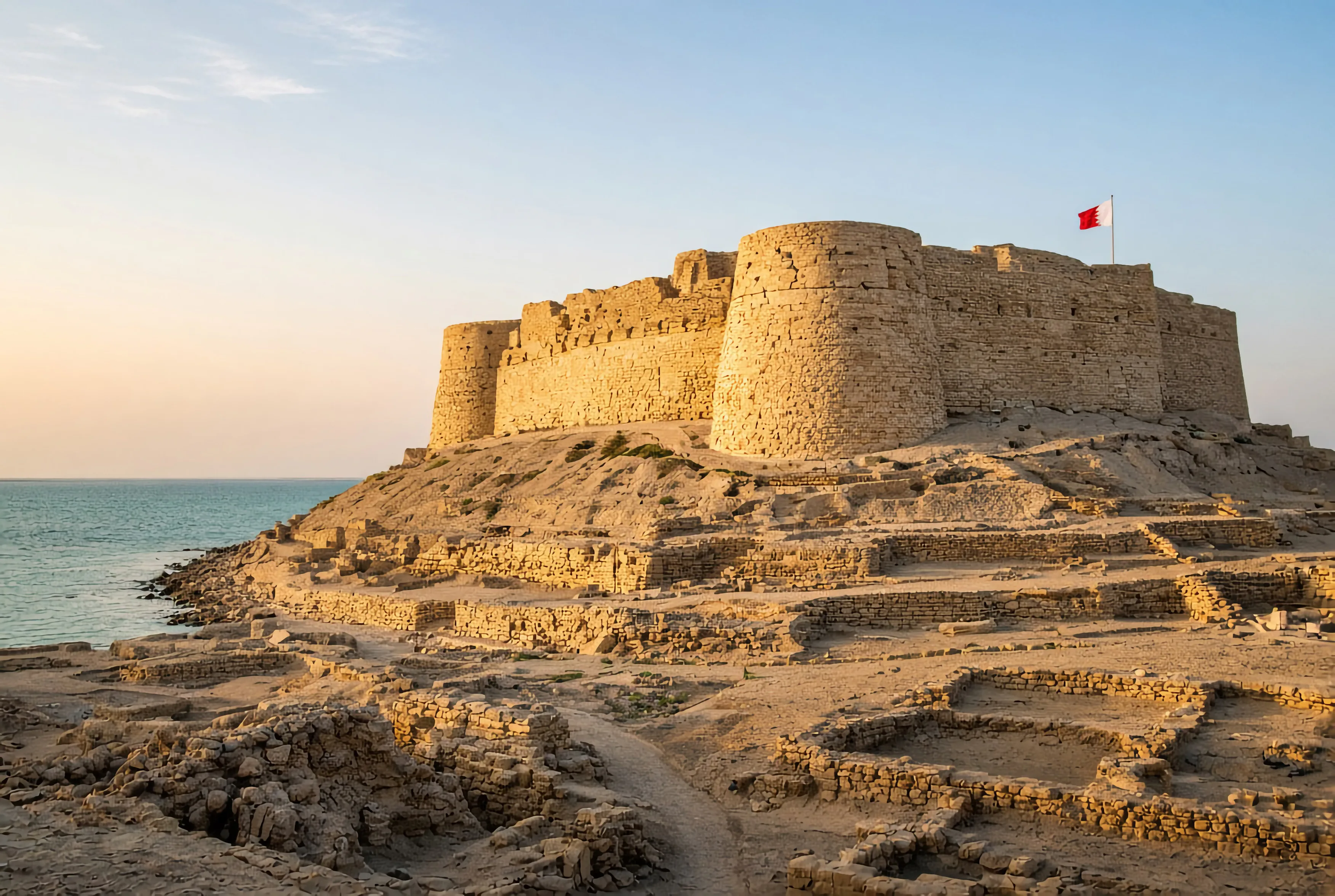
01 The experience
What to expect.
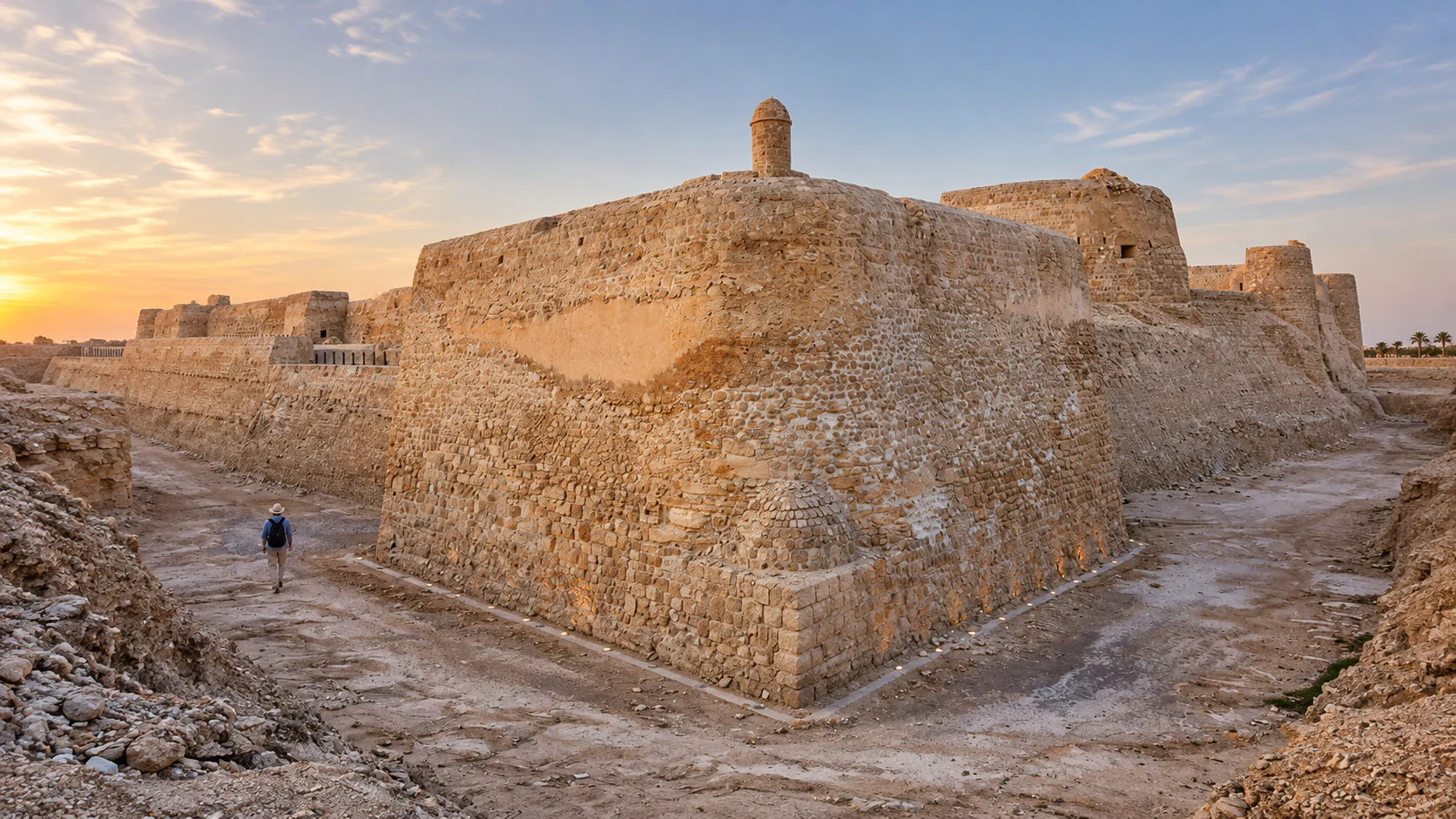
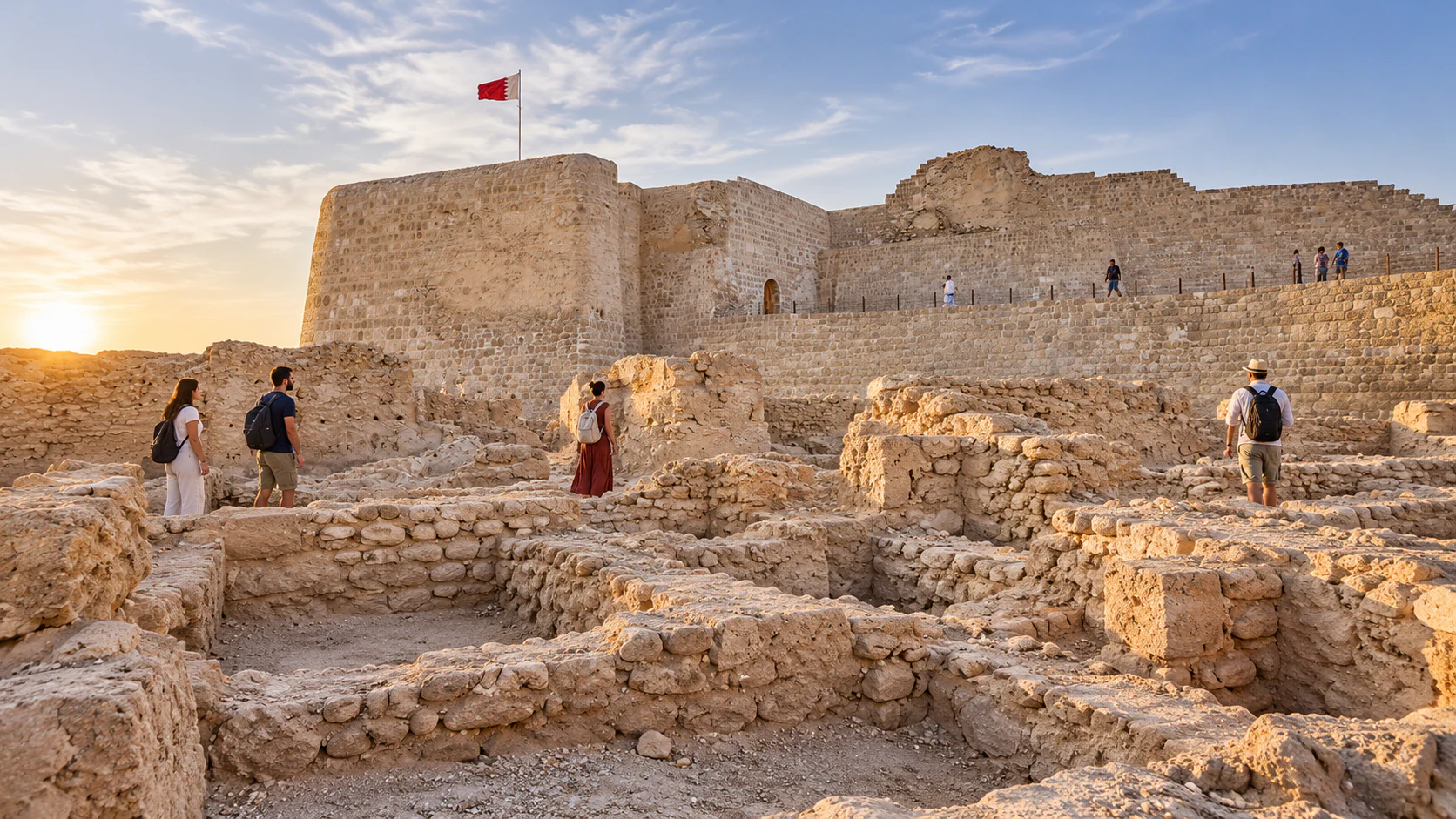
Bahrain Fort stands on top of a much older story. Its walls crown a mound formed by successive settlements, with the remains of streets, houses and monumental buildings below. The sea, the surrounding gardens and the small objects displayed in the site museum help explain why people returned to this place for so many centuries.
The fortress is the most recognisable part of the view, but the whole site is Qal’at al-Bahrain: the ancient harbour and capital associated with Dilmun. A visit works best when the hilltop building and the archaeological settlement are read together. The museum supplies the human scale that low excavated walls cannot always convey on their own.
From trading objects to a city
Start with a seal, a pot or a piece of administrative evidence in the museum, then look back towards the mound. These objects belonged to a place that connected maritime exchange with local production and daily life. Dilmun’s importance came from its position within Gulf trading networks, not simply from the presence of an impressive ruler’s residence.
The tell, or settlement mound, is especially revealing. Later buildings did not occupy an empty landscape: they stood over earlier streets and rooms. Archaeology exposes those relationships in sections through the ground, while the museum’s chronological arrangement turns the layers into a sequence that visitors can follow.
More than one fort
The large fortress at the top belongs to the later part of the site’s history and is commonly associated with Portuguese power in the Gulf. Other defensive structures and urban walls belong to different periods. The word “fort” on a modern sign therefore covers a landscape whose buildings were neither all built together nor used for the same purpose.
That variety is the pleasure of the visit. An outdoor circuit offers monumental walls and the coastal setting; the museum explains successive societies through what they left behind. Visitors interested mainly in a dramatic exterior can spend less time here, but two to three hours allows the museum and site to complement each other.
The sea and the gardens
The harbour relationship is central to the UNESCO designation. A historic sea channel and an offshore tower form part of the protected story, alongside the tell. Palm gardens around the land site connect maritime wealth with agriculture and the making of date products.
You do not need to see an offshore structure clearly to understand its importance. From the permitted shore-side routes, the museum and fort together show the relationship between a defensible settlement, access to boats and the land that fed its people.
Choosing a visit
The site museum is the best beginning for someone new to Dilmun. Follow its five chronological galleries before walking to the outdoor remains and fortress. If light and temperature favour going outside first, return to the museum while it is still open.
Plan the combined visit for Tuesday–Sunday, within the regular 08:00–18:00 window; the museum closes Monday. The outdoor site has uneven ground and steps, so visitors with mobility needs should request a suitable route rather than assume the hilltop circuit is step-free. The saved map pin marks the fort, while the museum visitor area is the arrival point for a combined visit.
The story
History & character.
Why a mound matters
Qal’at al-Bahrain is a tell: a hill created through repeated occupation rather than a natural summit chosen for a single castle. Its earliest settled layers reach back to about 2300 BC. The visible upper fortress belongs near the end of a sequence extending through the Dilmun, Tylos and Islamic periods.
That arrangement changes how the site should be read. A visitor standing high beside the fort is also standing above earlier cities. The mound’s height is evidence of rebuilding, survival and change. The open excavation areas make parts of that process visible, though they reveal only a portion of the whole settlement.
The phases are archaeological groupings. They help organise a complex record, but do not mean each new population arrived on a precisely known day or that every building changed use at the same moment. Museum interpretation gives the chronology a clearer shape than an unaided walk among the walls.
Early Dilmun and the harbour
In the late third and early second millennia BC, the settlement developed into a major centre of the Gulf exchange system. The routes linked Mesopotamia and regions to the east, including the Indus world. Bahrain’s position made it useful as a meeting point between those connections and the local island economy.
Urban remains show that this was more than a place where boats briefly stopped. Defensive walls, streets, residential space and substantial storage architecture indicate an organised settlement. Goods had to be received, held, accounted for and redistributed. The archaeological record lets the visitor connect long-distance commerce with ordinary rooms and containers.
Large central buildings developed around 2000 BC. The excavators describe substantial limestone-built storage structures as part of a palace complex. Their scale suggests the organisation of resources beyond a single household. Their later reuse is as significant as their original construction.
Middle Dilmun and administration
Parts of the monumental complex remained in use during the second millennium BC, including the period associated with Kassite influence from Babylonia. Administrative writing is an important part of this phase. Cuneiform evidence connects the settlement’s architecture with the management of goods and people.
The term “palace” should not conjure only a royal living room. In an ancient settlement it can include storage and administrative functions. Rows of rooms and substantial walls may represent the practical organisation of an economy as much as ceremonial display.
For visitors, this makes the museum especially valuable. An inscribed object or an account of storage practices gives an inhabited purpose to architecture that now survives largely at foundation level.
Late Dilmun and reused monumental space
The central structures were adapted again in the first millennium BC. Published excavation research traces buildings whose use extended across more than a thousand years. The Late Dilmun palace was therefore part of a long sequence of rebuilding rather than a wholly isolated creation.
Some of the most intriguing evidence concerns bowls containing snake remains deposited beneath floors. The site museum has presented a reconstruction of the discovery context. The meaning is debated: ritual, protection and the use of particular rooms are questions explored through the find, not settled by the mere presence of a snake.
It is tempting to make a memorable story from a single unusual object. The stronger connection here is between an object, its position under a floor and the sequence of the building around it. That context is what separates archaeology from a cabinet of curiosities.
Tylos and continuing exchange
During the period known as Tylos, Bahrain remained connected to wider regional trade. The settlement record at Qal’at al-Bahrain belongs to that continued activity, even as political and economic relationships changed. The site’s history does not end with the peak of Early Dilmun.
Ceramics and other finds help archaeologists recognise these connections and changes. Their dating and distribution can reveal an occupation phase that is less immediately dramatic than the upper fortress. A chronological museum visit keeps the later ancient periods from disappearing between Dilmun and Portuguese history.
Islamic settlement and the later fortress
The Islamic centuries added more occupation, production and defence. Date-syrup installations are a particularly useful link between settlement and the surrounding gardens: they show agricultural produce being processed within the inhabited site.
The large fortress crowning the tell is the most conspicuous later monument. Its strong defences belong to a Gulf in which control of sea routes remained valuable. The modern name Qal’at al-Bahrain takes its cue from the fort, though the significance of the place extends far below and beyond it.
The safest way to connect a specific visible wall with a period is through the site’s interpretation. The large fort, earlier coastal defences and ancient city walls should not be collapsed into one building history.
Excavation and a new museum
Modern archaeological work transformed knowledge of the site. Danish expeditions began in the 1950s, associated with P. V. Glob and Geoffrey Bibby. Later French and Bahraini work added to the long record of excavation, analysis and conservation.
The research publications themselves show why the story continues to develop. Architecture, animal remains, inscriptions and pottery are studied in relation to their contexts, and interpretations can change. Earlier romantic connections between Dilmun and a literal earthly paradise are not a substitute for that evidence.
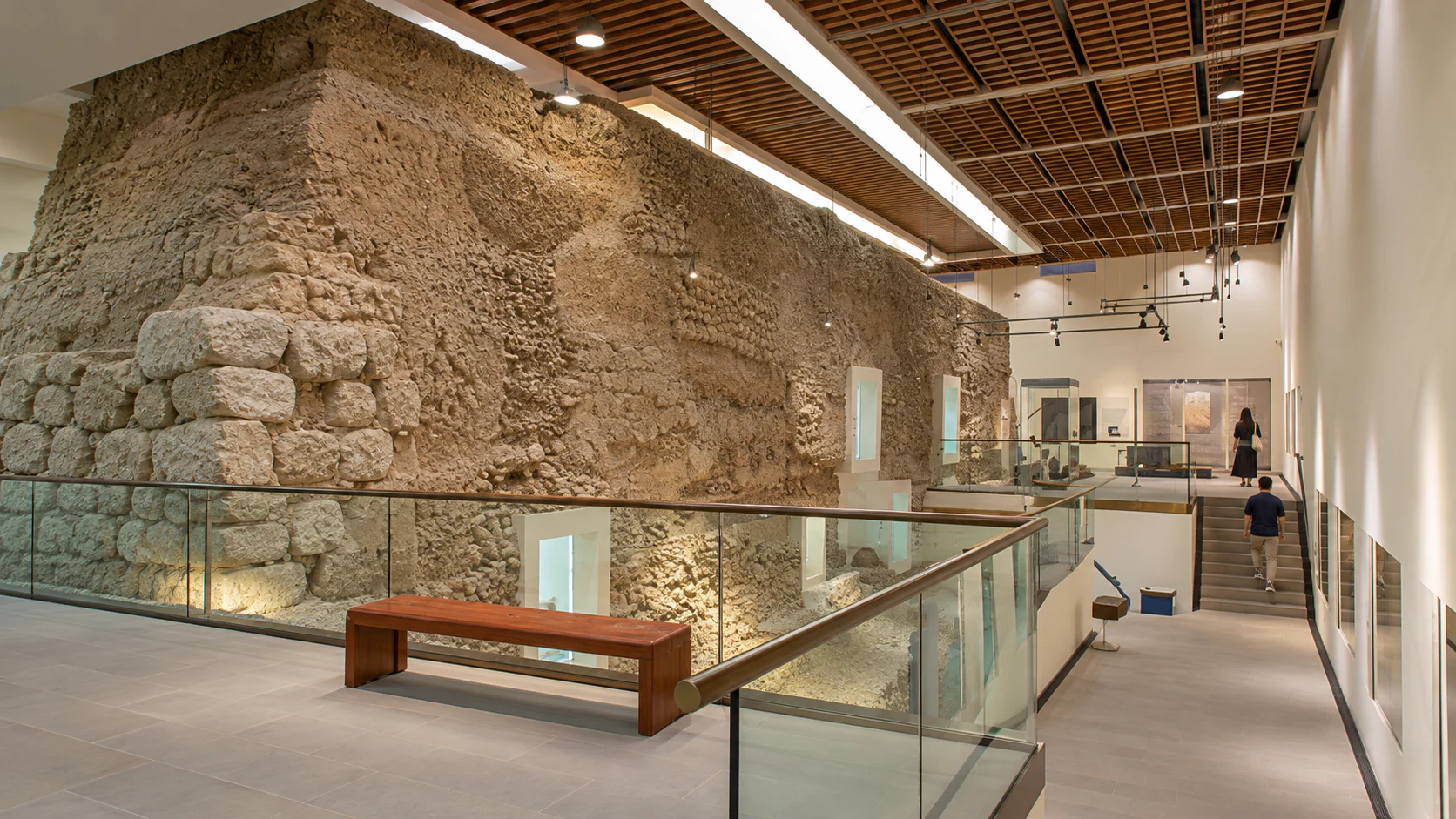
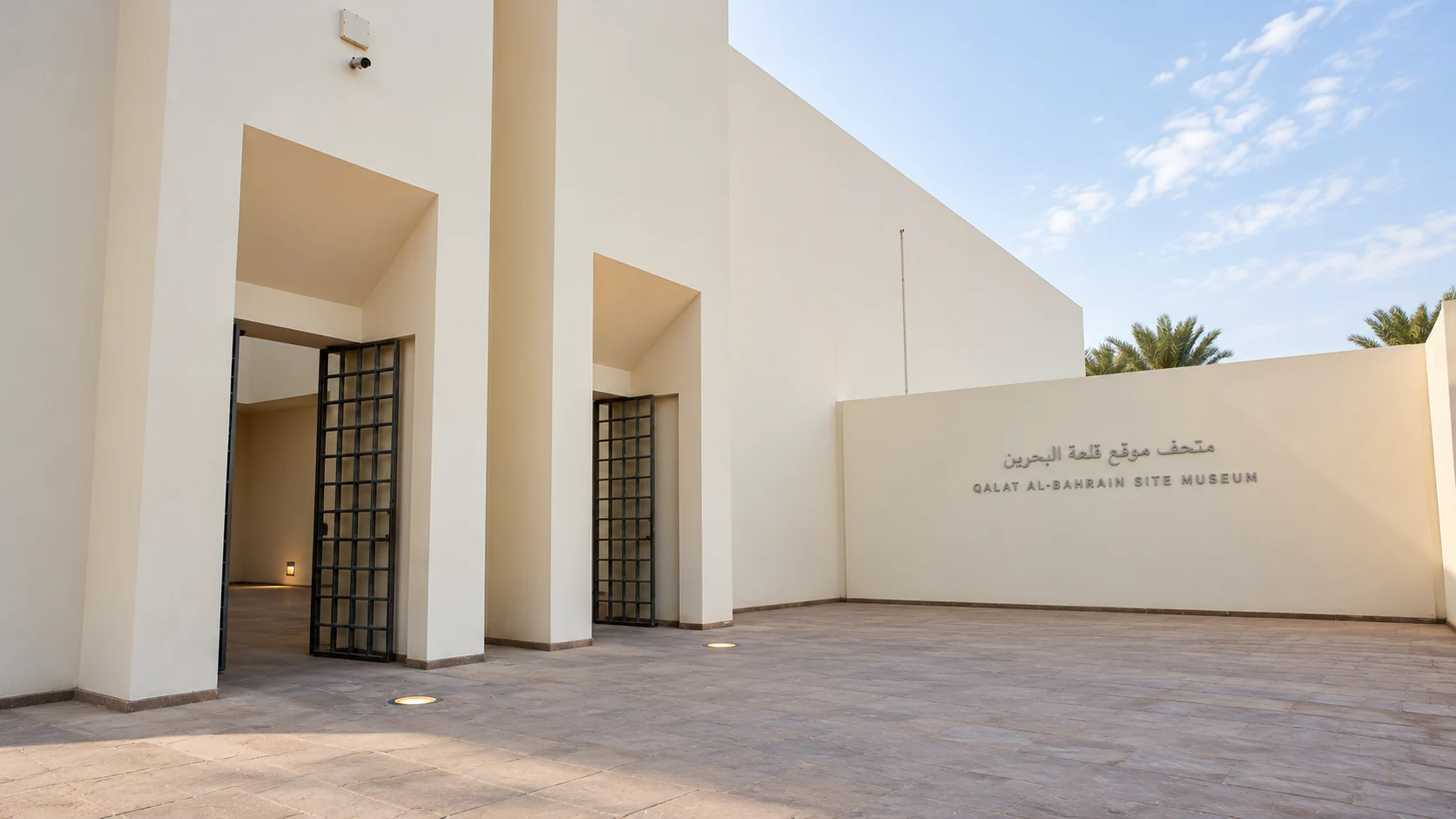
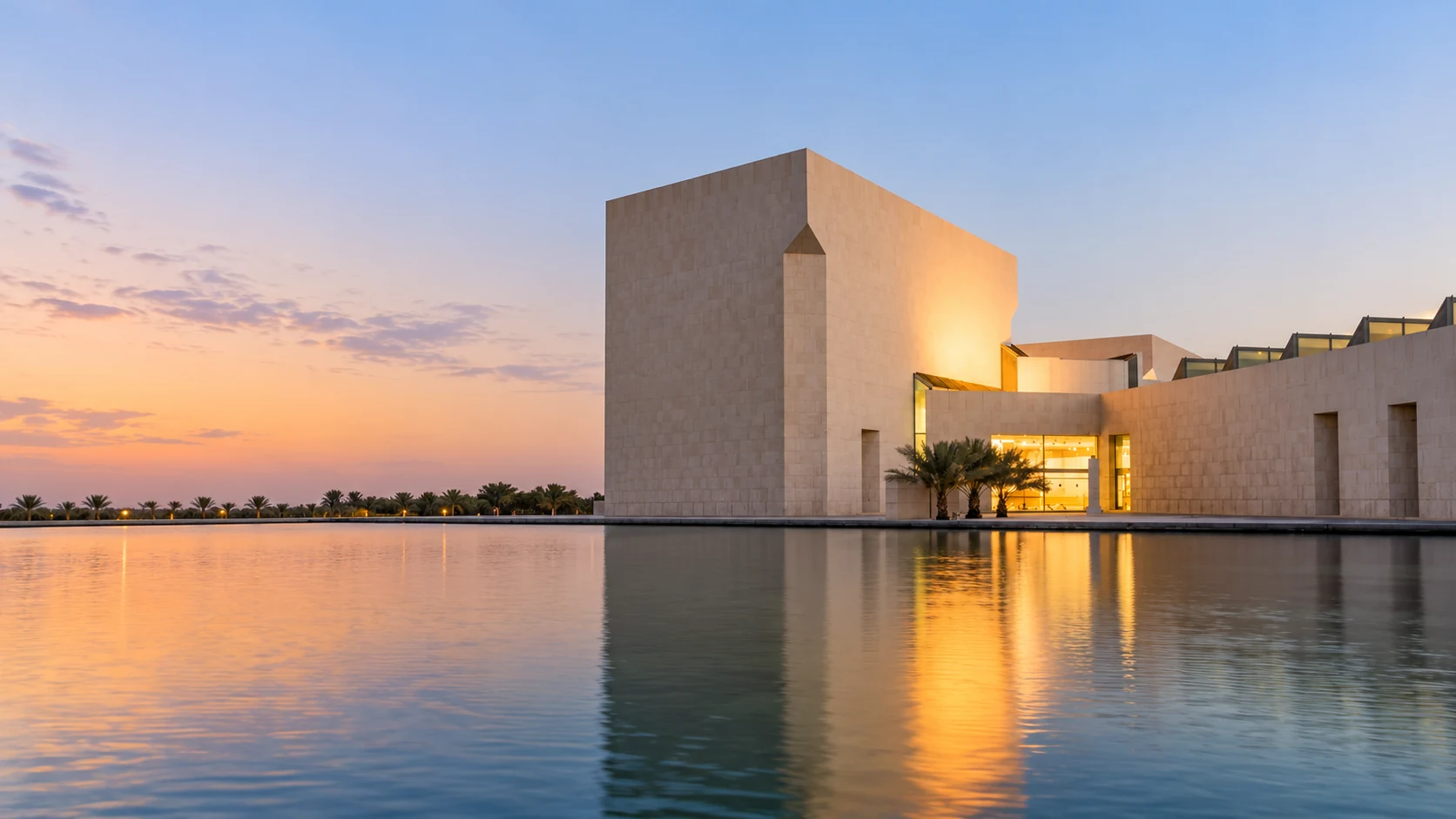
The site museum opened in February 2008. Designed by Wohlert Arkitekter, it brings the finds close to the place where they were recovered. The arrangement around a tall representation of the tell’s layers turns stratigraphy into a spatial experience rather than leaving it as a technical word.
World Heritage and the wider landscape
UNESCO inscribed Qal’at al-Bahrain in 2005. The protected story includes the ancient harbour relationship and surrounding agricultural setting as well as the fort and settlement. A later extension brought the sea tower and channel into the property.
This broad view explains why a museum object, a low archaeological wall and a palm garden all belong within the same visit. They are different kinds of evidence for a place that joined sea traffic, settlement and production over a very long period.
Look closer
Highlights and hidden details.
The settlement mound
The tell is the organising feature of the site. From permitted viewpoints, look at the relationship between the upper fortress and lower excavated remains. The rise is made of successive occupation, which is why structures at different heights can belong to very different periods.
A section through the ground can be more informative than the most complete wall. It shows how archaeologists connect one building phase to the next.
The hilltop fortress
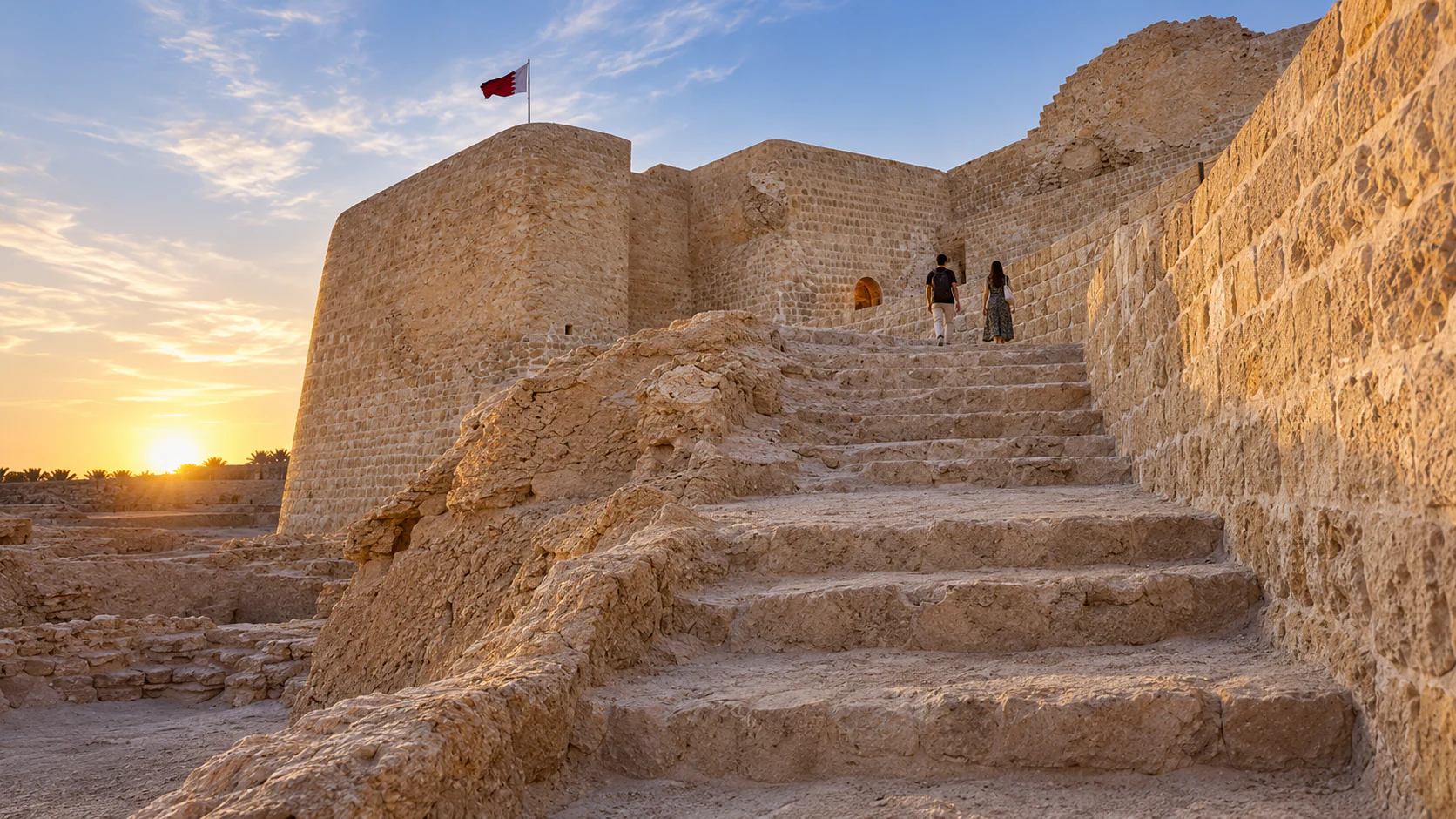
The upper fortress supplies the site's dramatic silhouette. Its defensive mass and commanding position belong to the later history of controlling this coast. Walk the permitted circuit to understand its scale in relation to the settlement below.
Do not climb closed walls or use an archaeological edge as a viewing platform. The public route determines which parts can be entered and how close visitors can approach.
Ancient streets and domestic space
The excavated urban fabric turns a famous trading name into a town. Low walls and passageways reveal relationships between movement, rooms and larger structures. Read the interpretation to identify the phase of a particular area.
It is worth giving these remains time before returning to the fortress. They show the place where people lived and worked, rather than only the monument that later gave the site its name.
The central monumental buildings
The published excavation sequence traces storage and palace architecture reused across Early, Middle and Late Dilmun. The central area illustrates long-term investment in the same part of the settlement.
These structures are easiest to understand after the museum. A room plan, its date and the associated finds help distinguish a palace organisation from an ordinary domestic courtyard.
The tell wall in the museum
An eight-metre representation of the archaeological layers gives the museum a strong vertical focus. Its five chronological galleries translate the settlement’s successive phases into a sequence a visitor can follow.
Stand back before concentrating on individual cases. The relationship between the levels and the central wall explains the display's organising idea.
Seals, vessels and administrative life
The collections connect durable objects with trade, storage and everyday use. Seals and inscriptions offer a different scale of evidence from monumental walls; a vessel can connect food, movement and production.
Look at the date and find context as well as the object’s appearance. The most useful question is how it contributes to the phase of settlement being explained around it.
The snake-bowl display
The reconstruction of bowls deposited beneath a floor is one of the museum’s more unusual archaeological subjects. It shows how a discovery was situated, rather than displaying an animal image as an unexplained symbol.
Its interpretation remains open. The arrangement can introduce questions about ritual and protection without requiring a confident claim about a single named cult.
Date processing and the gardens
Date-syrup installations, known as madbasa, connect the settlement to date cultivation. The agricultural landscape helps explain what supported the town alongside maritime exchange.
Use the designated interpretation to locate the relevant remains. The connection is valuable even if an installation is not accessible on the day's walking route.
The coastal relationship
The northern sea outlook belongs to an ancient harbour story that includes a historic channel and offshore tower. The latter is often interpreted as a maritime marker or lighthouse, but is not a guaranteed visible close-range stop on a normal land visit.
The view is most rewarding when you have already considered how boats, stored goods and the settlement worked together. It gives the museum’s objects their wider setting.
Museum courtyard and sea-facing side
The contemporary museum links its galleries to the coast and the surrounding landscape. Its courtyard and café area offer a change of scale after the chronological displays.
When the café is operating, it can make a convenient break during a combined visit. The museum’s own closing time remains the limit for galleries, regardless of later food service.
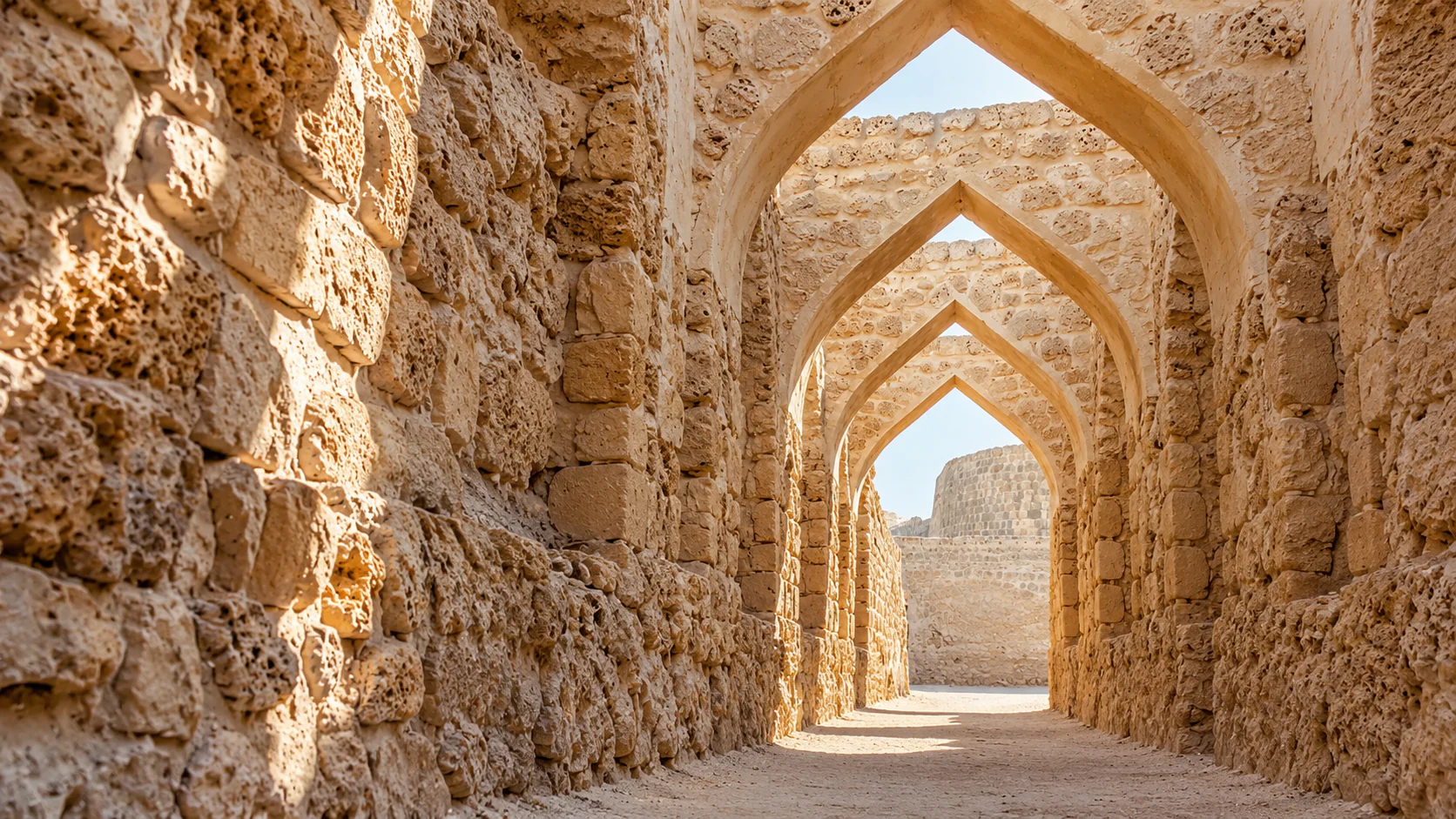
Details to look for.
A low wall can carry a long history
The height of a surviving wall is not a measure of the importance of the period it represents. An ancient foundation may be all that survives of a complex building, while a much later fort remains monumental. Compare chronology and function before comparing visual impact.
This is also why a museum-first visit helps. It gives modest remains a place within the long sequence instead of asking them to compete with the fortress as a spectacle.
A reused room
The palace complex’s long history of reuse is one of the site's distinctive features. A building can retain a location or part of a plan while its meaning changes. The sequence is more interesting than a simple label of “the palace”.
Look for interpretation that distinguishes an original structure from later alterations. Archaeology often asks how a room changed, not only when its first wall was laid.
Food beneath the international story
Research on fish remains provides evidence for the exploitation of marine resources through several phases of settlement. This is the everyday counterpart to accounts of distant trading connections. A port town had to feed its residents as well as move valuable cargo.
The fish-bone study is archaeological evidence, not a promise of a named object in a particular museum case. It offers another question to carry through the site: what did living here require on an ordinary day?
Date syrup and a working landscape
The madbasa links stored produce to cultivated palms. A process within a building depends on a landscape beyond its walls. That relationship makes the gardens part of the historical reading, rather than merely an attractive margin around the fort.
The view is especially useful when it includes the different elements together: cultivation, settlement and coast. Each supported the place in a different way.
Evidence that resists a neat answer
The snake deposits illustrate the difference between discovering something and fully explaining it. Bowls, their contents and their position under a floor are evidence; the precise beliefs behind the act are harder to reconstruct.
A good museum visit can leave that question open. The uncertainty is part of the historical subject, not a reason to turn a debated interpretation into a fixed story.
The museum as a section through time
The tall central display gives the visitor a way to imagine depth below the outdoor surface. It joins the museum’s physical route to the archaeological method used on the mound.
Compare this vertical organisation with the horizontal walk outside. Together they explain why one short stretch of coastline can contain such a long record.
04 / Before you go
Plan your visit
Museum collections, the hilltop fortress and the ancient harbour landscape.
Admission
BHD 2 per tourist or resident
Site museum ticket; Bahraini citizens BHD 1.
Museum tickets are sold at the venue. Fort entry arrangements are available from visitor information.
Opening hours
- Fort · daily planning window
- 08:00–18:00
- Museum · Tuesday–Sunday
- 08:00–18:00
Museum closed Monday. Enquire before a visit after 18:00.
Getting there
Qal’at al-Bahrain visitor area
Karbabad · northern Bahrain
For the museum and fort together, arrive at the museum visitor area. The map pin marks the fort rather than a vehicle entrance.
Museum and guided visits
A self-guided visit can combine the galleries and outdoor site. The museum information desk lists free multilingual audio guides.
Free guided tours are listed, with advance arrangements advised; ask about the available language and time.
Accessibility
Outdoor archaeological routes have uneven ground. Ask the visitor team about step-free museum access and a suitable route through the fort.
The museum as your starting point
For a combined visit, arrive at the Qal’at al-Bahrain museum visitor area in Karbabad. The saved place pin marks the fort rather than a specific vehicle entrance. Tell a driver you want the museum as well as the outdoor site.
The information desk can identify the public circuit open that day. It is also the place to collect an available audio guide before walking outside. The galleries and hilltop belong to the same historical visit, but circulation between them takes place outdoors.
A first visit to Dilmun
Begin with the five chronological galleries and the tall tell display. Choose a few objects that give the phases a distinct character: storage and seals, administrative evidence, later containers or a reconstruction of a discovery context.
The outdoor walk then has a clearer purpose. Instead of trying to memorise a large number of dates, look for the relationship of lower settlement and upper fortress, and use the posted interpretation to identify particular remains.
A fortress and landscape visit
Visitors principally interested in architecture can place more time outside. Walk the permitted fortress route, then include a view of the coast and the cultivated setting where the public path allows. The lower remains are still important to the silhouette: they explain what the later fort stands above.
A short exterior visit offers less collection context than the combined route. If the museum is closed on your chosen day, the archaeological interpretation available outside becomes more important.
Weather and the order of the visit
An early outdoor circuit followed by galleries can be practical in warm weather. A museum-first afternoon can leave cooler light for the exterior, provided both parts fit the closing arrangements. A café stop is additional to the time allocated to the collections and fort.
Do not let a sunset photograph become the reason to assume late entry. The day's access instructions and the museum’s opening programme determine the possible sequence.
A manageable circuit
Two to three hours suits a combined first visit. For limited stamina, a museum-led outing with a shorter outdoor section can still explain the long settlement history. Ask for the specific route that suits your needs rather than treating the upper circuit as compulsory.
Exposed paths, steps and archaeological surfaces require suitable footwear and water. Keep to public paths and away from excavation edges. Return to the agreed visitor-area pickup point rather than depending on a vehicle reaching an internal archaeological stop.
Visit your way
Access and family planning.
Two different environments
The museum and the outdoor remains should be considered separately. The galleries offer a structured indoor visit, while the archaeological mound includes uneven terrain, slopes and steps. A visitor may be able to enjoy one part substantially even when the other requires a shortened route.
Contact visitor information with your mobility requirements and ask for the appropriate museum entrance, lift operation, accessible toilet and the public areas reachable without steps. The guide does not promise a fully step-free fortress circuit.
Outdoor choices
A shorter ground-level or shore-side visit may be preferable to the upper route. The day's open paths and conservation restrictions determine what can be reached. Do not cross a barrier in search of a gentler gradient.
Seating and shade are not continuous across the site. Visitors with limited stamina should agree a manageable route at the museum and keep the return distance in mind. A vehicle cannot necessarily collect someone at the furthest point of an archaeological path.
Hearing, vision and interpretation
Multilingual audio guides are listed at the museum information desk; availability and languages can be requested in advance. This listing is not a confirmation of dedicated audio description, hearing loops or tactile access.
Some displays and outdoor interpretation involve close reading. If you need enlarged text, a supported tour or another format, ask what is available for your visit. Bright sun outside and lower gallery light can make a gradual transition useful.
A practical alternative
If the hilltop route is unsuitable, a museum-led visit still covers the sequence of occupation and the finds that explain it. Combine it with the accessible portions advised by staff, rather than treating the most demanding circuit as the only worthwhile version of the site.
Start with the mound
Ask children whether the hill beneath the fortress is natural or made by people. The museum’s layered display and the remains outside provide a concrete way to explore the answer. The idea of one town being built over another is easier to grasp here than a long list of dates.
For a short family visit, choose the museum’s broad sequence and one outdoor circuit. Children interested in castles can begin with the upper fortress and return to the galleries while attention and opening time allow.
Objects with a purpose
A seal, a storage vessel and a piece of writing can be linked to a simple problem: how did a busy town manage goods? Children can compare a small object with the much larger building system it belonged to.
The snake-bowl subject may appeal to older children, but keep the explanation attached to the actual display. There is no need to invent a complete ceremony or identify a deity where the interpretation is debated.
Safe outdoor exploration
The archaeological site is not a climbing playground. Fragile walls, exposed drops, steps and loose surfaces make the marked route important. Keep younger children close and avoid making an unprotected edge the place for a family photograph.
Bring water and allow a shorter outdoor section when it is hot. Strollers can be difficult on uneven ground; ask the museum about the routes and facilities that suit your family. Do not depend on a children's workshop or live demonstration unless one is advertised for the date.
Self-guided walk
Explore beyond the venue.
A practical, step-by-step route connecting this experience with more of Sakhir.Establish the layers
Allow about 10 minutes at the museum information desk and orientation display. Identify the five chronological phases and the location of the outdoor areas open that day. Begin with the idea of a settlement mound rather than a single castle.
Visitors using an audio guide should collect it before going outside and ask about the return arrangements.
Follow the galleries chronologically
Allow roughly 40–60 minutes for a first circuit of the five galleries. At each phase, choose one object or display that explains a change in the settlement: storage, administration, contact with other regions or the use of a building.
The goal is a sequence you can recognise outside. You do not need to read every case before continuing, but do not skip the later periods between Dilmun and the fortress.
Walk to the excavated settlement
Continue along the permitted public route, allowing about 20–30 minutes for the lower remains and interpretation. Compare the organisation of streets and rooms with the plans or models you have just seen.
Use the posted period labels for specific areas. Low walls alone do not reveal their date, and conservation closures may change the circuit.
Explore the upper fortress
Allow around 30–40 minutes for the open fortress route and coastal outlook. Notice its position on the mound and the relationship of the defences to the land and sea around it.
Visitors who cannot manage steps or uneven ground can substitute the shorter route advised by staff. Do not plan a fixed return pickup from an internal archaeological location.
Return to the coast and museum area
Allow about 15–20 minutes to return, revisit a display if time permits and understand the shore-side setting. A café stop is optional and depends on service that day.
This route is an editorial plan for two to three hours, not a booked tour or a surveyed walking track. The day’s access instructions take priority over the suggested order.
Make a record
Photograph it thoughtfully.
Fortress and mound together
An exterior image is most informative when it includes the upper fortress and some of the lower settlement. The contrast makes the site’s layers visible. A tight crop of a tower records the later building but leaves out the reason the whole place matters.
Use permitted paths and viewpoints. Archaeological walls and excavation margins are not safe or appropriate camera platforms, even when they appear low enough to step onto.
Show the coast
A wider view towards the sea connects the site to its harbour role. Where the public route allows it, include the museum or cultivated surroundings to show how different parts of the landscape relate.
Avoid presenting a distant shape as the historic offshore tower unless it is positively identified. A clear record of the coastline is more useful than a confidently mislabelled landmark.
Museum objects
Follow the museum’s instructions for personal photography, flash and equipment. For glass cases, a slight change in angle can help with reflections without touching a case or leaning across a barrier.
Include labels in a private reference photograph if you want to remember an object’s date or findspot. An attractive vessel is not enough to identify its period from shape alone, and a reconstructed discovery context is different from an untouched excavation.
Light and opening time
Low light can bring out the texture of exterior stone, but the combined visit must still fit the museum’s hours. An outdoor-first afternoon can work when it leaves adequate gallery time; a museum-first visit may suit a cooler end to the day.
Commercial filming, drone work and specialist equipment require the relevant permission. This guide does not grant a photography permit or imply that every part of the heritage landscape can be filmed.
See it
In pictures.
8 views, full screen. Tap any one to open the viewer.Around here
Make more of the area.
Bahrain National Museum places the fort’s settlement within a broader island history. Its Dilmun, burial and later-period displays are a strong companion to the site museum, whose focus is the finds and sequence of Qal’at al-Bahrain itself.
The two museums are in different locations. Allow a road transfer and avoid treating their opening days as identical: the National Museum closes Tuesday and the fort’s museum closes Monday.
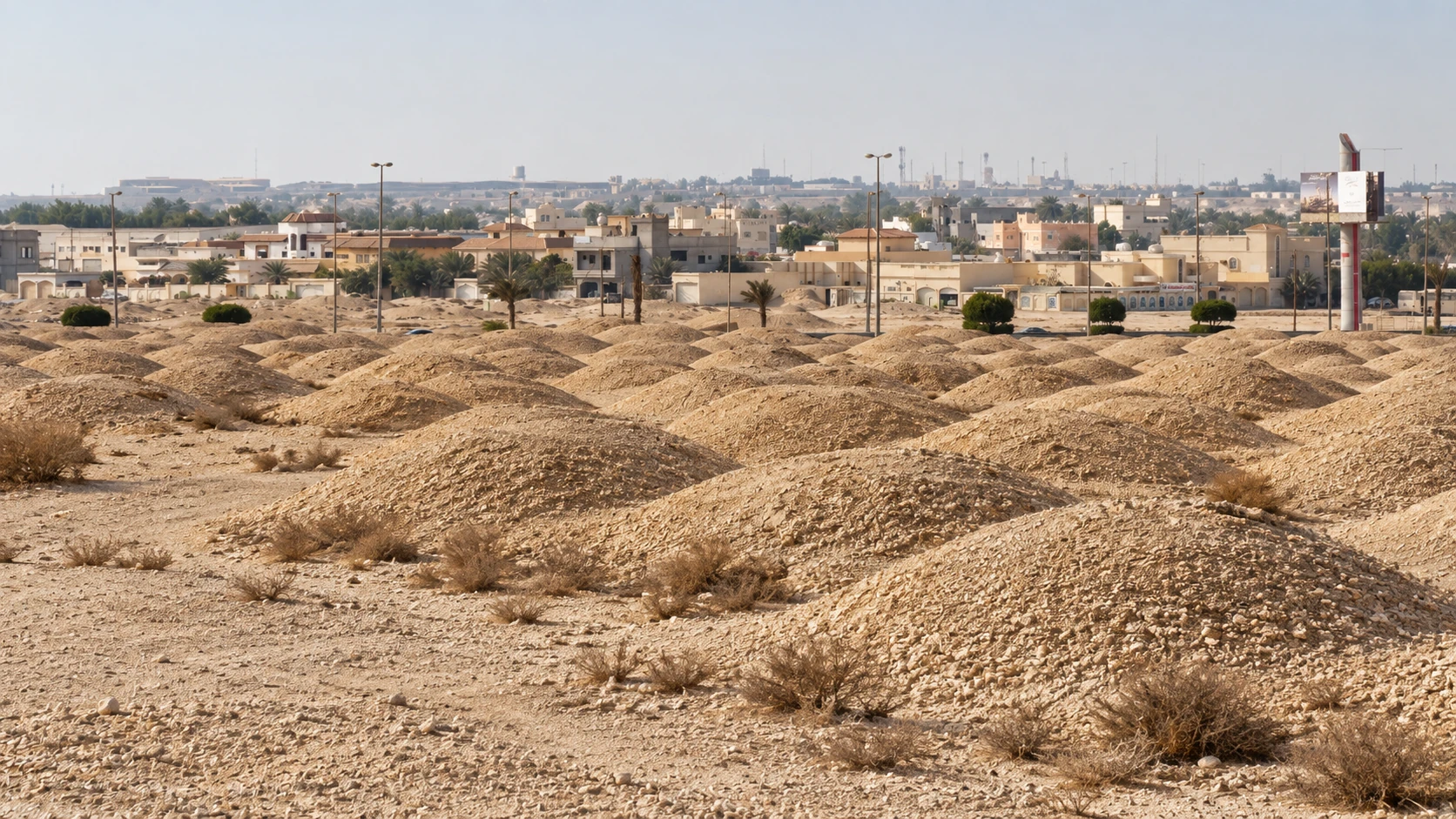
The A’ali burial mounds show a different part of the society introduced by the fort. The contrast is between an inhabited trading settlement and a funerary landscape.
The National Museum’s burial display helps make that landscape legible. Use the established visitor route at the mounds; archaeological fields are not unrestricted places to climb.
Good to know
Questions, answered.
Is Bahrain Fort only a Portuguese fortress, or does it include older Dilmun remains?
The upper fortress is the most recognisable later monument, but Qal’at al-Bahrain includes a much older settlement mound, urban remains and an ancient harbour landscape. The combined visit explains several historical periods.
What is the archaeological tell beneath Bahrain Fort?
The tell at Qal’at al-Bahrain is an artificial mound formed through repeated occupation and rebuilding. At Qal’at al-Bahrain, later structures stand over earlier settlement layers. The museum uses this idea to organise its chronological displays.
Was Qal’at al-Bahrain the capital of ancient Dilmun?
Qal’at al-Bahrain is recognised as a major political and commercial centre of Dilmun. The UNESCO title identifies it as the ancient harbour and capital. Dilmun’s trading connections extended beyond one settlement or the modern boundaries of Bahrain.
How old is the settlement beneath Bahrain Fort?
The settlement sequence at Qal’at al-Bahrain reaches back to about 2300 BC. The visible fortress is much later, and the archaeological record includes successive Dilmun, Tylos and Islamic occupation.
When did Qal’at al-Bahrain become a UNESCO World Heritage site?
Qal’at al-Bahrain became a UNESCO World Heritage site in 2005. The protected property was later extended to include the offshore sea tower and historic channel.
Should I visit Bahrain Fort Museum before exploring the archaeological site?
Bahrain Fort Museum is a good starting point for a first visit to Qal’at al-Bahrain. Its five chronological galleries explain the objects and phases that can be difficult to distinguish among low outdoor walls. Weather and opening time may favour reversing the order.
How long do I need for Bahrain Fort and its site museum?
Allow two to three hours for Bahrain Fort and its site museum together. A shorter outdoor visit can focus on the fortress and setting, while a detailed gallery visit or guided tour needs longer.
What are Bahrain Fort and Bahrain Fort Museum’s opening hours and closure days?
Use 08:00–18:00 as the planning window for Bahrain Fort and its site museum. The fort is listed daily; the museum normally opens Tuesday–Sunday and closes Monday. Ask visitor information before planning an evening visit beyond that window.
How much is admission to Bahrain Fort Museum, and does it include the fort?
Bahrain Fort Museum admission is BHD 2 per tourist or resident and BHD 1 per Bahraini citizen, bought at the venue. Ask about the fort’s entry arrangements; the museum fee is not presented here as a combined site ticket.
Can I book Bahrain Fort Museum tickets online or buy them at the venue?
For Bahrain Fort Museum, call visitor information on +973 1729 8777. Museum tickets are bought at the venue. A call can establish guiding and access arrangements but does not itself constitute a reservation.
Are audio guides and guided visits available at Bahrain Fort Museum?
Bahrain Fort Museum lists free multilingual audio guides and guided visits by advance arrangement. Ask about the language, time and availability for your visit.
What is the difference between Bahrain Fort Museum and Bahrain National Museum?
Bahrain Fort Museum in Karbabad and Bahrain National Museum are separate museums. Bahrain National Museum is on the Manama waterfront facing Muharraq and covers a broader range of the island’s history and traditions.
Can visitors see Qal’at al-Bahrain’s historic sea tower and harbour channel?
Qal’at al-Bahrain’s sea tower and channel belong to the wider harbour landscape, but a normal land visit does not guarantee a clear close-range view. It is not a separately promised walking stop or boat excursion in this guide.
Is Bahrain Fort wheelchair accessible, including its outdoor archaeological site?
Bahrain Fort’s outdoor routes include uneven ground, slopes and steps. Ask staff about the suitable museum entrance and a specific route through the open site. A full step-free circuit of the fortress is not promised.
What do the snake bowls displayed at Bahrain Fort Museum reveal about Dilmun?
Bahrain Fort Museum’s snake-bowl display presents evidence of bowls with snake remains deposited beneath a floor. The discovery context supports questions about ritual and protection, but its exact interpretation is debated.
Is Bahrain Fort suitable for children and family visits?
Bahrain Fort can suit families with an appropriate route and allowance for the heat. The layered mound, small objects and fortress offer different points of interest. Keep children on designated paths and off fragile walls.
Editorial notes
Sources and further reading.
Sources for this guide
Research review: 28 October 2026. Historical interpretation uses the official site/operator, UNESCO, institutional collections and the original research or architecture publishers identified below. Current admission and contact details retain the accepted visitor contract. Suggested visit lengths and route orders are Above.Guide editorial recommendations, not operator schedules.
Source register
S01. UNESCO: Qal’at al-Bahrain
Evidence reviewed: Direct page read, 28 October 2026. 2005 inscription; tell, successive occupation from about 2300 BC; ancient harbour, sea tower/channel and agricultural setting. Offshore elements are not promised as close-range walking attractions.
S02. Culture Authority: site and museum
Culture Authority: site and museum
Evidence reviewed: Official indexed page read; direct access unreliable, 28 October 2026. February 2008 museum opening, five chronological galleries, courtyard, café, audio guides and guided visits by arrangement. Its printed 20:00 close conflicts with the dedicated working-hours source; do not extend the accepted 18:00 planning window.
S03. Culture Authority: dedicated working hours
Culture Authority: dedicated working hours
Evidence reviewed: Earlier accepted official indexed evidence reused; fresh direct request timed out, 28 October 2026. Fort daily 08:00–18:00; museum same window closed Monday. Acceptance dated 28 October 2026 retained. Direct retrieval is not marked successful and no new evening access is inferred.
S04. Government fee catalogue
Evidence reviewed: Earlier accepted official indexed fee evidence reused; fresh direct request returned 403, 28 October 2026. Site-museum fee BHD 2 tourist/resident and BHD 1 citizen; venue purchase. The fee is not extended to a combined fort, tour or offshore product. Recheck before the race travel period.
S05. Culture Authority: museum publication news
Culture Authority: museum publication news
Evidence reviewed: Official indexed page read, 28 October 2026. Wohlert Arkitekter; five halls arranged around an eight-metre tell wall; around 500 displayed finds and the 2008 opening. The count describes the institutional collection account, not a guarantee of each object on view.
S06. Aarhus University Press: Qala’at al-Bahrain 2
Aarhus University Press: Qala’at al-Bahrain 2
Evidence reviewed: Publisher description read, 28 October 2026. Central monumental buildings, substantial storage architecture and reuse through Early, Middle and Late Dilmun. Bibliographic summary used; the complete paid volume was not claimed read.
S07. Aarhus University Press / JSTOR: Qala’at al-Bahrain 3
Aarhus University Press / JSTOR: Qala’at al-Bahrain 3
Evidence reviewed: Publisher summary and available chapter extracts read, 28 October 2026. Danish excavation history and western/southern city walls; investigations in multiple areas. No assertion that the entire paywalled book was inspected.
S08. Culture Authority: Bahrain history timeline
Culture Authority: Bahrain history timeline
Evidence reviewed: Official indexed page read, 28 October 2026. Early settlement, later palace and administrative context, Kassite influence, Tylos and later phases. Disputed ruler-attribution and exact political boundaries are not presented as settled.
S09. Pierre Lombard: site museum guide
Pierre Lombard: site museum guide
Evidence reviewed: Indexed extract read; direct HAL request blocked by Anubis, 28 October 2026. Snake-bowl discovery context and the debate about interpretation. Neither a named cult nor access to the original underfloor deposit is promised. The full PDF was not successfully downloaded in this task.
S10. Justine Vorenger: fishing at Qal’at al-Bahrain
Justine Vorenger: fishing at Qal’at al-Bahrain
Evidence reviewed: Research abstract read, 28 October 2026. Fish-remains evidence across several phases; used for daily subsistence context. Not converted into a claim about a particular fish-bone case on current display.
S11. Kuml: Arabian archaeology expedition report
Kuml: Arabian archaeology expedition report
Evidence reviewed: Excavation-report extract read, 28 October 2026. Earlier excavation observations about deposited snake remains and changing interpretation of rooms. Historic hypotheses remain hypotheses, not a definitive label for a visitor to repeat.
S12. Wohlert Arkitekter: project list
Wohlert Arkitekter: project list
Evidence reviewed: Architect project list read, 28 October 2026. Corroborates the archaeological museum and exhibition/landscape commission at Qal’at al-Bahrain. Not evidence for the National Museum’s architect; the two institutions are distinguished.
S13. Carlsberg Foundation: search for Dilmun
Carlsberg Foundation: search for Dilmun
Evidence reviewed: Research funder historical account read, 28 October 2026. Glob/Bibby expedition context and caution about mythic-paradise identifications. Used for interpretation history, not as proof that a literary paradise has a literal archaeological location.
S14. Culture Authority: National Museum halls
Culture Authority: National Museum halls
Evidence reviewed: Official indexed page read, 28 October 2026. Companion institution’s island-wide Dilmun scope. Nearby links refer to existing canonical published records; no invented walking time or new map point.
S15. UNESCO: Dilmun Burial Mounds
Evidence reviewed: Direct page read, 28 October 2026. Distinct funerary landscape and 2019 World Heritage inscription; supports the existing A’ali companion link. The mound sites are not folded into the fort’s ticket or walking route.
How to read the guide
The history and highlights describe the subject; they do not promise access to every historic space or the continued display of one object. Current entrance instructions and conservation closures take priority over a suggested route. Opening hours, admission and transport arrangements should be reviewed again before 15 February 2027 for the race travel period.
Descriptions of objects follow the institution’s published collection accounts. A photograph or a reconstructed display is not used to infer an unrecorded date, owner or archaeological findspot. A suggested family activity is an editorial way to explore the displays, not an advertised staffed workshop.
Access and current programmes
Detailed room-level step-free access, equipment loans and specialist sensory support are not confirmed for every part of these visits. The practical advice therefore names the questions to put to visitor information and retains physical limitations, without promising facilities that have not been established. Boat operation and boarding conditions require day-specific advice from the operator.
Historical architectural descriptions do not confirm current lift operation, ticket availability or access inside a private property. Temporary exhibitions and performance programmes can change; past events have not been carried forward as current offers.
Dates, hours and fees
UNESCO’s 2005 inscription date takes precedence over an older Culture Authority destination page that prints 2007. The dedicated working-hours evidence and accepted plan use 08:00–18:00 with museum closure on Monday; older directory text gives 20:00. The later closing time is not promised.
Direct requests to the dedicated hours page timed out and the government fee page returned 403 during this task. The unchanged same-day accepted official indexed evidence is reused for the existing fee and hours contract. Those failed requests are not recorded as successful live availability checks.
The Lombard museum-guide PDF was accessible as an indexed extract, while the direct HAL request returned an access-control page. Its interpretation of snake deposits is retained as debated, without claiming that the full PDF was read or that one definitive cult has been identified.
Opening hours, prices, programmes and access arrangements can change. Confirm critical details with the venue.
Continue exploring / Bahrain
More to explore
in Bahrain
Find another place for your itinerary, or explore all things to do in Bahrain.
 Cafés & bakeriesCrust & Crema in SeefExplore experience →
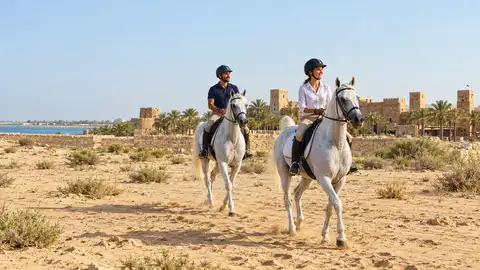 Adventure, active & sportArabian horse riding near Bahrain FortExplore experience →
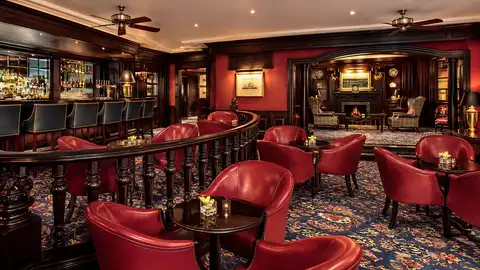 Nightlife & barsBurlington Club at The Ritz-CarltonExplore experience →
 Beach clubsThe Ritz-Carlton Bahrain beach club day passExplore experience →