Styrian Armoury · Landeszeughaus
Thousands of helmets, breastplates and weapons in Graz’s historic arsenal.
01 / The experience
An armoury preserved as an armoury
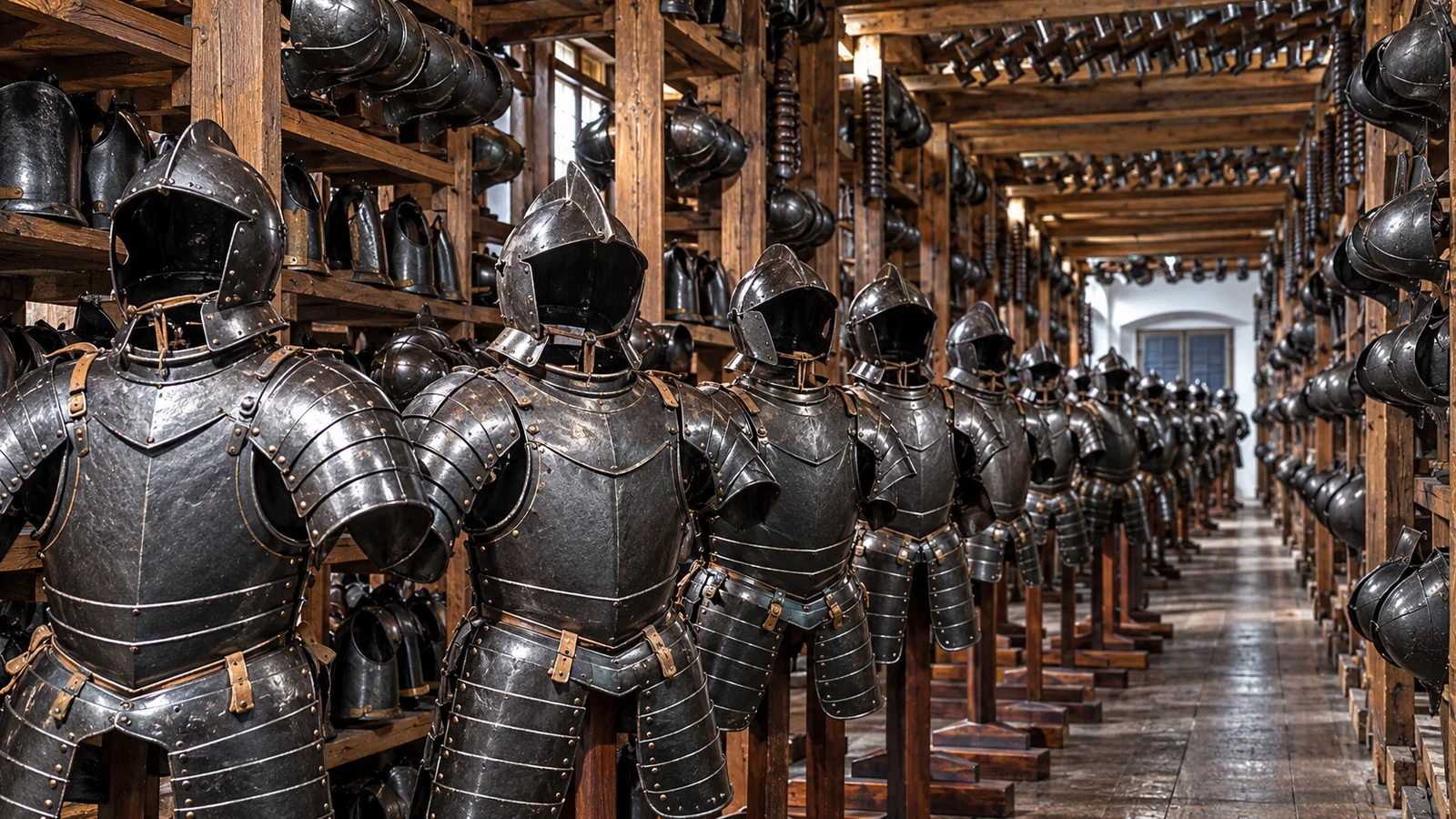
Rows of dark breastplates, helmets and long weapons fill the timber interior of the Styrian Armoury. The impact comes from their density: equipment is stored in ranks, with racks, posts and beams shaping the view through the rooms. This is the world’s largest preserved historical armoury, holding around 32,000 objects from the fifteenth to eighteenth centuries. The historic storage system remains part of the display, allowing whole ranks of equipment to be seen together.
The Styrian estates commissioned the building between 1642 and 1647, to plans by Antonio Solar. Its purpose was to equip forces in the southeast of the Habsburg lands. That practical origin helps explain the architecture and the quantity of material. A helmet is interesting as a crafted object; a long sequence of helmets also tells you about supply, organisation and the resources needed to maintain an arsenal.
Defensive arms include helmets, chain mail, armoured sleeves, shields and suits made in Graz, Nuremberg and Augsburg. The surviving pieces cover changes in protection as well as the work of different production centres. Their patinated surfaces and repeated forms are visually striking, but the differences in construction are another reason to spend time with the displays.
Edged weapons add a different vocabulary: two-handed swords, sabres, estocs and broadswords are among the types held here. Pikes and halberds form the larger staff-weapon collection, alongside less familiar forms. Together with firearms and their accessories, they show that an armoury supported many roles and methods of fighting. A guided explanation or the museum’s short guide helps turn the mass of unfamiliar shapes into something more legible.
The building’s heritage status also determines how information is presented. Object labels are not fixed throughout the historic rooms in the way you might expect at a modern exhibition. Free accompanying booklets, a multimedia guide and guided visits provide the interpretation within those protected rooms. English-language interpretation is available through the advertised programme and guide options.
The armoury also asks visitors to consider what it means to preserve weapons and the history of violence. The objects carry evidence of conflict as well as the craft and organisation that produced them. That perspective gives the rooms more weight than their impressive appearance alone. The strongest visit combines an understanding of how the store functioned with attention to the individual pieces that made it work.
04 / Before you go
Plan your visit
Admission & visit options
Admission and interpretation options are listed by the museum; guided tours and audioguide are additional.
When to visit
Indicative summer pattern: Tuesday–Sunday/public holidays 10:00–18:00. Winter visits have guided-entry restrictions; use the seasonal admission page.
Allow 1–1½ hours.
Getting there
Herrengasse 16, 8010 Graz
Visitor entrance at Herrengasse 16 in central Graz.
Plan your visit
Admission, guided tours and audioguides are available through the museum. Seasonal guided-only access can apply; group visits require advance arrangements.
Accessibility
This protected historic building has access limitations. Contact the museum about the gallery route and mobility assistance before booking.
Location & nearby places
Continue exploring / Austrian Grand Prix
More to explore
in Austrian Grand Prix
Find another place for your itinerary, or explore all things to do in Austrian Grand Prix.
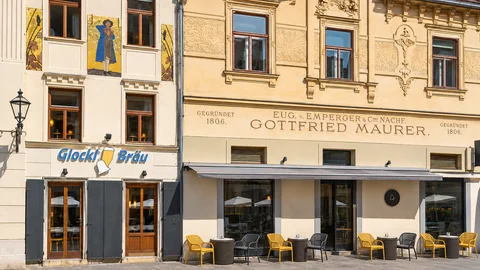
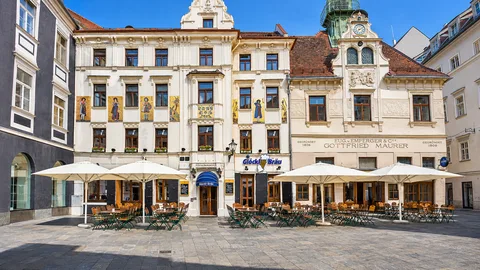 Cafés & casual diningGlöckl BräuExplore experience →
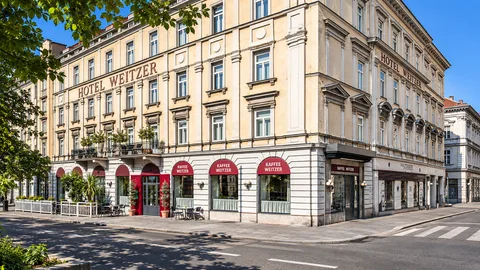 Cafés & casual diningKaffee WeitzerExplore experience →
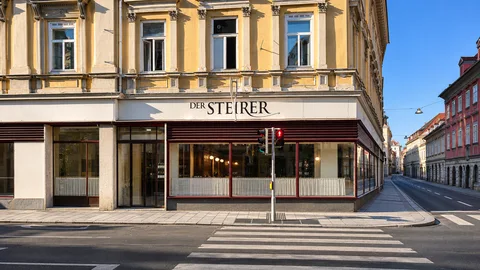 Cafés & casual diningDer SteirerExplore experience →
 Nightlife And BarsGlockenspiel Café Bar LoungeExplore experience →
Good to know
Styrian Armoury · Landeszeughaus: frequently asked questions
Are exhibits labelled at the Styrian Armoury in Graz?
The Styrian Armoury’s protected rooms do not have the usual object-by-object labels. Free booklets, guided tours and a multimedia guide provide interpretation.