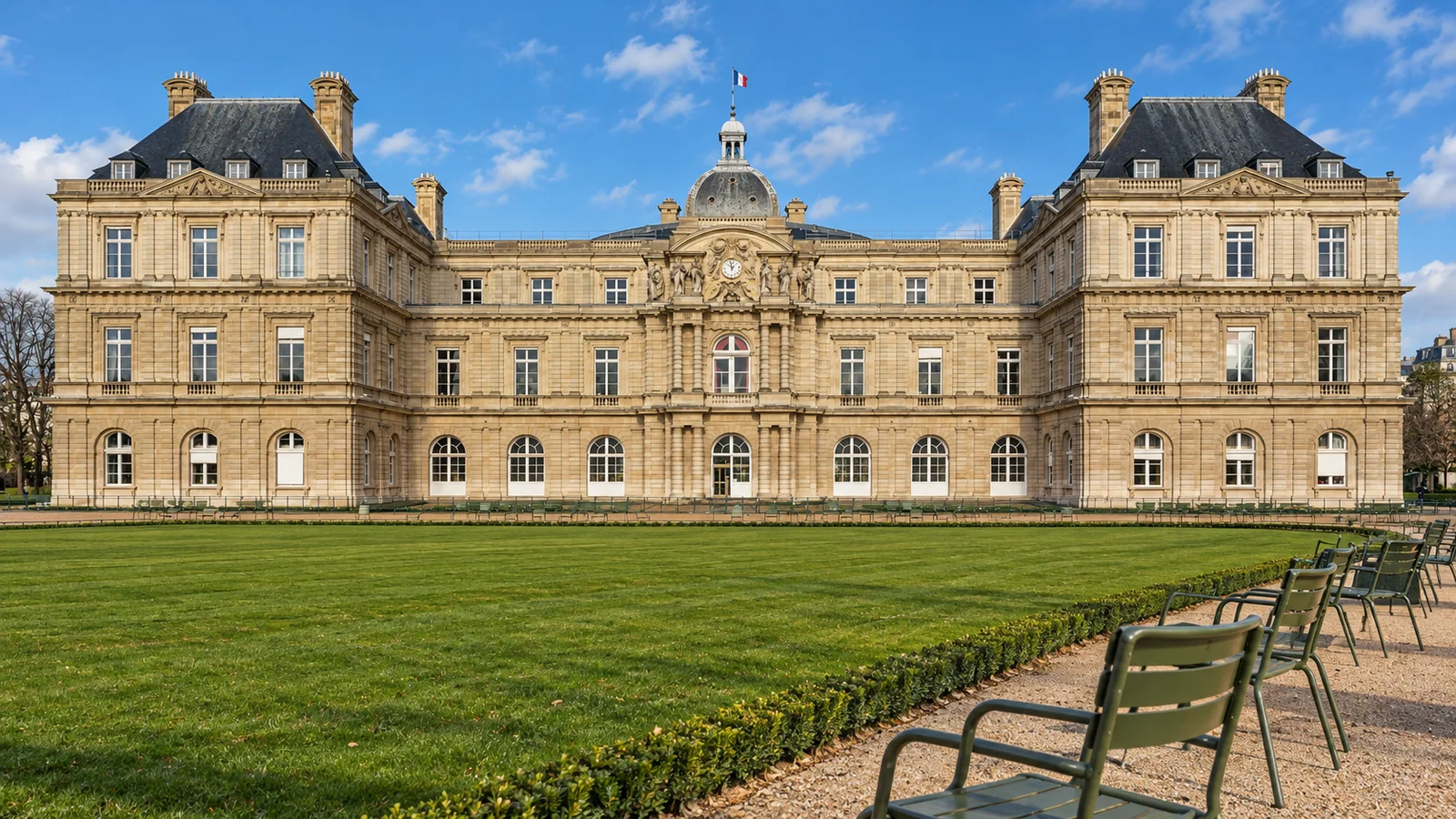
Jardin du Luxembourg
A relaxed garden break with fountains, statues and green chairs.
01 / The experience
A formal basin, quieter paths and a garden still in use.
The central pond gives the Jardin du Luxembourg its most recognisable scene: green chairs, toy sailing boats and the palace beyond. Around it, the garden changes character through formal beds, tree-lined paths and more loosely planted areas. It is a public landscape with several different uses, rather than one continuous monumental view.
Garden history and the Medici Fountain
Marie de' Medici initiated the gardens in 1612, drawing inspiration from Florence's Boboli Gardens. The later landscape brings French and English garden forms into the same grounds, with a geometric wooded area and the large basin between them. That variety gives a walk more interest than simply circling the central water.
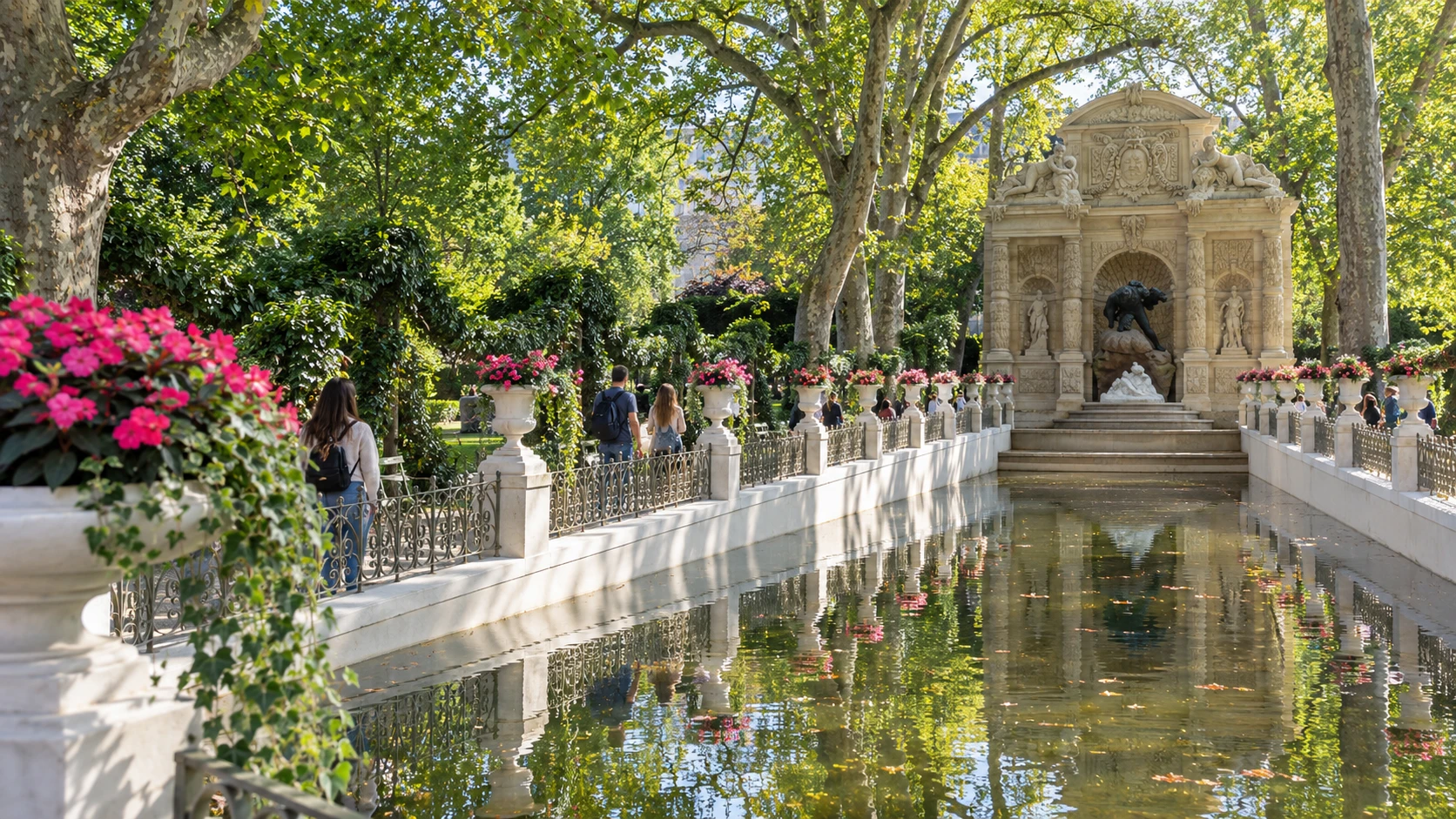
The Medici Fountain provides a more enclosed setting, with water, sculpture and shade creating a strong contrast with the open pond. Elsewhere, statues, the Orangerie and the Pavillon Davioud add architectural and artistic points along the paths. The garden also holds specialist collections, including fruit trees and orchids, whose access follows their own arrangements.
Games, green chairs and different garden walks
Everyday activity is part of its identity. Children have play areas and puppet entertainment, while chess, tennis and other games give adults reasons to return. Concerts at the bandstand and photography on the railings add a cultural programme outside the museum format. The appeal is partly in seeing those uses coexist with the formal landscape.
The palace remains a strong backdrop, but the public garden is the visit in its own right. A short route can connect the basin and fountain; a longer one can follow the quieter paths and changing planting. The garden's particular success is that its ceremonial layout still leaves room for ordinary Paris life.
In pictures
The full gallery.
02 / The essentials
Jardin du Luxembourg: visit essentials
- 01
Latin Quarter
- 02
Allow 1–1½ hours
- 03
Opening and closing vary with daylight and season. Check the Senate’s calendar for your date; this is not an overnight park.
04 / Before you go
Plan your visit
A relaxed garden break with fountains, statues and green chairs.
Admission
Free ordinary pedestrian entry; paid activities and special events extra.
Check admissionChoose your visit
Opening and closing vary with daylight and season. Check the Senate’s calendar for your date; this is not an overnight park.
Opening and service times can change on public holidays.
Arrival & access
The pin represents the garden site; choose an open street entrance rather than navigating to the point as a doorway.
Rue de Médicis / rue de Vaugirard, 75006 Paris
The tourism listing identifies accessible entrances on several surrounding streets; choose an entrance that suits your journey.
Plan admission
No booking is needed for ordinary garden entry. Guided visits and paid activities have their own arrangements.
05 / Where it is
Find it
and what’s nearby.
Continue exploring
More of Paris, around your visit.
06 / Good to know
Jardin du Luxembourg: frequently asked questions
01Can I walk a dog anywhere in Jardin du Luxembourg?
No. Dogs on leads are restricted to the designated southeast zone between the Gay-Lussac and Observatoire gates, outside lawns and planted beds. Dogs are prohibited in the rest of the garden.
02Can I cycle or ride a scooter through Jardin du Luxembourg?
No. Cycling and scootering are prohibited inside. The Senate points visitors to bicycle and scooter parking around the garden instead.