Upper East Side
Museum Mile, Madison Avenue and park walks between Central Park and the East River.
01 / The experience
Choose your collection
Museum Mile, Madison Avenue and park walks between Central Park and the East River.
Choose your collection
Museum Mile gives the Upper East Side its best-known visitor route, but the neighbourhood changes noticeably a block away from Fifth Avenue. Museum façades face Central Park; Madison Avenue brings shop windows and old apartment buildings; farther east, smaller residential streets lead towards Yorkville and the East River. A visit can centre on one major collection and still leave room for a very different walk afterwards.
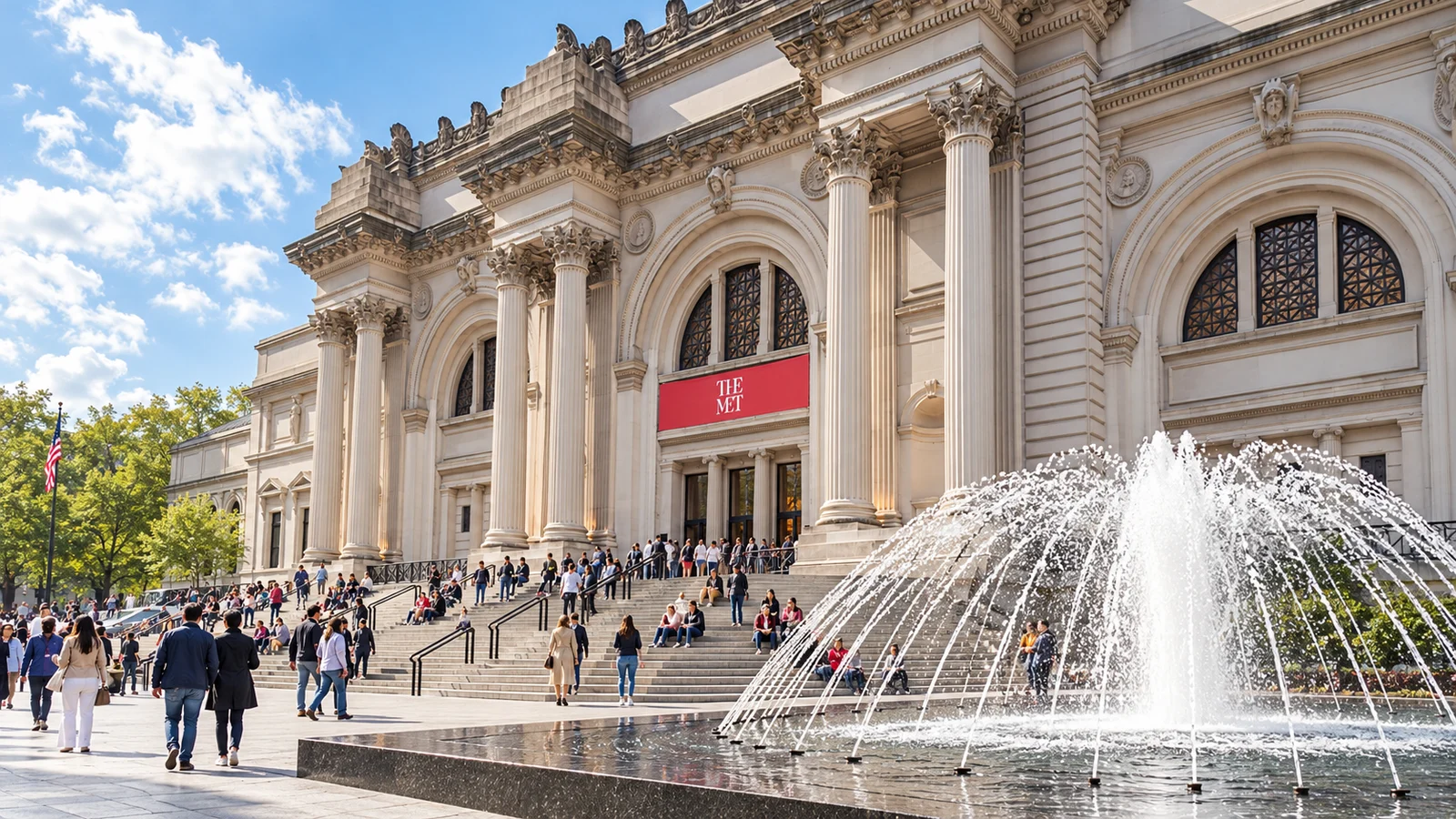
The Met is the most expansive choice. Its Fifth Avenue steps lead into collections that can take a visit in almost any direction, from the Temple of Dendur and the American Wing to armour, paintings and musical instruments. Choose the galleries you most want to see rather than treating the whole building as a single manageable stop. The museum’s own guide sets out admission and access details, and the steps and plaza provide a recognisable meeting point before the group goes inside.
Streets beyond Museum Mile
The Guggenheim and the Frick offer distinct experiences. At the Guggenheim, the spiral building shapes the movement through changing exhibitions. At the Frick, paintings and decorative arts sit within the restored house and its newer visitor spaces. These are separate collections with separate admissions. Their different scale is useful: a focused visit can leave more time for the neighbourhood, while a long Met visit may be enough museum time for one day.
Madison Avenue runs parallel to the park behind the museum frontage. At East 94th Street, ornate older buildings and the corner streetscape show another side of Carnegie Hill. The smaller cross streets are worth walking for their entrances, stonework and residential character, without treating private buildings as attractions to enter. Museum Mile continues north, but this guide’s main choices remain the Met, Guggenheim and Frick rather than adding every institution to the same outing.
Two park directions
Central Park provides an easy western extension. Conservatory Water, on the park’s east side, is known for model sailing boats and a path around the pond. It is a different setting from the busier museum steps, with the water and surrounding trees giving a clear destination for a short walk. Farther east, Carl Schurz Park introduces planted paths, stone steps and the East River edge. The two parks are alternatives on opposite sides of the neighbourhood; including both means allowing a longer cross-town walk.
For food, use the museum cafés for a simple pause during a collection visit, or make a separate meal of Creola near the Carnegie Hill–East Harlem edge. Its Creole cooking is a substantial dining choice rather than a quick café substitute. The subway makes it straightforward to return to an existing Midtown hotel after an uptown day. Midtown is a practical overnight base for this part of Manhattan, with a subway journey connecting its hotels to Museum Mile.
In pictures
Museum Mile
In pictures
Beyond Fifth Avenue
In pictures
Parks and neighbourhood streets
04 / Before you go
Plan your visit
Cost
Free
Individual admissions, meals, transport and accommodation are separate.
Opening
Public streets daily; museums, parks, food venues and performance spaces have individual opening hours.
Starting place
1000 Fifth Avenue, New York, NY
The map starts at The Met Fifth Avenue. 86 St on the 4, 5 and 6 serves the northern museum area; 77 St on the 6 is another approach for the Met. The Q line serves Second Avenue farther east. The M1, M2, M3 and M4 buses follow the Fifth/Madison Avenue corridor; select the stop and direction in the MTA journey planner.
Access & visits
The public neighbourhood walk needs no reservation. Museum admissions, performance tickets, restaurant tables and hotel rooms are arranged separately through their own guides.
Accessibility
Street crossings and park routes vary in gradient and surface. Museum, restaurant and performance access conditions are listed in their individual guides. Use the MTA’s current accessible-station and elevator information for your journey.
Location & nearby places
Continue exploring