Chinatown
Doyers Street, dim sum, community landmarks and the streets around Columbus Park.
01 / The experience
A neighbourhood beyond the food stop.
Doyers Street, dim sum, community landmarks and the streets around Columbus Park.
A neighbourhood beyond the food stop.
Around Columbus Park, Chinatown has the character of a neighbourhood in daily use. Players gather at outdoor tables for Chinese chess, neighbours meet on the benches and the surrounding streets carry groceries, deliveries and the lunch trade. The park makes an appealing starting point because it connects the visit with this everyday life before the better-known restaurant fronts and lantern-lit streets.
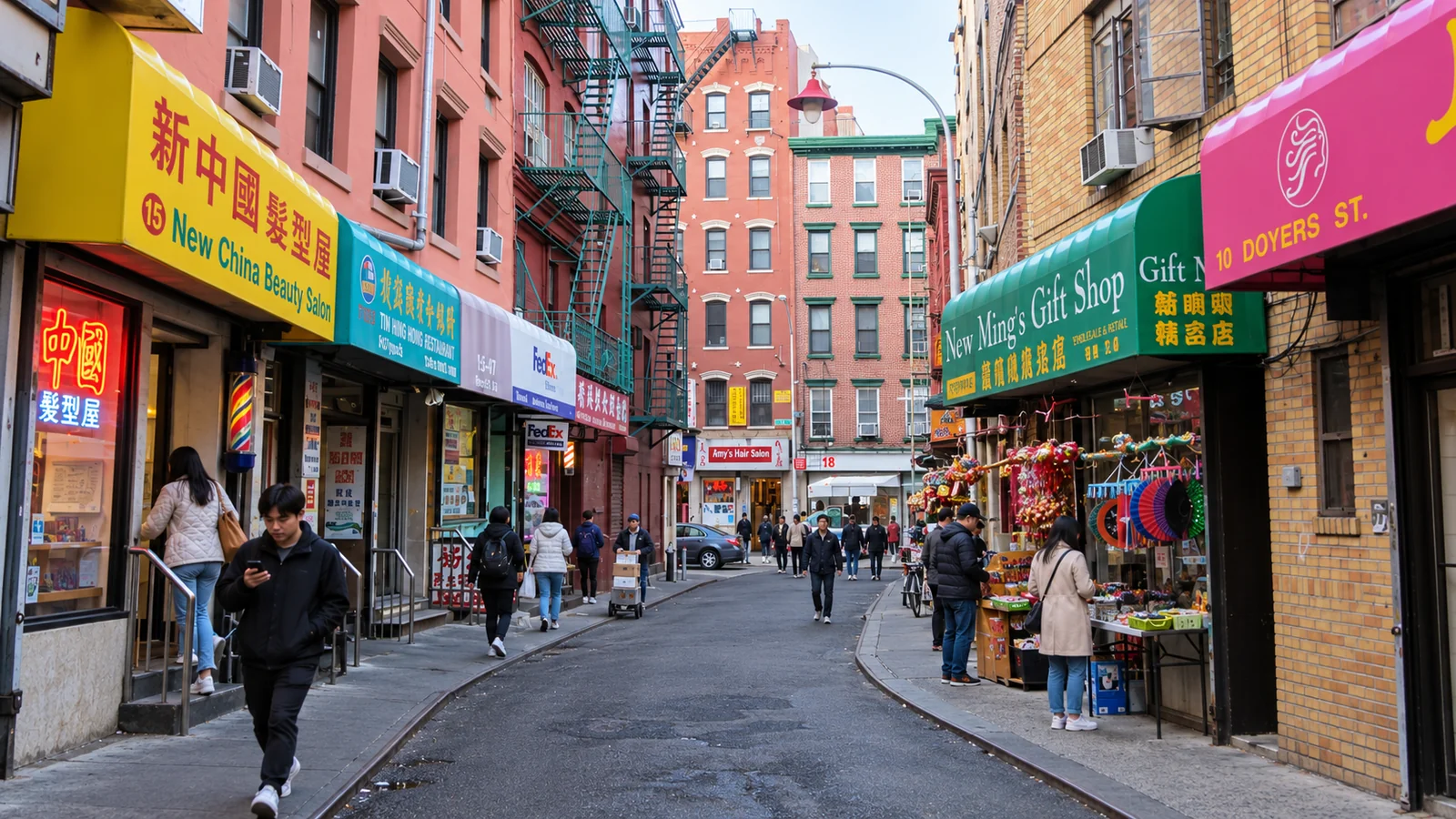
Mott, Pell and Doyers streets form a compact area with very different street shapes. Mott runs past shops and places of worship; Pell opens another corridor of signs and upper-floor fire escapes. Doyers turns sharply, making its brick façades and narrow roadway feel particularly enclosed. The bend is a recognisable photograph, but the businesses along it are part of the reason to come. Nom Wah Tea Parlor, established in 1920, serves dim sum behind its yellow-and-red frontage at 13 Doyers Street. Dumplings, rice rolls and the tea-parlor setting connect a meal with the street’s longer history.
Food here draws on more than one regional tradition. Cantonese bakeries, dim sum and roast-meat shops sit within the older core, while East Broadway reflects the growth of a Fuzhou-speaking community. A short walk can change the languages on the signs and the dishes in the windows. Markets and groceries are as important to that landscape as restaurants: vegetables, seafood and provisions make these working shopping streets rather than a restaurant district assembled only for visitors.
Monuments, worship and Chinese American stories.
Chatham Square introduces some of the neighbourhood’s most consequential public landmarks. The Kimlau War Memorial honours Chinese Americans who died in United States military service. Designed by Chinese American architect Poy Gum Lee, its granite gateway combines a restrained modern form with a peaked roof and bilingual dedication. The nearby Lin Zexu statue and the Confucius figure at Confucius Plaza tell different stories; they are separate monuments, with different subjects and settings, rather than interchangeable decorative statues.
Religious buildings add another layer. The Church of the Transfiguration’s stone walls and green steeple rise from Mott Street, reflecting the area’s succession of immigrant communities. On Canal Street, Mahayana Buddhist Temple’s city campus has a striking red-and-green entrance within a yellow-brick frontage. These are active places of worship. Services, prayer and community use determine the atmosphere inside, so the exterior can be appreciated without treating every doorway as a sightseeing attraction.
The Museum of Chinese in America at 215 Centre Street gives the visit a wider frame. Its exhibitions and collections address Chinese American experience beyond this group of Lower Manhattan streets, connecting objects, personal accounts and national history. The museum is a worthwhile indoor focus, especially when the weather cuts short a longer walk. Its opening days differ from the surrounding shops: public hours are Wednesday to Sunday.
East Broadway extends the walk beyond the tightly photographed core. From the Manhattan Bridge approach, the street leads towards the towers of Lower Manhattan while the close-packed local buildings remain in the foreground. To the north, the Tenement Museum explores other family histories on the Lower East Side; to the west, SoHo changes the architectural language again. Chinatown’s own identity comes from the connections between its food businesses, public spaces, cultural institutions and the people who continue to use them.
Where to stay.
Hotel Mimosa offers a small hotel with queen and twin choices near Division Street; its lobby entrance is on Eldridge Street. Hotel Mulberry faces Columbus Park and has two-queen and kitchenette family categories. Hotel 50 Bowery supplies a more contemporary upscale stay with larger suites and rooftop views.
Where to eat and drink.
Mei Lai Wah on Mott Street is the bun stop; Kong Sihk Tong adds a Hong Kong café breakfast, while Wah Fung serves roast-meat rice to take away. Spicy Village brings Henan noodles and a shared chicken tray, and Fong On makes tofu pudding the reason to visit. Original Buddha Bodai offers vegetarian and kosher Chinese dining; Nom Wah is the historic dim-sum choice. For a group, 99 Favor Taste has hotpot and tabletop barbecue. Chinatown Ice Cream Factory covers dessert, Apotheke the late drink, and Phoenix Palace a contemporary Cantonese dinner on the Bowery.
In pictures
Streets and everyday life.
In pictures
Memorials and community landmarks.
In pictures
Places to eat, worship and explore.
Highlights
- 01
Lower Manhattan
- 02
Free street walk
04 / Before you go
Plan your visit
Allow 3–4 hours for the streets and a meal; add time for a museum visit.
Street walk
Free street walk
The neighbourhood walk and public outdoor monuments have no admission charge. Meals and indoor visits follow each venue’s prices.
When to visit
Explore the streets daily. Shops, restaurants, worship spaces and the museum keep individual hours.
Arrival
Columbus Park is between Mulberry, Bayard, Baxter and Worth streets. Canal Street and Grand Street stations provide approaches to the wider neighbourhood. Use street crossings at Canal Street and Chatham Square, where roads are busy and layouts can be confusing.
Columbus Park, Bayard and Mulberry streets, New York, NY 10013
Visitor information
The self-guided neighbourhood walk needs no reservation.
Nom Wah accepts parties of two as walk-ins. Its official page offers limited reservations for parties of three to five on Monday–Thursday; availability depends on the selected date.
Museum of Chinese in America public hours are Wednesday–Saturday, 11 a.m.–6 p.m., and Sunday, 11 a.m.–4 p.m.; there are no public hours on Monday or Tuesday.
Mahayana’s Canal Street campus is a working temple. Respect prayer and service arrangements; photography follows the temple’s instructions.
Accessibility
Crowded and sometimes narrow pavements, deliveries and kerbs affect the outdoor route. Individual restaurants, shops and religious buildings vary in step-free access; the street walk does not require entry into them. Keep park games and worship activity clear when stopping for photographs.
Location & nearby places
Continue exploring
Explore more of New York.
Continue your city visit
Plan your New York visit
06 / Good to know
Chinatown: frequently asked questions
01Which Chinatown does this guide cover?
Manhattan’s Chinatown, around Columbus Park, Mott, Pell, Doyers and East Broadway. Flushing in Queens is a different neighbourhood.
02Can I visit the museum every day?
Museum of Chinese in America has public hours Wednesday to Sunday. It has no public hours on Monday or Tuesday.