Monaco / Discover Monaco
History of Monaco
From the Rock to the Riviera.
A fortress above the harbour, a palace shaped by the Renaissance and a coastline still changing: Monaco’s past is written into its streets.
Discover Monaco
The places behind the principality.
1215: a fortress above the sea
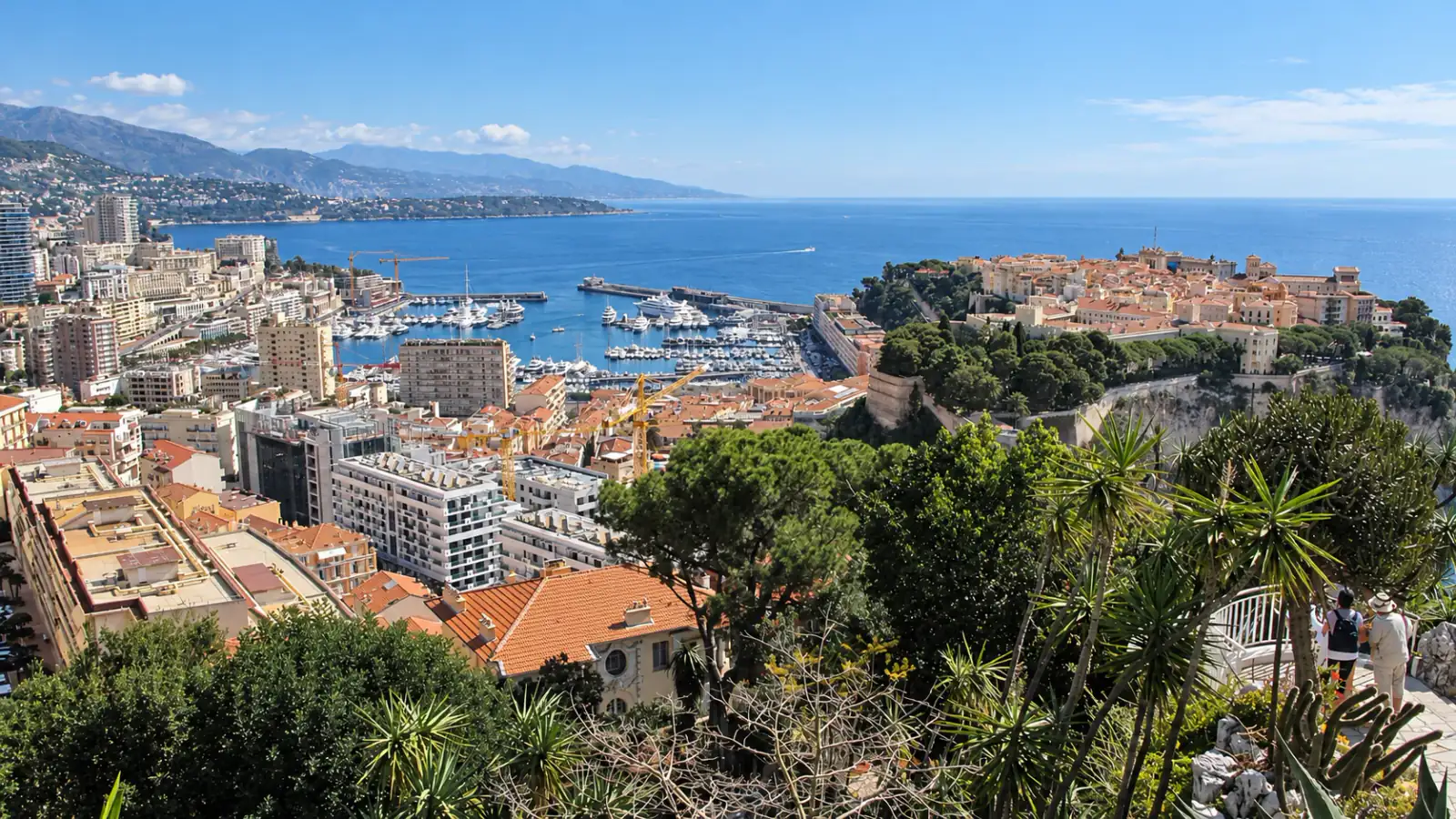
The Prince’s Palace began as a Genoese fortress in 1215. Its position on the Rock gave the defenders a view over the harbour and the approaches along the coast. Monaco-Ville still occupies that high ground, with the palace square at one end and streets leading towards the cathedral and the sea-facing gardens.
The outline of the early stronghold survives within a residence altered over centuries. Looking across Port Hercule from the Rock connects the two parts of the story: the defensive settlement above and the sheltered water below.
1297: the Grimaldi connection
On 8 January 1297, François Grimaldi seized the fortress during the conflicts between rival factions in Genoa. That date became central to Monaco’s dynastic story, although control changed hands again before the family established a lasting hold.
The palace was both a home and a defensive building. Its transformation was gradual: strengthened walls gave way to more elaborate living spaces as the rulers sought recognition from neighbouring powers.
A Renaissance residence
In the sixteenth century the medieval stronghold increasingly took the form of an Italian Renaissance palace. Painted galleries and ceremonial rooms brought a different kind of display to the Rock. Honoré II adopted the title of prince in 1612; the horseshoe staircase added under Louis I gave the Court of Honour another of its defining features.
The French Revolutionary period dispersed the palace’s collections and interrupted princely rule. Restoration followed the return of the princes in 1814, with further changes during the nineteenth century. A visit to the State Apartments traces a residence assembled through these successive periods, rather than a building completed at one moment.
1863: a new resort economy
The creation of the Société des Bains de Mer in 1863 helped turn Monte-Carlo into an international resort. The casino, hotels, restaurants and entertainment spaces created another centre of gravity across the harbour from the old town.
The contrast is still easy to see in a single day. Monaco-Ville has the palace and old streets; Monte-Carlo has the grand public spaces around the casino. Both belong to the same principality.
A coastline that keeps changing
Monaco’s recent history also lies in the land itself. Mareterra, inaugurated on 4 December 2024, added a new waterfront district. Its six-hectare extension continues the principality’s long relationship with building beside and into the sea.
From the Rock, the harbour and the eastern seafront, the city tells several stories at once: fortified outpost, princely residence, resort and modern coastal neighbourhood. The Grand Prix is another chapter, explored in the dedicated race guide.
Know before you go / 2 answers
Monaco, explained.
2 answers
When did the Grimaldi family first take Monaco?
François Grimaldi seized the fortress of Monaco on 8 January 1297. Control changed hands again before the family established a lasting hold.
Was the Prince’s Palace of Monaco originally a fortress?
The Prince’s Palace of Monaco began as a Genoese fortress in 1215 and was transformed into a princely residence over subsequent centuries.
Visiting for the Grand Prix? Explore tickets, circuit views and race-week plans.
Open the Monaco F1 guide