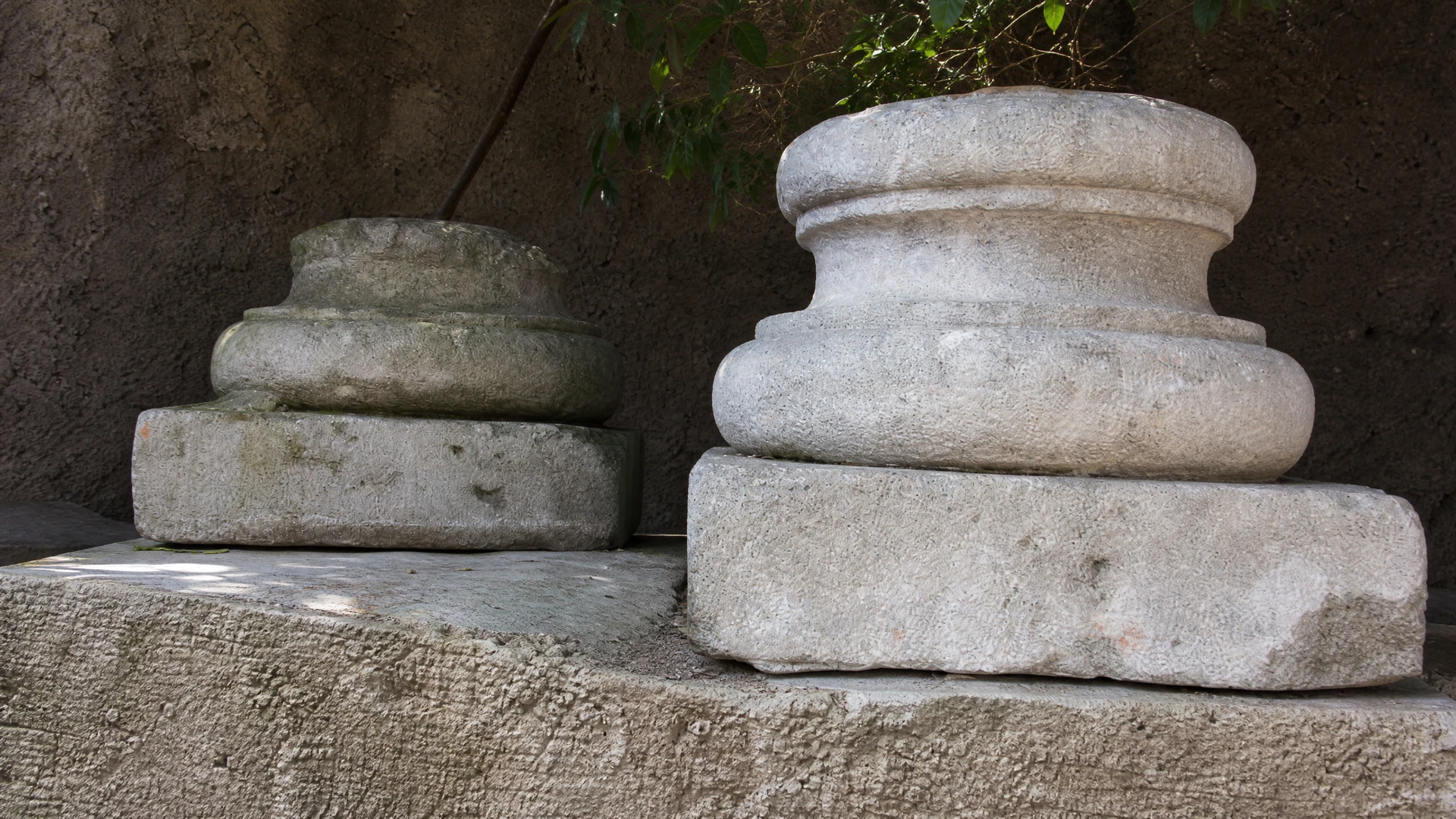
Templo Mayor · ruins and museum
Explore the ceremonial heart of Tenochtitlan, then meet Coyolxauhqui, Tlaltecuhtli and the remarkable offerings inside its eight-gallery museum.
01 / The experience
Templo Mayor · ruins and museum
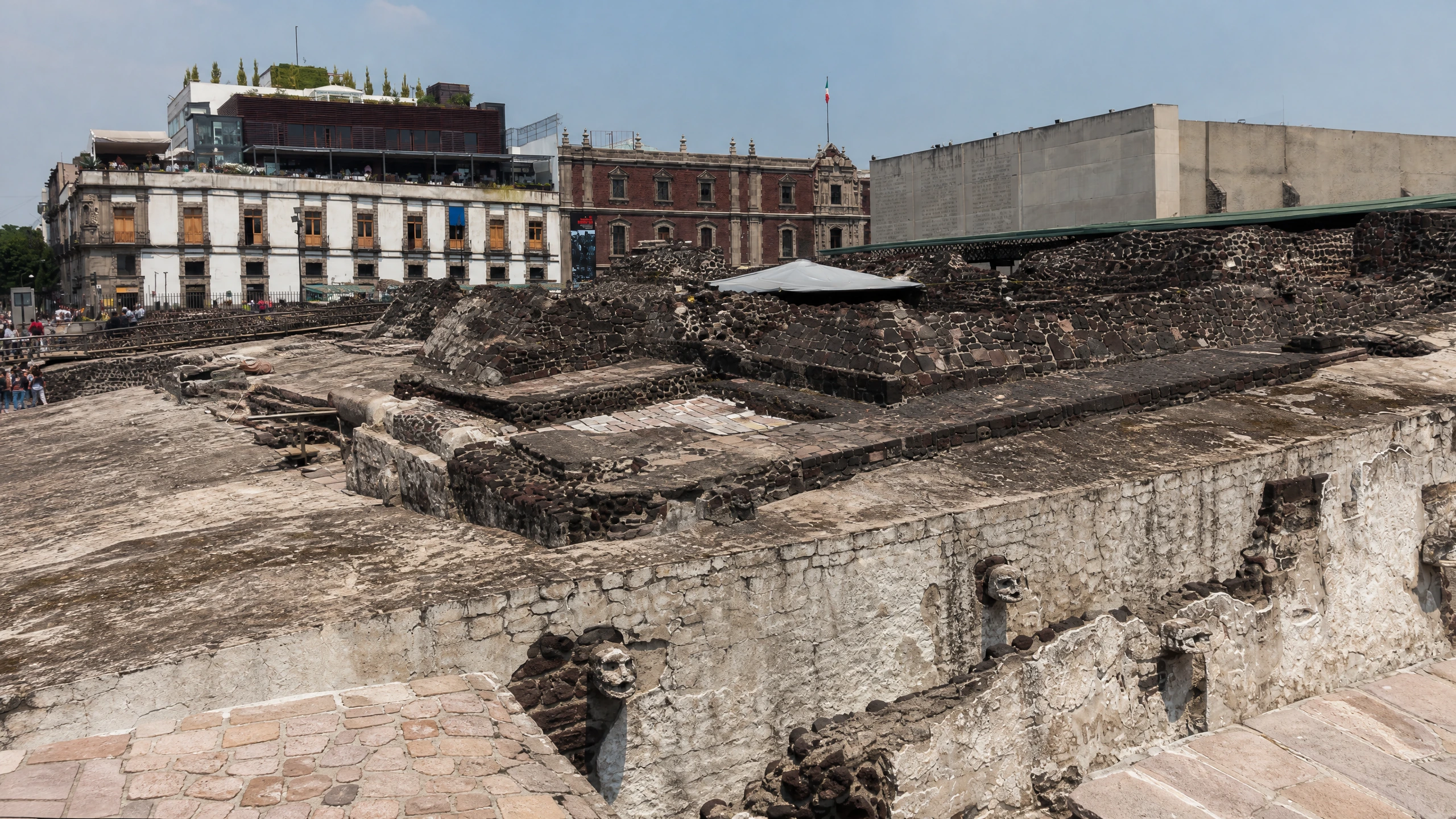
A carved moon goddess helped bring the centre of Tenochtitlan back into view. Electricity workers uncovered the circular Coyolxauhqui relief in 1978, prompting the excavations that became the Templo Mayor project. The archaeological site and its museum now belong to one visit: outside are the surviving foundations of the Mexica ceremonial centre; inside are the objects that explain what those buildings meant.
The original temple had twin shrines dedicated to Huitzilopochtli and Tláloc. Pedro Ramírez Vázquez's museum echoes that division across eight galleries, moving from war and tribute towards rain, agriculture and the natural world. This gives the visit a useful thread through a large collection, especially if you want more than a quick circuit of the ruins.
Tlaltecuhtli commands the entrance hall. The earth deity's immense rectangular relief retains traces of its original colour and measures more than four metres along its longer edge. A display of original stone skull carvings nearby evokes a tzompantli, or skull rack. Coyolxauhqui occupies the central area of the museum's second level; seeing the relief here connects the story of the discovery with the mythology of Huitzilopochtli.
In the Huitzilopochtli gallery, the clay Eagle Man and Mictlantecuhtli figures bring the ceremonial buildings into sharper focus. The Eagle Man was recovered from the House of the Eagles, north of the main temple. A great basalt serpent head represents Xiuhcóatl, the fire serpent associated with Huitzilopochtli. These are distinct objects with different roles, rather than a single decorative vocabulary repeated through the rooms.
The Tláloc gallery shifts attention towards water. Its blue ceramic vessel held mother-of-pearl shells and greenstone beads, while other offerings include marine shells and objects from regions far beyond the Valley of Mexico. Flora and Fauna follows that wider geography through animals from highlands, tropical forests and coastal waters. Agriculture then connects belief with the work of feeding the city, including chinampas and the trade centred on Tlatelolco. Together, the galleries make the excavated stones outside part of a living city's systems of food, power and worship.
In pictures
The full gallery.
Highlights
- 01
Museum included with zone admission
- 02
Outdoor ruins and indoor galleries
- 03
Monday closed
04 / Before you go
Plan your visit
Explore the ceremonial heart of Tenochtitlan, then meet Coyolxauhqui, Tlaltecuhtli and the remarkable offerings inside its eight-gallery museum.
Cost
MXN 210 · ruins and site museum
Admission MXN 210; Mexican nationals and foreign residents in Mexico MXN 105. The archaeological zone and site museum share one admission. Bring valid identification for concessions; Sunday free entry is restricted to eligible visitors.
When to visit
Tuesday–Sunday 09:00–17:00. Closed Monday.
Allow 90 minutes–2 hours, plus entry
Getting there
Templo Mayor · ruins and museum
Seminario 8, Centro Histórico, Cuauhtémoc, 06060 Ciudad de México
The pin marks the archaeological complex. Follow current public-entry signs for Seminario 8 rather than crossing excavations or using an assumed entrance. Check Zócalo/Tenochtitlan station status and Centro cordons.
Plan your visit
The INAH visitor page covers the archaeological zone and its included site museum. Admission is for the combined visit; the information link does not reserve a timed entry.
Accessibility
Confirm the accessible museum entrance and the usable archaeological route with staff; uneven surfaces, ramps and the outdoor walk need separate consideration.
Location & nearby places
Continue exploring / Mexico City
More things to do
in Mexico City
Explore Mexico City activities, sights and places to eat. Compare the time to allow, costs and booking details, then save your favourites to your itinerary.
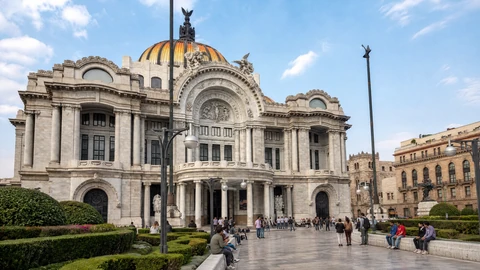 01Museums & cultureMuseo del Palacio de Bellas ArtesExplore experience →
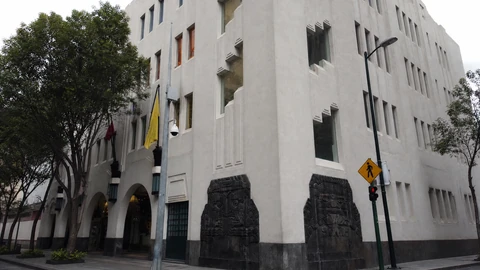 02Museums & cultureMuseo de Arte PopularExplore experience →
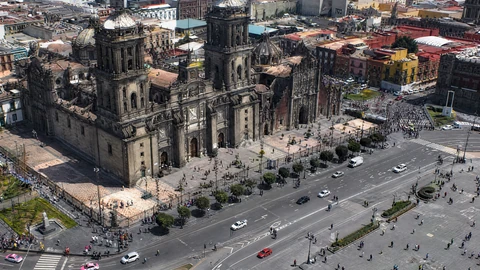 03Landmarks & public spacesZócalo · Plaza de la ConstituciónExplore experience →
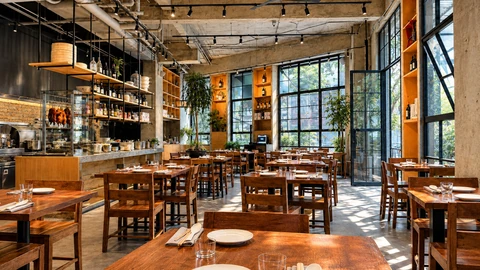 04RestaurantsMakanSingaporeanExplore experience →
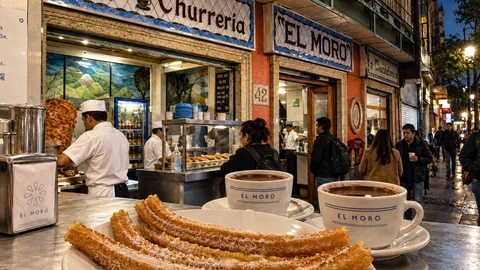 05Local & casual diningChurrería El Moro · Centro HistóricoChurros and chocolateExplore experience →
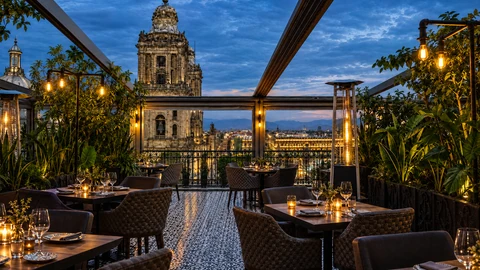 06Destination diningBalcón del ZócaloMexicanExplore experience →