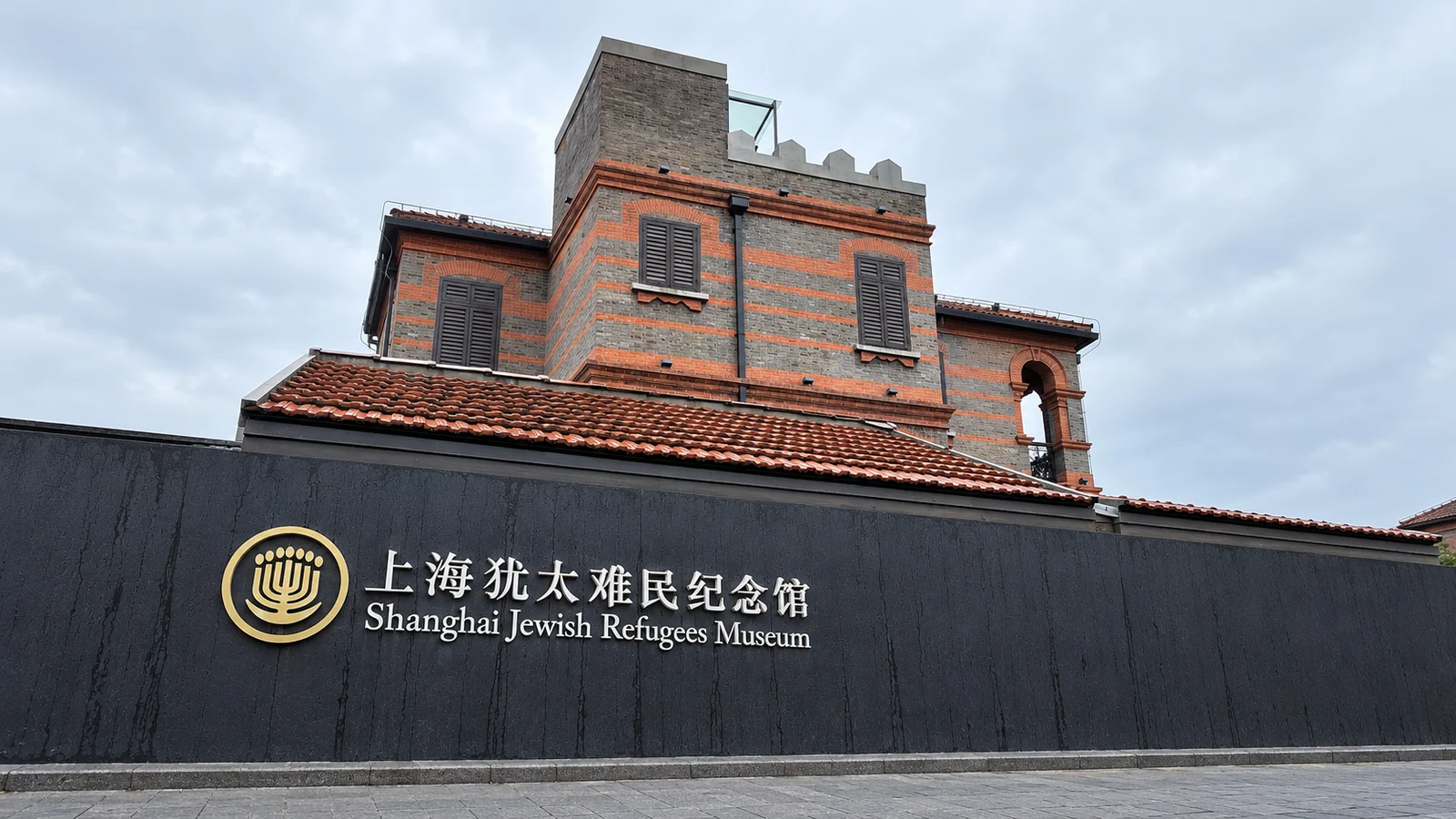
Shanghai Jewish Refugees Museum
Refugee documents, personal histories, the former Ohel Moshe Synagogue and a memorial Wall of Names in Tilanqiao.
01 / The experience
Shanghai Jewish Refugees Museum
Passports, passage tickets and residence papers make this history personal. Shanghai Jewish Refugees Museum follows the European Jews who fled Nazi persecution and found refuge in the city during the 1930s and 1940s. Its setting matters: the former Ohel Moshe Synagogue and neighbouring buildings belong to the Tilanqiao neighbourhood where refugee lives unfolded.
The permanent exhibition moves through six sections, beginning with Fleeing to Shanghai and Starting a New Life. The objects show both the escape from Europe and the practical work of rebuilding a household, education and a livelihood. Bitter-sweet Memories addresses the restrictions imposed by the Japanese authorities in 1943. Later sections follow the refugees’ post-war departures and continuing relationships with Shanghai. Materials donated by former refugees and their descendants give individual stories a central place.
The escape section introduces people such as Ho Feng-shan, the Chinese consul in Vienna whose assistance with visas helped refugees leave Europe. The next rooms follow the less familiar work of settling in Shanghai. Newspapers, artistic activity, schooling and family life show a community trying to sustain itself after losing its former home. This gives the exhibition a broader human range than the account of a journey alone.
In the 1943 section, the Japanese authorities’ designated area for stateless refugees changes the story again. Restrictions on residence and movement are presented alongside the relationships refugees formed with their Chinese neighbours. After the War follows departures to places including the United States, Australia and Israel; the later sections consider continuing ties with China. The chronology makes the donated documents especially useful: a ticket or permit belongs to a particular stage of someone’s life, not simply a display of old paperwork.
The synagogue and the Wall of Names are important counterparts to the exhibition rooms. The wall records more than eighteen thousand names, turning a broad account of refuge into a memorial to identifiable people. Allow a substantial museum visit rather than treating the courtyard as a photo stop. The subject is also a reason to explore Hongkou: it adds an international and human dimension to Shanghai’s port-city history beyond the Bund’s commercial buildings.
Highlights
- 01
CNY 20 adult
- 02
Tuesday–Sunday 09:00–17:00; ticket sales and entry end at 16:00. Closed Mondays except separately announced holiday arrangements.
04 / Before you go
Plan your visit
Admission & cost
CNY 20 adult
Adult admission CNY 20; student CNY 10 and senior CNY 15 with eligible documentation. An audio guide is available for a separate CNY 10 rental.
When to visit
Tuesday–Sunday 09:00–17:00; ticket sales and entry end at 16:00. Closed Mondays except separately announced holiday arrangements.
Allow an estimated 90–120 minutes.
Choose a city day outside the three race sessions. The normal Monday closure affects 12 and 19 April 2027.
Arrival & access
Use the museum at 62 Changyang Road. Metro Line 12, Tilanqiao station Exit 1, is the operator’s listed approach.
62 Changyang Road · 长阳路62号
Plan your visit
Bring the original passport or valid identity document used for admission. Regular scheduled talks are in Chinese; paid group guiding for groups of 20 or more requires advance arrangement.
Location & nearby places
Continue exploring / Shanghai
More to explore
in Shanghai
Find another place for your itinerary, or explore all things to do in Shanghai.
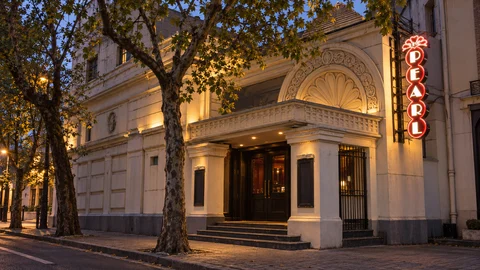 Chinese opera, concerts & showsThe PearlExplore experience →
 Landmarks & gardensShanghai TowerExplore experience →
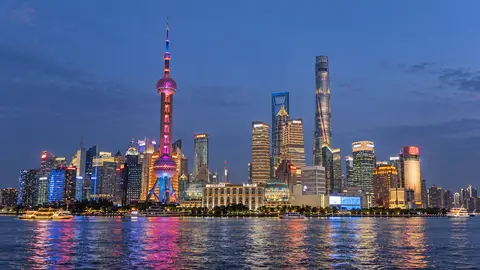 Landmarks & gardensThe Bund promenadeExplore experience →Historic streets & water townsHistoric Shanghai: private Bund and Beyond walkExplore experience →
Good to know
Shanghai Jewish Refugees Museum: frequently asked questions
What does Shanghai Jewish Refugees Museum cover?
Shanghai Jewish Refugees Museum’s synagogue and permanent exhibition tell the stories of Jewish refugees in Shanghai in the 1930s and 1940s.
Do I need identification for Shanghai Jewish Refugees Museum?
Shanghai Jewish Refugees Museum admission uses real-name registration; the operator accepts valid documents such as passports.
Are free talks at Shanghai Jewish Refugees Museum in English?
The scheduled free talks at Shanghai Jewish Refugees Museum are in Chinese. An English-speaking group service is not guaranteed by that offer.
Can I borrow a wheelchair at Shanghai Jewish Refugees Museum?
Shanghai Jewish Refugees Museum lists wheelchair loans following identification registration; contact staff about availability and your route.