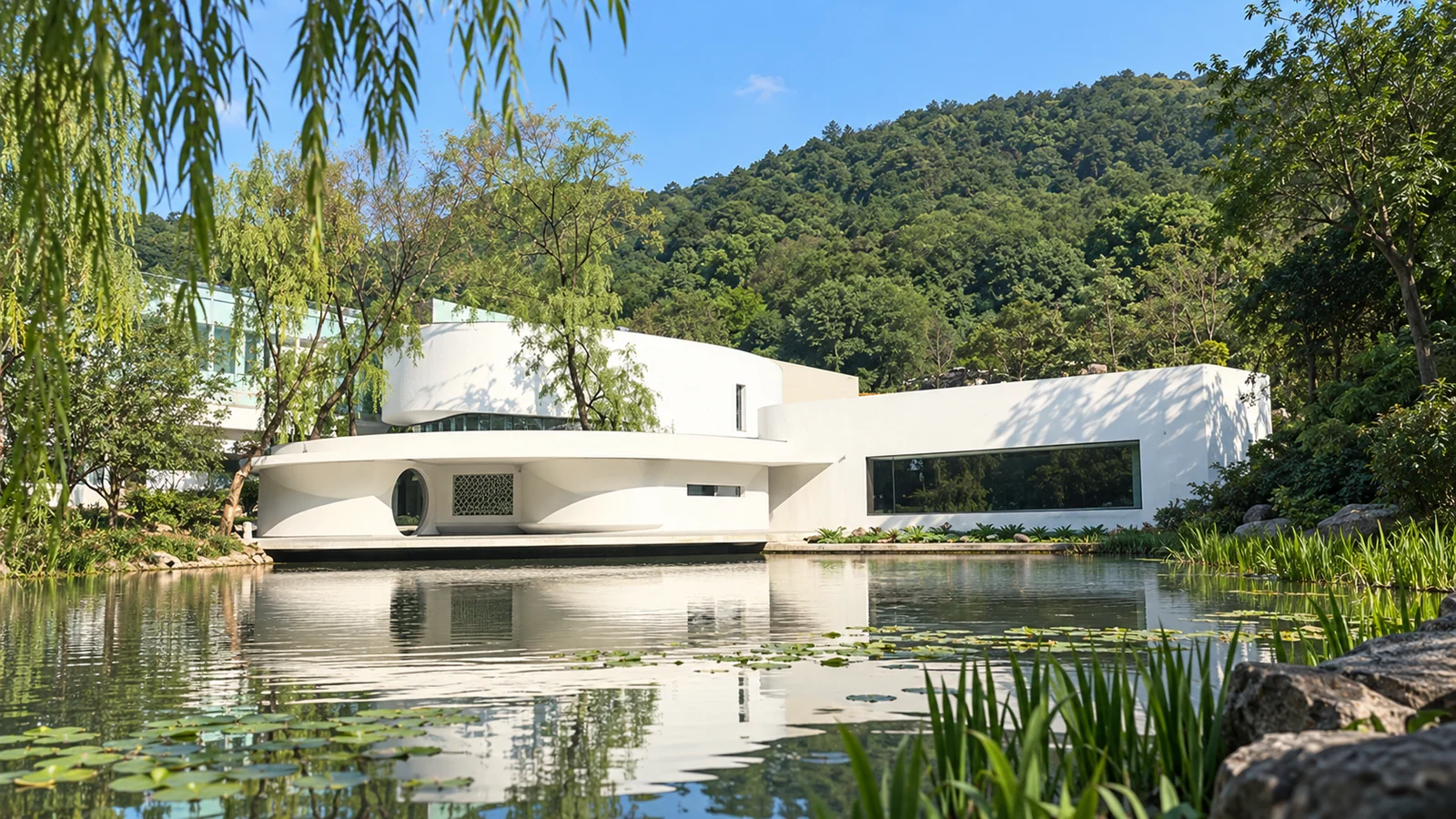
China National Silk Museum
Discover Chinese silk, textile making and dress in a museum devoted to the material and its history.
01 / The experience
China National Silk Museum
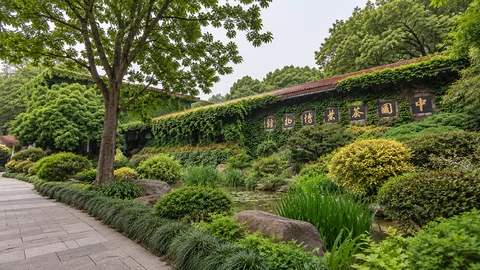
China National Silk Museum gives Hangzhou’s textile tradition more depth than a shopping stop. Its subject runs from the work of producing and weaving silk to the textiles and clothing people made from it, and the routes through which those objects travelled. The museum sits below Yuhuang Mountain near the southern side of West Lake, in a landscaped campus rather than a single shopfront.
The institution opened in 1992 and was substantially expanded and renewed in 2016. Its role combines collecting and exhibiting textiles with conservation and the transmission of silk-related skills. That makes material, technique and preservation useful threads through a visit: look at how a textile is constructed as well as the finished dress or decorative image. The broader subject also connects silk to cultural exchange along the Silk Roads.
Permanent displays and changing exhibitions share the site, so choose from the programme for your actual travel dates. Exhibition dates determine which temporary displays you can visit. Practical activities and specialist guiding need their own arrangement.
The Silk Road Gallery connects Chinese silk with the movement of textiles and ideas across regions. The Silk Weaving Gallery then brings attention back to manufacture: raising silkworms, reeling thread, weaving and dyeing are distinct stages behind a finished cloth. Following those two strands gives a practical way through a large subject, from the construction of a material to the distances across which it travelled.
Textile conservation is another important part of the museum’s identity. Fragile fibres, dyes and structures create different preservation questions from stone or bronze, and the institution’s work includes research and conservation as well as public display. Its wider collecting interest reaches into costume and fashion, with material from China and abroad. That range makes the museum useful for visitors interested in clothing and design as well as traditional silk production. The exact selection of historical textiles changes with the exhibition programme and conservation needs.
This is a good anchor for a museum-focused Hangzhou day, or a counterpart to Shuangfeng’s tea visit over a longer stay. The museums explain different materials and traditions and occupy different parts of the West Lake area. Combining them requires a local transfer, while a longer lake walk or Lingyin excursion is another choice rather than part of the same admission.
Highlights
- 01
Free general admission
- 02
Tuesday–Sunday 09:00–17:00; last entry 16:30. Closed Mondays except national statutory holidays.
04 / Before you go
Plan your visit
Admission & cost
Free general admission
General admission is free. Guided services, practical activities and separately ticketed special programmes can have their own charges.
When to visit
Tuesday–Sunday 09:00–17:00; last entry 16:30. Closed Mondays except national statutory holidays.
Allow an estimated 2–3 hours for the museum.
Choose a separate day before or after 16–18 April 2027. This regional visit does not fit around a timed circuit session.
Arrival & access
Use the museum at 73-1 Yuhuangshan Road, below Yuhuang Mountain near the southern side of West Lake. Bring a passport for entry; this is the national museum, not a retail silk workshop or factory tour.
73-1 Yuhuangshan Road, Hangzhou · 玉皇山路73-1号
Plan your visit
The operator’s standing policy does not require an advance general-entry reservation and accepts passports for foreign visitors. Carry the original passport. Arrange any handcraft session or specialist guide separately.
Location & nearby places
Continue exploring / Shanghai
More to explore
in Shanghai
Find another place for your itinerary, or explore all things to do in Shanghai.
 Temples & spiritual heritageLingyin Temple and Feilai FengExplore experience →
 Landmarks & gardensWest Lake: Broken Bridge and Bai CausewayExplore experience →
 Landmarks & gardensRetreat and Reflection Garden, TongliExplore experience →
 Museums & Chinese cultureChina National Tea Museum, Shuangfeng branchExplore experience →
Good to know
China National Silk Museum: frequently asked questions
Is a reservation required for China National Silk Museum?
China National Silk Museum’s standing general-entry policy says no advance reservation is required; carry the passport used for identification.
Can I visit China National Silk Museum on Monday?
China National Silk Museum regularly closes Mondays, with national statutory holiday exceptions.
Are silk-making workshops included at China National Silk Museum?
Silk-making workshops are separate from China National Silk Museum entry. Ask about the dated activity, language and fee.