Barbar Temples
Read the low limestone terraces, stairs and sacred-water remains of successive Dilmun temples in Barbar’s village landscape.
01 / The experience
Where Dilmun built around fresh water.
Read the low limestone terraces, stairs and sacred-water remains of successive Dilmun temples in Barbar’s village landscape.
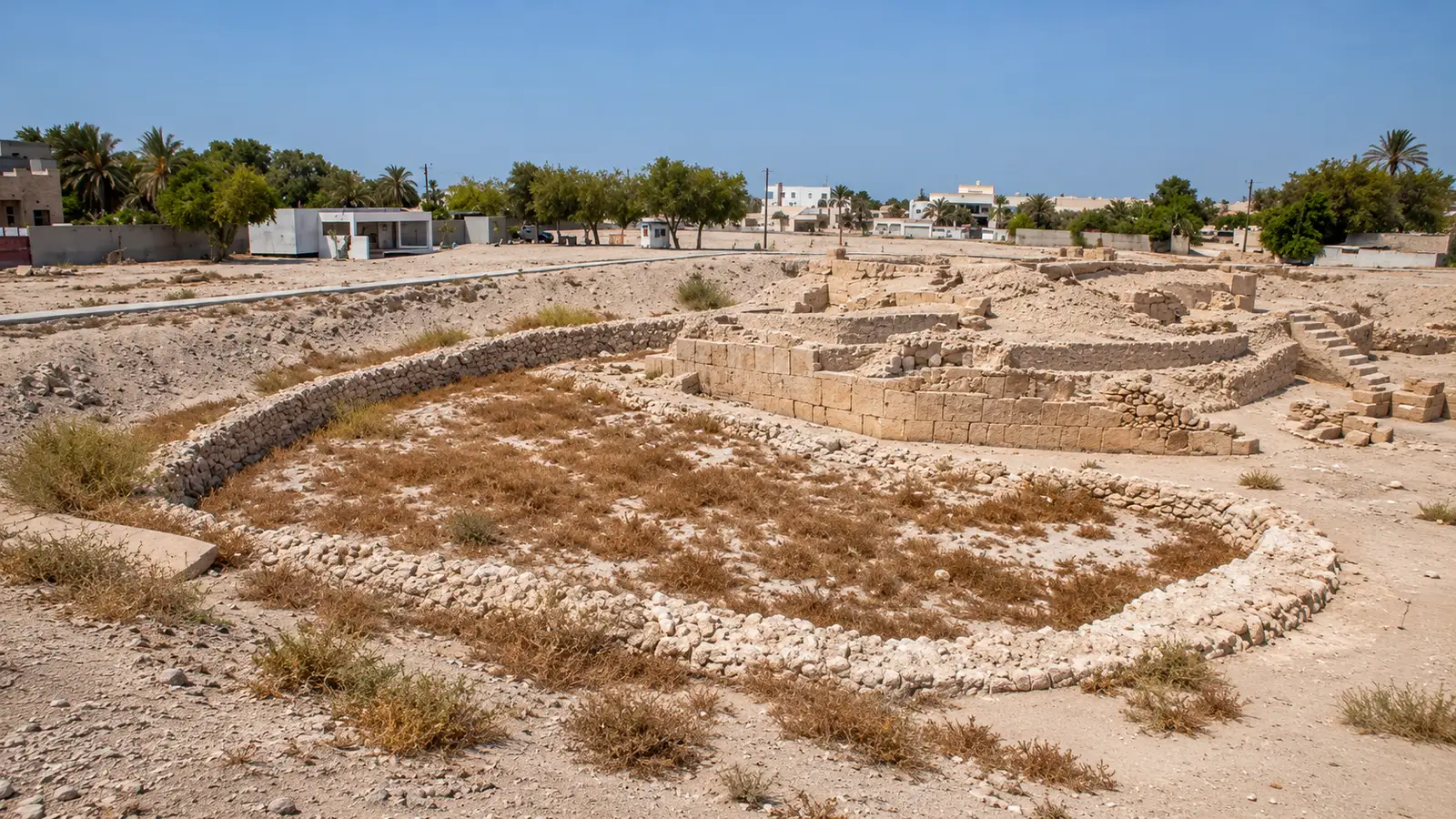
Barbar is an archaeological landscape to read at ground level. Low limestone walls, curved terraces and changes of height mark successive temples built on the same place. There is no complete ancient sanctuary above them: the interest lies in how the surviving platforms, stairways and lower chamber fit together, with the modern village and palms still close around the excavation.
The site preserves three main temple phases from the Bronze Age. Each built on or replaced an earlier arrangement, making the layers part of the story rather than damage to a single finished monument. Carefully dressed stone in the better-preserved second temple contrasts with rougher surviving wall tops and the sandy ground between the remains. Looking across the terraces is often more revealing than treating each block as an isolated object.
Fresh water gives Barbar a particular place in the Dilmun story. A stair leads towards a lower water chamber, often interpreted in connection with the freshwater deity Enki and wider Mesopotamian traditions. The chamber and the platforms suggest a ceremonial use of water within a society whose settlements and maritime trade depended on reliable supplies. Archaeology can support that connection without turning every surviving feature into a ritual whose details are known.
The Danish expeditions began investigating the temples in the 1950s, and later excavations have refined the understanding of their phases and water system. Finds from Barbar belong to Bahrain’s museum story as well as this landscape. The copper bull’s head associated with the excavations is a useful connection with the National Museum, but the objects should not be expected in an outdoor display beside the stonework.
A visit is most useful when the site and museum complement each other. The museum supplies objects and historical context; Barbar supplies the scale and relationship of the surviving architecture. Stay on the permitted visitor approach and view lower features from safe, open positions. The open archaeological landscape is the focus of the visit; indoor interpretation needs arranging separately. Barbar is on UNESCO’s Tentative List, a different status from Bahrain’s three inscribed World Heritage properties.
Highlights
- 01
Successive Dilmun temple phases
- 02
Terraces and lower water chamber
- 03
UNESCO Tentative List
- 04
Outdoor archaeological visit; indoor access unresolved
04 / Before you go
Plan your visit
Admission
Ask about admission
Opening and event times
Bahrain Tourism lists 08:00–17:00 daily. Indoor visitor-centre access requires separate confirmation.
Getting there
Barbar Temples archaeological site, Barbar
Use the named Barbar Temples archaeological site. The pin marks the mapped temple complex, not a village-centre fallback. Follow the signed public approach and stay outside restricted excavation areas.
Arrange your visit
Use Bahrain Tourism’s site information and contact the Culture Authority for guided or group access. Public visitor-centre operation is unresolved across official descriptions; no indoor museum admission or access down the ancient chamber steps is promised.
Accessibility
Exposed archaeological ground, ancient steps and uneven levels are not a continuous step-free route. Arrange a suitable viewing position and assistance with the Culture Authority; do not enter excavations to avoid a barrier.
Location & nearby places
Continue exploring / Bahrain
More to explore
in Bahrain
Find another place for your itinerary, or explore all things to do in Bahrain.
 Public beachesAbu Subh BeachExplore experience →
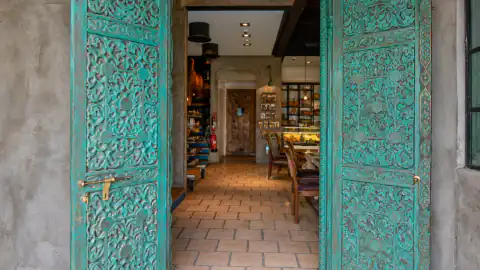 Restaurants & fine diningVilla Mamas restaurant in Saar, BahrainExplore experience →
 Concerts & entertainmentMJ’s Bowling LoungeExplore experience →
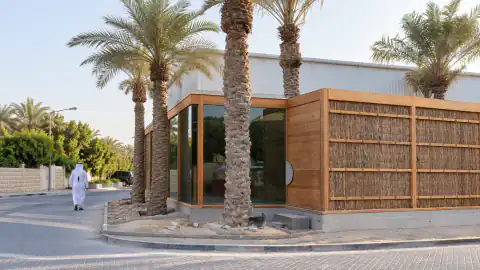 Cultural districtsBani Jamra weaving at Al Naseej FactoryExplore experience →
Good to know
Barbar Temples: frequently asked questions
What are the Barbar Temples in Bahrain?
They are the remains of successive Bronze Age temples associated with Dilmun, preserving limestone terraces, platforms and a lower water chamber in Barbar village.
Is Barbar Temple a UNESCO World Heritage Site?
Barbar Temple is on UNESCO’s Tentative List. It should not be described as one of Bahrain’s inscribed World Heritage properties.
Why is fresh water important at Barbar Temples?
The Barbar Temples include a lower water chamber associated with interpretations of freshwater worship and the Mesopotamian deity Enki. Its architecture links ritual use of water with Dilmun’s wider cultural contacts.
Can I walk down into the water chamber at Barbar Temple?
The ancient stair and chamber at Barbar Temple are not established as a public visitor route. Follow barriers and staff instructions and use the permitted viewing position.
Is Barbar Temple’s museum open?
Official descriptions conflict about the Barbar Temple visitor centre and museum project. Establish indoor access with the Culture Authority; plan primarily for the archaeological remains.
Can I see Barbar Temple finds at Bahrain National Museum?
The National Museum provides the wider context and archaeological finds associated with Dilmun. Do not expect the temple’s excavated objects to be displayed outdoors at Barbar.
How long does a Barbar Temples visit take?
Allow around 45–60 minutes at the Barbar Temples to see the platforms and water-chamber area from permitted routes, with longer time for a booked guide.