Monza · Theodolinda’s Chapel and Iron Crown
A reserved, staff-led visit to the Zavattari frescoes and Iron Crown in Monza’s cathedral.
01 / The experience
Monza · Theodolinda’s Chapel and Iron Crown
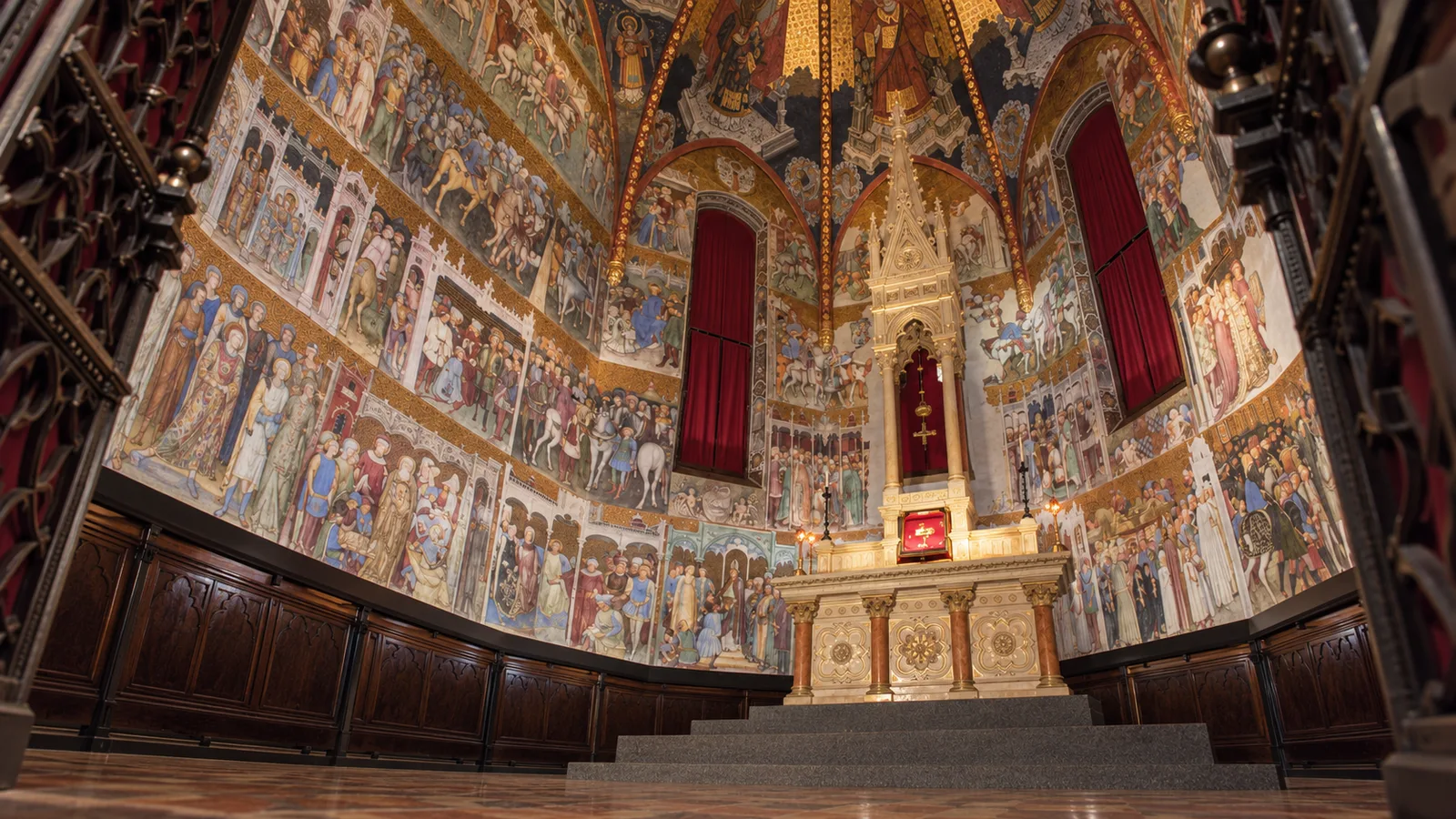
The walls of Theodolinda’s Chapel unfold like an illuminated book on an architectural scale. Courtiers, horses, banquets and richly patterned clothes fill forty-five scenes, arranged in five tiers around a small Gothic space inside Monza’s cathedral. At its centre is another kind of treasure: the Iron Crown, a small gold diadem whose religious and royal associations reach far beyond its size. Together, the painting and the crown make this one of Monza’s most compelling cultural visits.
Theodolinda was a Bavarian princess who became queen of the Lombards, first through her marriage to Autari and then to Agilulf. The basilica she founded in honour of Saint John the Baptist established a lasting connection between the royal household and Monza. Her chapel lies to the left of the cathedral’s main apse, behind a screen, beneath a ribbed Gothic vault. The queen’s sarcophagus is also preserved here. The setting brings a historic person, a local foundation story and a remarkable painted cycle into one compact encounter.
The Zavattari workshop painted the stories during the 1440s, drawing on Paul the Deacon’s history of the Lombards and the later chronicle of Bonincontro Morigia. The narrative begins with Theodolinda’s first marriage, proceeds through her union with Agilulf and the foundation of the basilica, and ends with the unsuccessful Italian expedition of the Byzantine emperor Constans II. It reads from left to right and from the upper registers downwards. The number of scenes devoted to weddings makes court ceremony a major part of its visual language.
Although the subject is early medieval, the people wear the sumptuous fashions of fifteenth-century Lombardy. That distance between the queen’s lifetime and the painters’ world gives the cycle much of its interest. Patterned fabrics, elaborate headwear and processions reveal the taste of the Visconti era, while the sacred building contains scenes of feasting and secular life. The paintings turn history into a courtly spectacle, with gold and decorative detail binding the separate episodes into a continuous setting.
One of the key stories concerns the basilica’s foundation. According to the medieval legend, a dove directed the queen towards the place where she should build her church. The painted departure and foundation episodes connect the richness of the court with a landscape and a city that visitors can still explore outside. Scene 32 also carries the Zavattari signature and the date 1444, an unusually direct meeting with the makers within the narrative itself.
The Iron Crown deserves attention as an object as well as a symbol. Six hinged gold plates carry coloured stones, rosettes and enamelled decoration. Its circumference is only about forty-eight centimetres. The traditional identification of its inner band with a nail from Christ’s Crucifixion explains the name and its status as a relic; scientific examination identifies the band’s metal as silver. The museum presents these religious and scientific histories together, while the crown’s precise dating and early origin remain subjects of study.
The adjoining Museum and Treasury extends the visit beyond the chapel. Theodolinda’s Gospel-book binding has great gemmed crosses and reused Roman cameos. The Cross of Agilulf and the queen’s separate votive crown show the richness of the early royal gifts; the gilt-silver hen with seven chicks is another memorable object. Later donations include the Cross of the Kingdom and ancient ivory diptychs reused for precious book bindings. These works give tangible form to the royal patronage that the chapel’s paintings retell centuries later.
The chapel and crown are visited with museum staff in a reserved thirty-minute slot. Museum-only admission does not include them; a combined option adds the Museum and Treasury. Booking is mandatory, and photography is prohibited inside the chapel. Those arrangements suit its intimate scale: the guided explanation helps connect the small crown, the surrounding stories and the cathedral’s much longer history.
04 / Before you go
Plan your visit
A reserved, staff-led visit to the Zavattari frescoes and Iron Crown in Monza’s cathedral.
Cost
€9 chapel · €14 combined
Current adult prices: chapel and crown €9; museum only €8; combined €14. Future tariffs may change.
When to visit
Reserved chapel times; religious services can limit access.
Chapel tour 30 minutes, plus ticket-office arrival and any museum visit.
Getting there
Ticket office: Via Lambro 2, 20900 Monza
Use the operator’s visitor entrance at Ticket office: Via Lambro 2, 20900 Monza.
Plan your visit
Reserve the chapel or combined visit through the museum: +39 039 326383 or info@museoduomomonza.it. Arrive at the Via Lambro 2 ticket office 15 minutes early. Museum-only admission excludes the chapel and crown; use the selected visit’s payment and cancellation terms.
Reservation always required for the chapel.
Museum-only admission excludes the chapel and crown.
No photography inside Theodolinda’s Chapel.
Treasury access involves stairs; arrange mobility assistance in advance.
Location & nearby places
Continue exploring / Italian Grand Prix
More to explore
in Italian Grand Prix
Find another place for your itinerary, or explore all things to do in Italian Grand Prix.
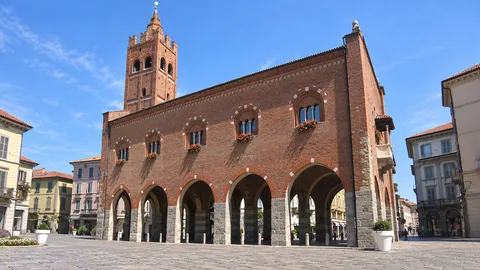 Landmarks & gardensArengario and Piazza Roma in MonzaExplore experience →
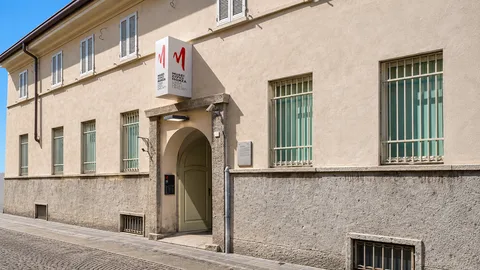 Art, museums & Italian heritageMusei Civici di MonzaExplore experience →
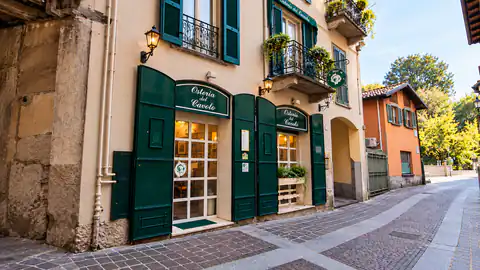 RestaurantsOsteria del CavoloAffordable: counter food and pizza. Mid-range: trattorias and osterias. Special occasion: premium à la carte or tasting menus. Figures may describe a dish or a menu; see the stated basis.ItalianMilanese & LombardExplore experience →
 Pizza & affordable Italian foodSpontini Monza CentroFood price level 1 of 4ItalianPizzaExplore experience →