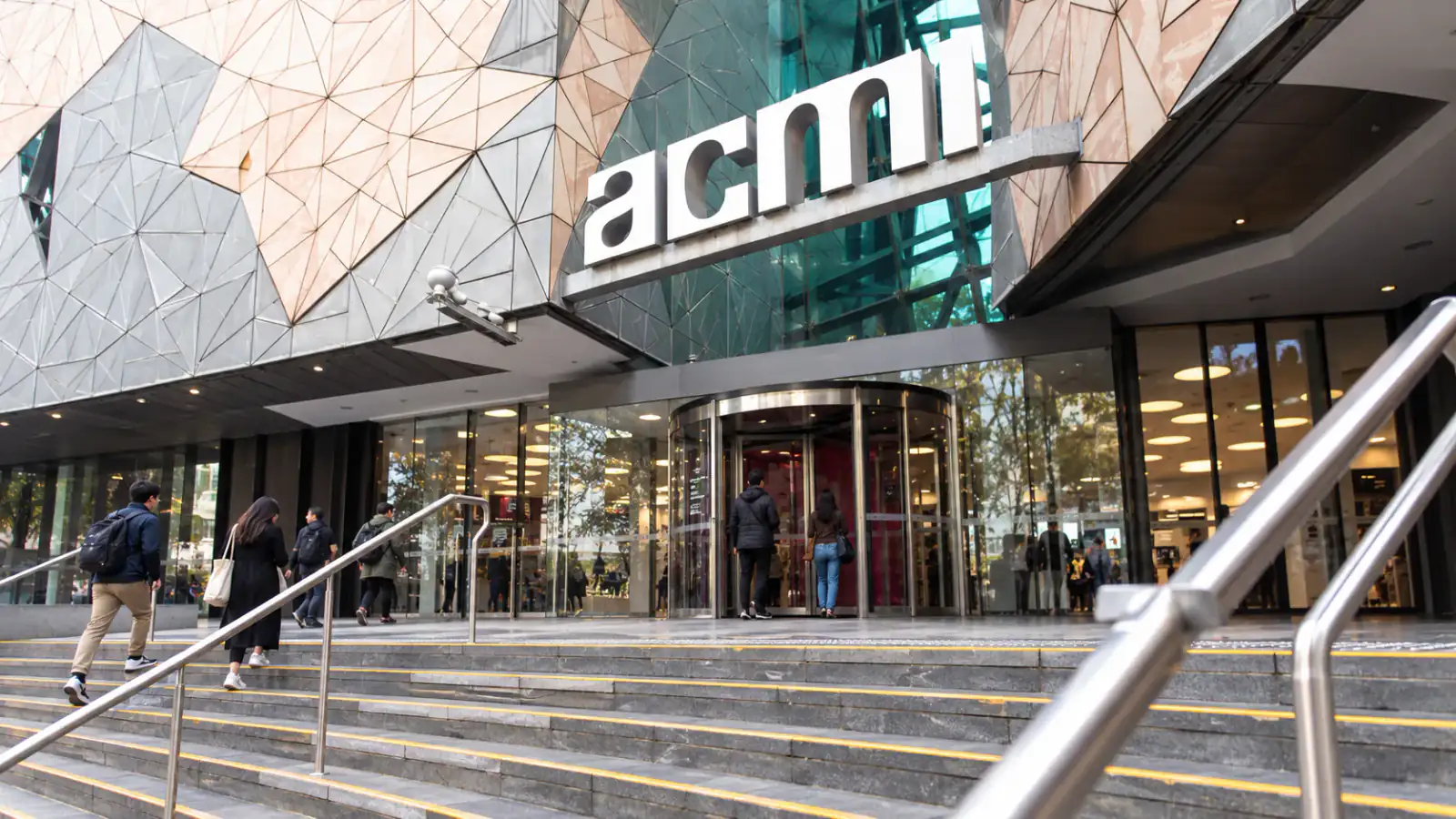
ACMI — The Story of the Moving Image
Make film sound effects, rearrange scenes and play videogames in ACMI’s free screen-culture exhibition at Federation Square.
01 / The experience
Play your way through screen culture.
Make film sound effects, rearrange scenes and play videogames in ACMI’s free screen-culture exhibition at Federation Square.
Move a storyboard block and the film changes. At ACMI’s Edit Line, physical blocks trigger clips on a screen, allowing visitors to assemble a sequence and see how a different order changes the story. It is one of the most direct introductions to this museum’s subject: the work behind the moving images that fill our cinemas, televisions, phones and games.
The Story of the Moving Image and the Foley Studio
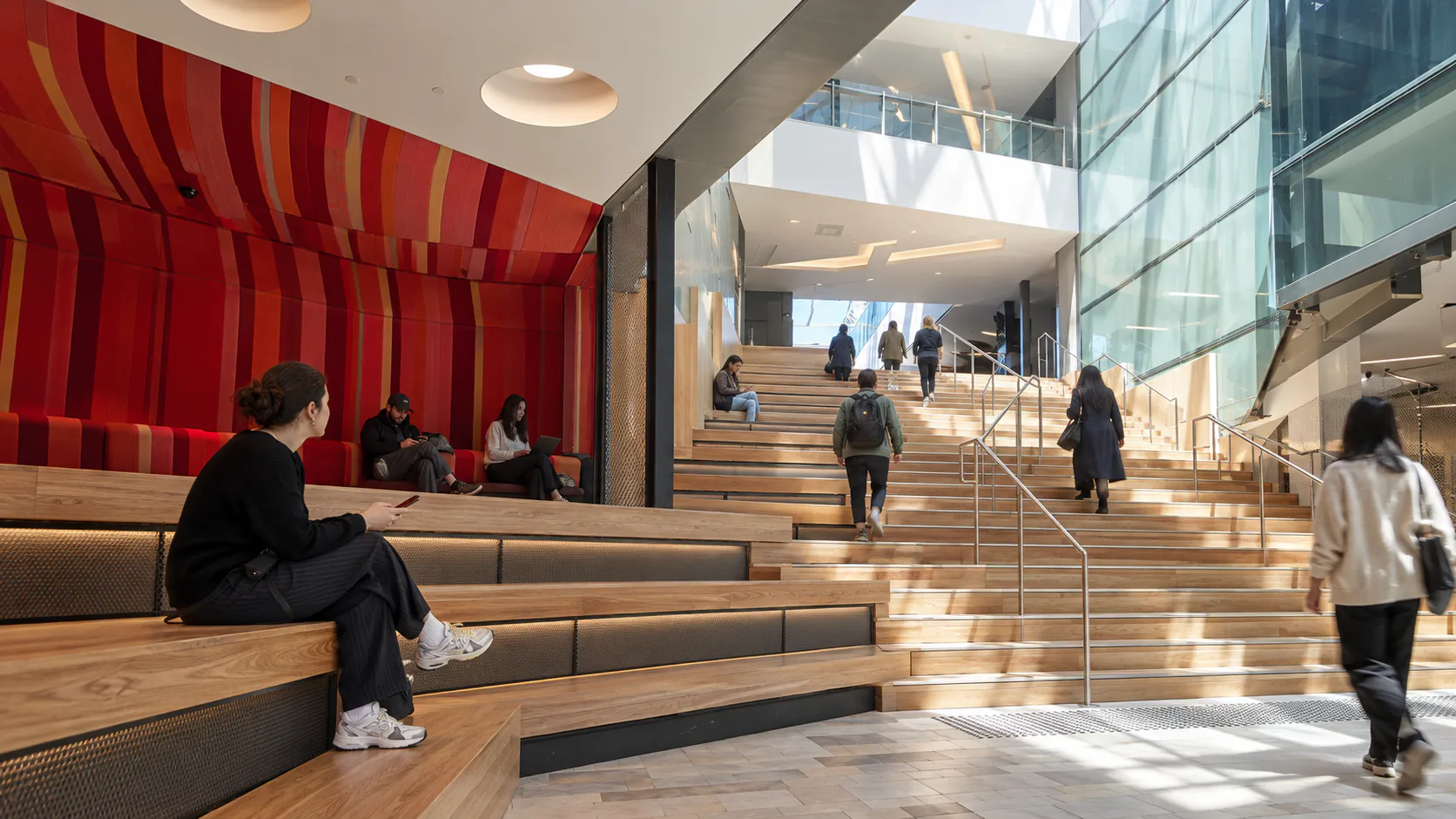
The Story of the Moving Image is ACMI’s free permanent exhibition at Federation Square. Its five sections travel through the origins of cinema, production design, Australian screen stories, videogames and the influence of screens on public life. Costumes, props and sets sit beside playable and creative stations, so the visit alternates between looking at finished work and trying some of the processes that made it. The museum’s interest reaches well beyond film buffs or one generation’s favourite television programmes.
Sound gets its own hands-on treatment in the Foley Studio. Visitors can add effects to scenes from Round the Twist and Li’l Elvis and the Truckstoppers, discovering how ordinary materials can suggest an entirely different action onscreen. Shadow Play goes further back, using the visitor’s outline to create characters and imaginary settings. Together, these activities connect older storytelling techniques with digital tools, rather than presenting screen history as a succession of newer machines.
Playing in the Games Lab and collecting with the Lens
The Games Lab makes room for playing. Its selection spans independent and major publishers, Australian and international work, with changing titles that encourage visitors to try something unfamiliar. Elsewhere, the Memory Garden turns home movies into an interactive display: projected light responds to outstretched hands, revealing digitised footage from the museum’s collection. Family recordings sit within the same broad story as cinema and television, giving everyday lives a place alongside professional productions.
A small cardboard Lens links the visit together. Pick one up on arrival and use it at collection points to save objects, artworks and your own creations. Afterwards, the collection is available online, with connections to other screen material. It is particularly useful when a display introduces a filmmaker, game or technique you would like to explore at home. Saving an edited sequence or a Foley experiment also leaves something more personal than a photograph of a museum label.
Australian stories and First Peoples contributions
Australian stories and First Peoples’ contributions run through the exhibition. Some material includes the names, images and voices of Aboriginal and Torres Strait Islander people who have died. The galleries also contain dark passages, bright or flickering images and layered sound. Seating is available throughout, and separately booked relaxed visits reduce sensory stimulation for visitors who need it.
Allow around two hours for a visit that includes making and playing; popular interactive stations can involve a wait. Entry to The Story of the Moving Image needs no ticket, while cinema screenings, workshops and selected temporary exhibitions have their own bookings. The café on Level 1 offers a break, and NGV Australia is nearby in the same Federation Square complex. ACMI’s cinemas give the building a further life beyond the exhibition: after learning how screen stories work, visitors can return for a film from the programme.
Highlights
- 01
Make film sound effects, rearrange scenes and play videogames in ACMI’s free screen-culture exhibition at Federation Square.
- 02
Daily 10:00–17:00; ANZAC Day opens at 13:00; closed Christmas Day.
- 03
Free museum entry and The Story of the Moving Image; cinema sessions, workshops and some exhibitions extra.
04 / Before you go
Plan your visit
An interactive indoor stop at Federation Square.
Admission
Free museum entry and The Story of the Moving Image; cinema sessions, workshops and some exhibitions extra.
- General entry
- Free
- Optional extras
- Selected exhibitions, events and programs have separate prices.
Choose your visit
Daily 10:00–17:00. ANZAC Day: 13:00–17:00. Closed Christmas Day.
Allow around two hours for the main galleries.
Booked events have their own session times.
Arrival & access
Enter on Flinders Street, between Swanston and Russell streets. The revolving door has an accessible door immediately beside it and a ramp approach. The Fed Square plaza entrance reaches Level 1; lifts connect the museum floors. Arrive from Flinders Street Station using the Russell Street crossing or the Swanston Street crossing outside the station.
ACMI, Federation Square, Flinders Street, Melbourne VIC 3000, Australia
Walk in or book a session
Walk in for The Story of the Moving Image; no ticket needed. Book cinema sessions, workshops and selected exhibitions separately.
Follow the terms attached to any paid ticket or registered event.
Accessibility
The Flinders Street ramp and adjacent accessible door avoid the uneven Fed Square plaza. Lifts connect all levels and accessible toilets are on Ground Floor and Level 1. Gallery displays include loud sound, low light and some strobing effects; relaxed visits require their own registration.
Participation requirements
Children under 13 must be accompanied by an adult.
Finish food and drinks before entering galleries. Follow artwork-specific photography restrictions.
Location & nearby places
Continue exploring
More of Melbourne, around your visit.
Continue exploring Melbourne
06 / Good to know
ACMI — The Story of the Moving Image: frequently asked questions
01Which part of ACMI can I visit for free?
The permanent Story of the Moving Image exhibition is free. ACMI opens daily from 10:00 to 17:00; films, events and other exhibitions have their own ticket arrangements.